Table of Contents >> Show >> Hide
- Why Javelin Videos Grab So Much Attention
- What the Javelin Actually Is
- Why the Army Keeps Showing It Off
- The “Blow Stuff Up” Appeal, Minus the Cartoon Version
- The Business Side of a Famous Missile
- What Watching a Javelin Launch Really Represents
- Experiences Around the Javelin: What the Topic Feels Like to Watch, Discuss, and Remember
- Conclusion
Note: This article is written for general information and defense-tech context. It avoids operational instructions and graphic detail, and it is formatted cleanly for web publishing.
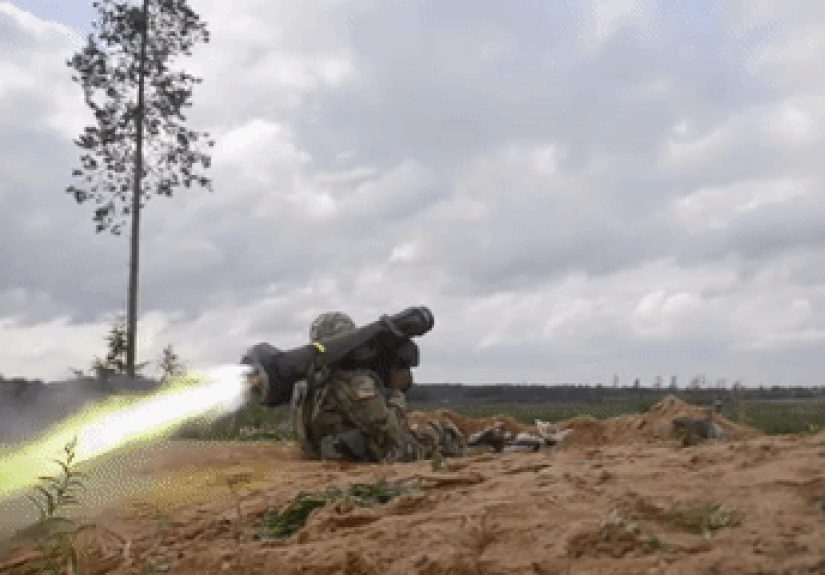
Some military videos are impossible to ignore. A tank silhouette appears in the distance. A launcher locks in. A missile streaks away. A moment later, the target is done having a good day. That dramatic sequence is a big reason the Army’s Javelin missile system has become one of the most recognizable pieces of modern battlefield hardware. Even people who could not identify a road wheel from a shopping cart suddenly know the word “Javelin.”
But the real story is bigger than viral footage and the internet’s endless appetite for loud, smoky clips. The Javelin matters because it changed the way many people think about portable anti-armor weapons. It is compact enough to move with troops, advanced enough to be treated as precision battlefield equipment, and famous enough to have crossed from military circles into mainstream culture. In public imagination, it is the missile that seems to show up, make a point, and leave before the argument can continue.
This is where the headline energy meets the deeper reality. Yes, the Army’s Javelin anti-tank missile absolutely appears in videos that look like something between a training film and an action-movie trailer. But behind the spectacle is a serious system with decades of development, combat history, upgrades, and logistical headaches. The Javelin is not famous just because it destroys targets. It is famous because it represents a very modern blend of portability, precision, survivability, and battlefield confidence.
Why Javelin Videos Grab So Much Attention
Let’s be honest: people love watching technology work exactly as advertised. That goes for espresso machines, robot vacuums, and highly advanced military hardware. The Javelin is visually compelling because the sequence looks clean and decisive. Unlike older images of drawn-out anti-armor engagements, Javelin footage often feels almost cinematic. The operator identifies a target, the system does its job, and the result is immediate and unmistakable. No complicated explanation is needed for the average viewer to understand that something expensive just lost an argument.
Publicly released Army and Defense Department imagery also contributes to that fascination. Training exercises, live-fire events, and demonstration videos are made to show capability. They are not random cellphone clips from a parking lot; they are carefully captured moments meant to illustrate confidence, readiness, and the value of modern equipment. That visual language matters. When a system repeatedly appears in official footage from ranges and exercises, it builds a reputation that extends beyond military audiences.
There is also a strange kind of modern contrast at work. The launcher itself does not look enormous. The team operating it does not resemble a giant artillery battery. The Javelin’s visual power comes from the mismatch between what you see and what it can do. It is man-portable, which makes the effect feel even more dramatic. In internet terms, it is the military equivalent of a compact gadget that punches way above its weight.
What the Javelin Actually Is
The Javelin is a man-portable anti-tank guided missile system fielded by the U.S. Army in the 1990s and continually improved since then. It was built to give infantry a more effective answer to armored threats than older systems could provide. Over time, it has become one of the most recognized examples of a “fire-and-forget” weapon, meaning the missile is designed to track after launch so the operator does not need to keep guiding it all the way to the target.
Fire-and-Forget Changed the Conversation
That “fire-and-forget” feature is a huge part of the Javelin legend. Older guided systems often demanded more continuous operator involvement. The Javelin changed that by reducing the burden after launch and improving survivability for the team using it. In plain English: once it is away, the crew is not expected to stand around like unpaid extras in a very dangerous movie. That design made the system appealing not just from a technical standpoint, but from a practical one. Soldiers value gear that works and also helps them avoid becoming the sequel nobody asked for.
The Javelin also became known for attack flexibility, including its ability to engage armored targets in ways intended to exploit weaker protection areas. That helped set it apart from the older image of anti-tank warfare as a straightforward head-on slugfest. Modern armor is complicated; modern anti-armor design has to be just as smart. The Javelin’s reputation comes from being part of that smarter generation.
The Reusable Brain of the System
One of the most important pieces of the Javelin system is the Command Launch Unit, often discussed almost as carefully as the missile itself. This reusable component gives troops observation and targeting capability, which means the system is not merely about one dramatic launch. It also plays a role in seeing, identifying, and working through what is in front of the user. More recent modernization efforts, especially the Lightweight Command Launch Unit, show that the Army and industry do not see Javelin as frozen in time. The idea is not just to keep the missile alive, but to keep the whole experience more effective, more portable, and more useful.
Why the Army Keeps Showing It Off
The Army does not highlight systems like the Javelin just because they make good thumbnails. Public messaging around military capability serves several purposes. It reassures allies, signals readiness, supports recruitment narratives, and reminds taxpayers that defense procurement is not just a spreadsheet hobby. When footage shows soldiers successfully engaging targets during training, the message is broader than “look, explosion.” The real message is “this force trains, adapts, and fields equipment with proven battlefield credibility.”
That helps explain why the Javelin keeps surfacing in official photos, exercises, modernization discussions, and acquisition news. It sits at the intersection of tactical relevance and public recognizability. Some military systems are crucial but invisible to the general audience. The Javelin is crucial and camera-friendly. That is a powerful combination in the age of defense news, social clips, and viral military explainers.
Training Matters More Than the Hype
One of the more interesting recent developments is how much attention has gone into training tools and launch-unit improvements. That is a reminder that the Javelin story is not just about live-fire drama. It is also about repetition, simulation, sustainment, and getting soldiers familiar with a system without wasting expensive rounds. The Army’s work with trainers and simulation tools shows that modern military readiness is increasingly built in classrooms, labs, and controlled training environments long before it appears in a highlight reel.
In other words, the spectacular part of the Javelin’s public image depends on a less glamorous truth: experts, maintainers, trainers, engineers, and acquisition teams doing patient work behind the scenes. Viral footage is the final scene. The rest of the script is logistics.
The “Blow Stuff Up” Appeal, Minus the Cartoon Version
There is a reason the phrase “blow stuff up” keeps sneaking into headlines, comments, and social posts around weapons footage. It is punchy, plainspoken, and built for the internet. But it also flattens the subject in a way that misses what actually fascinates viewers. Most people are not staring at Javelin clips because they are studying raw destruction alone. They are watching because the missile represents precision, speed, and engineering confidence.
That distinction matters. The public appeal is not just chaos; it is controlled force. The launch sequence looks disciplined, almost clinical. The weapon appears to do exactly what it was designed to do. That creates a feeling of technological certainty, and in military storytelling that certainty is gold. It is the same reason people are drawn to footage of aircraft carrier operations, rocket launches, and bomb-disposal robots. High-stakes engineering is magnetic.
There is also an emotional layer. For many viewers, especially in recent years, the Javelin came to symbolize something larger than a single weapon system. It became shorthand for the idea that modern portable systems can complicate the plans of much heavier forces. That symbolism helped the Javelin become not just a tool of war, but a symbol in news coverage, defense debate, and public discussions about military aid, industrial capacity, and deterrence.
The Business Side of a Famous Missile
The Javelin’s public fame has a less glamorous companion: production pressure. Once a weapon becomes central to alliance planning, resupply efforts, and foreign sales, the conversation shifts from “what can it do?” to “how fast can industry build more?” That is where recent reporting on contracts, backfilling inventories, and supply-chain capacity becomes important. The Javelin is a reminder that even famous weapons are only as useful as the industrial base behind them.
Defense reporting over the past few years has highlighted efforts to increase output, modernize production, and support replacement of stocks sent abroad. That tells us something essential about contemporary defense technology: battlefield relevance is not just about design quality. It is also about manufacturing resilience. A system can be admired around the world, but admiration does not assemble components, certify electronics, or move launch units through a supply chain.
Foreign military sales add another dimension. Demand from partners and allies reinforces the Javelin’s reputation as a trusted system, but it also increases the pressure to balance U.S. needs, partner requirements, and industrial realities. The result is a missile system that exists simultaneously as battlefield equipment, export item, policy symbol, and production challenge. Not bad for something many casual viewers first encountered through a very dramatic clip online.
Modernization Keeps the Story Going
If the Javelin were just a legacy weapon coasting on old fame, it would have faded into the background by now. Instead, ongoing work on launch units, training systems, and production processes has kept it relevant. That is one reason the system remains part of current defense discussions rather than a museum label with good stories attached.
And that may be the most interesting thing about it. The Javelin is old enough to have history, but modern enough to keep getting updated. It has the rare defense-tech profile of being both proven and still evolving. In technology terms, that is the equivalent of a classic machine that somehow also keeps getting software updates and better optics. Not flashy for the sake of being flashy. Just stubbornly useful.
What Watching a Javelin Launch Really Represents
Watching Army footage of a Javelin launch is not just watching a missile hit a target. It is watching decades of doctrine, engineering, training, procurement, and battlefield learning compressed into a few unforgettable seconds. The smoke trail and target impact get the attention, but the backstory gives those moments meaning.
The Javelin’s cultural staying power comes from that rare mix of visual drama and strategic relevance. It looks impressive, yes. More importantly, it tells a larger story about how modern armies think: move light, hit precisely, train hard, modernize constantly, and make sure the industrial base can keep up with the headlines. That is a lot to ask from one system, but the Javelin has managed to carry that weight remarkably well.
So when people say, “watch the Army’s Javelin anti-tank missile blow stuff up,” what they usually mean is this: watch a famous piece of military technology demonstrate why it earned its reputation. The explosion may grab the click. The real story is everything that made that moment possible.
Experiences Around the Javelin: What the Topic Feels Like to Watch, Discuss, and Remember
There is an experience dimension to the Javelin story that often gets overlooked when people focus only on the launch itself. For many viewers, the first encounter is not on a training range or in a defense journal. It is on a news clip, a short video, or a reposted military highlight with a caption that sounds half serious and half amazed. That first impression tends to be the same: the system looks compact, the launch feels sudden, and the result lands with an almost unreal sense of finality. It does not feel like old movie-style battlefield imagery. It feels modern, sharp, and efficient.
For defense enthusiasts, that creates a very specific reaction. They start asking questions not about spectacle alone, but about design, doctrine, and what the footage implies. Why is this system so trusted? What makes it different from older anti-armor weapons? Why does it keep appearing in official Army discussions and procurement updates? The experience shifts from “wow” to “how does this fit into the bigger military picture?” That shift is part of why the Javelin keeps its hold on public attention. It rewards both casual viewers and serious readers.
For veterans, service members, or military families, the experience can be different again. The system may evoke memories of training ranges, long preparation cycles, maintenance routines, and the endless gap between what the public sees in ten seconds and what troops live through in the months before that moment. In that sense, the Javelin represents something larger than a launch. It represents readiness. It stands for hours of instruction, inspections, briefings, drills, and evaluations condensed into one visible outcome. The camera catches the dramatic half-second; the professionals remember the entire chain behind it.
There is also the strange media experience of watching a weapon become a symbol. Over the years, the Javelin stopped being known only inside military and policy circles. It entered mainstream conversation. It became part of headlines about deterrence, battlefield adaptation, weapons production, and alliance support. That shift changes the emotional feel of the topic. A viewer is no longer just watching a missile test. They are watching a symbol that has accumulated political, strategic, and cultural meaning.
And then there is the internet experience, which is its own category of human behavior. Online, the Javelin is often framed with a mix of awe, shorthand, dark humor, and technical admiration. One person talks about infrared guidance. Another talks about production capacity. A third simply posts a clip with the digital equivalent of “well, that settled it.” The topic moves between expert analysis and meme culture with surprising ease. Few military systems manage that without turning into complete nonsense, but the Javelin has done it because the underlying reality is strong enough to support the hype.
Ultimately, the experience of the Javelin topic is about more than a weapon in flight. It is about what people project onto that flight: precision, confidence, engineering, training, deterrence, and modern military identity. That is why the subject stays compelling long after the smoke clears. The launch is brief. The meaning lingers.
Conclusion
The Army’s Javelin anti-tank missile became famous because it offers the kind of footage that the modern internet cannot resist: clean launch, visible confidence, immediate result. But its staying power comes from more than dramatic visuals. The system’s real significance lies in its fire-and-forget design, its reusable launch-unit architecture, its long service life, and its ongoing modernization in an era defined by fast-changing military needs.
What makes the Javelin worth writing about is not just that it can destroy a target. It is that it represents a larger story about American defense technology: precision matters, training matters, production matters, and the systems that become iconic are usually the ones that combine battlefield credibility with a memorable public image. The launch may last seconds. The reputation has taken decades to build.