Table of Contents >> Show >> Hide
- Why High Fiving Babies Feels So Awesome
- The Tiny Science Behind the Baby High Five
- High Fives as “Serve and Return” Play
- The Social Magic of “You Did It!”
- When Do Babies Learn to High Five?
- How to High Five a Baby Without Being Weird About It
- Why Adults Need Baby High Fives Too
- High Fiving Babies and the Joy of Ordinary Moments
- Real-Life Experience: The Baby High Five Hall of Fame
- Conclusion: A Tiny Hand, a Big Awesome
Some joys arrive with fireworks. Others arrive in a tiny palm that has no idea what it is doing but somehow lands on your hand like a champion completing a championship handshake. That is the magic behind #886 High fiving babies – 1000 Awesome Things: a small, silly, wildly wholesome moment that turns an ordinary room into a stadium of applause.
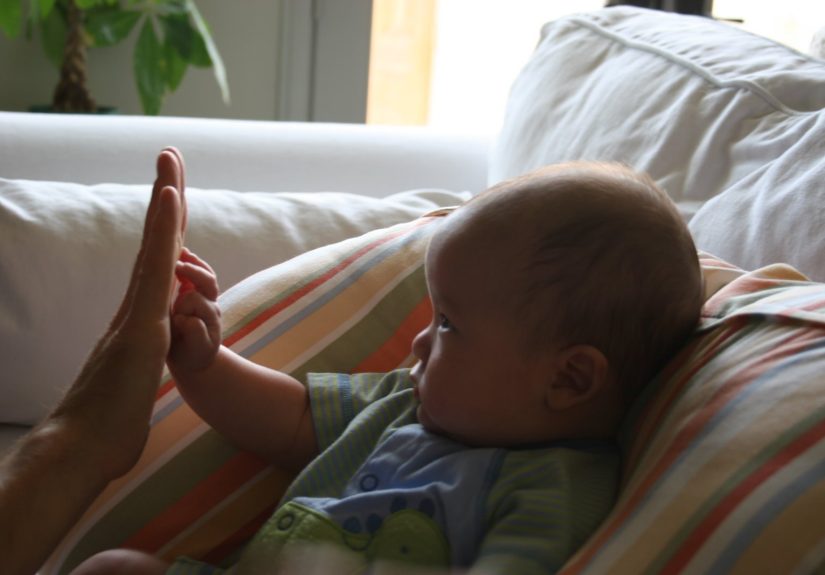
The original 1000 Awesome Things entry keeps the idea beautifully simple: high fiving babies is awesome because they usually do not leave you hanging. That tiny line works because everyone understands the emotional risk of the high five. You raise your hand. You wait. For one suspenseful second, your dignity dangles in the air like a forgotten party balloon. Then a baby slaps your palm, or at least makes enthusiastic contact somewhere near your wrist, and suddenly you feel like you have won a friendship trophy.
But behind the comedy is something surprisingly meaningful. Baby high fives sit at the intersection of play, bonding, imitation, body control, social learning, and pure family entertainment. A high five is not just a palm slap. It is a miniature conversation: “I see you,” “You see me,” “Let’s do this tiny celebration together.” For babies, who are still learning how hands, faces, sounds, and people work, that little exchange can be a doorway into connection.
Why High Fiving Babies Feels So Awesome
High fiving a baby is funny because the stakes are both extremely low and emotionally enormous. Nobody is winning a Super Bowl. Nobody has finished a tax audit. The baby may have simply knocked over a block tower, chewed a sock, or discovered that spoons make excellent table drums. Yet when you lift your hand and say, “High five!” the moment transforms into a ceremony.
Adults love it because babies respond without social calculation. They are not thinking, “Is this person cool enough for a high five?” They are not judging your timing, your outfit, or your haircut that looked better before humidity got involved. They see a hand, hear an excited voice, and sense an invitation. Their response is direct, honest, and gloriously wobbly.
That wobbly part matters. Babies are still mastering hand-eye coordination, balance, and intentional movement. A successful high five might look like a gentle pat, a delayed tap, a double-handed smack, or a dramatic miss that lands on your forearm. It is the cutest version of teamwork: one person knows the rules, the other person is mostly powered by curiosity and applesauce.
The Tiny Science Behind the Baby High Five
While the moment feels like comedy, it also connects with real child development. Babies and toddlers learn through responsive, back-and-forth interaction. When a child babbles, reaches, smiles, claps, waves, or points, and an adult responds warmly, the child learns that communication works. A high five fits neatly into that pattern because it is interactive, simple, physical, and joyful.
Early gestures such as waving, clapping, pointing, and reaching are important because babies often communicate with their bodies before they can explain themselves with words. Long before a toddler can say, “Dear adult, I appreciate your celebratory energy,” they can grin, slap a palm, and squeal like a tiny sports commentator.
A baby high five also supports imitation. Babies watch what adults do and try to copy it. This is why a baby may wave bye-bye after seeing adults wave, clap after a song, or hold a toy phone to their ear after watching grown-ups talk on the phone. The high five becomes a playful imitation game: adult raises hand, baby studies the pattern, baby attempts the action, everyone acts like the moon landing just happened in the living room.
High Fives as “Serve and Return” Play
Child-development experts often describe healthy early interaction as “serve and return.” The child “serves” by making a sound, gesture, facial expression, or movement. The adult “returns” by responding with attention, words, touch, or another gesture. This back-and-forth exchange helps babies build communication, social skills, and trust.
A high five is basically serve and return wearing a party hat. You offer the serve: “Up top!” The baby returns with a palm, a giggle, a stare, or a hand wave that travels through three zip codes before reaching you. Then you respond again: “Yeah! Great job!” The baby learns that actions can create reactions. That is a powerful lesson hidden inside a moment that looks like simple goofiness.
Face-to-face games such as peekaboo, pat-a-cake, clapping, waving, singing with gestures, and high fiving all have something in common: they invite babies to notice another person, share attention, take turns, and enjoy repetition. Babies love repetition because it helps them predict what comes next. Adults love repetition because the baby laugh at the end never gets old.
The Social Magic of “You Did It!”
A high five is one of the earliest forms of celebration many children experience. It says, “You did something, and I noticed.” That something does not have to be impressive by adult standards. For a baby, grabbing a toy, stacking one block, crawling across a rug, or waving at Grandma on a video call can be a major achievement. A high five turns that achievement into a shared victory.
This is why high fives work so well as encouragement. They are immediate, positive, and easy to understand. A baby may not grasp a long motivational speech about perseverance, fine motor skills, or the emotional benefits of self-efficacy. But a smiling face, an excited voice, and a gentle palm tap? That message lands.
Even better, high fives create belonging. They tell babies they are part of the group. When older siblings, parents, grandparents, cousins, and friends line up for tiny high fives, the baby becomes the star of a miniature parade. The room gets louder. Phones come out. Someone says, “Do it again!” eight times. The baby, naturally, becomes drunk with power.
When Do Babies Learn to High Five?
Every baby develops at a different pace, so there is no universal “high five birthday.” Some babies may begin responding to hand games in the second half of the first year, while others become more consistent closer to the toddler stage. Around this broad window, babies often grow more expressive with gestures, sounds, facial expressions, and imitation.
At first, the high five may be accidental. A baby reaches toward your hand because hands are interesting, and suddenly the adults erupt with applause. The baby thinks, “Interesting. I have discovered the button that activates the big people.” With practice, the movement becomes more intentional. The baby sees your hand, hears the cue, and starts to connect the action with the response.
The key is to keep it playful and pressure-free. Babies are not tiny employees in a corporate team-building workshop. If they do not want to high five, they do not have to. Some days they may be tired, hungry, overstimulated, or deeply committed to investigating a teething toy. The goal is not performance. The goal is connection.
How to High Five a Baby Without Being Weird About It
First, get on the baby’s level. A giant adult hand descending from the clouds can be a little much. Smile, use a warm voice, and hold your palm up slowly. Say something simple like “High five!” or “Up top!” Then wait. Babies need time to process the invitation, plan the movement, and negotiate with their own elbows.
Second, celebrate effort, not accuracy. If the baby taps your thumb, your sleeve, your chin, or the empty air beside your hand, count it. This is not a professional palm-contact tournament. The attempt is the adorable part.
Third, keep hands gentle and clean. Babies explore the world with their hands and mouths, so hand hygiene matters. A soft palm tap is enough. No adult should be delivering a high five with the intensity of a basketball player after a buzzer-beater dunk. This is a baby, not a motivational seminar.
Finally, watch the baby’s cues. If they smile, reach, laugh, or lean in, they may be enjoying the game. If they turn away, fuss, freeze, or seem overwhelmed, give them a break. Respecting a baby’s signals is part of what makes playful interaction healthy and safe.
Why Adults Need Baby High Fives Too
Here is the secret: the baby is not the only one receiving a benefit. Adults need these tiny celebrations. Parenting, caregiving, and family life can be exhausting. There are diapers, laundry mountains, mysterious sticky spots, snack negotiations, and toys that sing the same song until your soul packs a suitcase.
Then a baby gives you a high five, and for a second the whole day becomes lighter. It is a reset button. A tiny hand meets yours, and the message is simple: we are here, we are together, and something good just happened.
This is exactly the spirit that made 1000 Awesome Things so beloved. The blog celebrated small, everyday joys that people often rush past. High fiving babies belongs on that list because it is free, brief, funny, and surprisingly rich. You do not need a perfect schedule, a perfect house, or a perfect parenting strategy to enjoy it. You just need a baby, a hand, and the courage to risk being left hanging by someone wearing a bib.
High Fiving Babies and the Joy of Ordinary Moments
Part of the charm of #886 High fiving babies is that it reminds us to notice ordinary happiness. Modern life trains people to chase big milestones: promotions, vacations, graduations, launches, weddings, awards, and perfectly organized refrigerators that somehow only exist on social media. But much of real happiness lives in smaller places.
It lives in a baby’s laugh after a palm tap. It lives in the serious face a baby makes while trying to aim. It lives in the way adults cheer too loudly for a gesture that lasted half a second. It lives in the fact that the same baby who cannot find their own sock can somehow understand the social contract of celebration.
High fiving babies is a reminder that joy does not always need to be sophisticated. Sometimes joy is a tiny hand slapping yours while everyone in the room acts like the baby just closed a major business deal.
Real-Life Experience: The Baby High Five Hall of Fame
Ask almost any parent, aunt, uncle, grandparent, babysitter, or family friend about baby high fives, and they will probably have a story. Not a long story. Not a plot-heavy story with character development and a twist ending. Usually it goes something like this: “I put my hand up, and she actually did it!” Then the storyteller smiles like they are describing a miracle, because in a small way, they are.
One of the best baby high five moments happens when the baby has just learned the trick and suddenly wants to use it everywhere. High five after breakfast. High five after crawling three feet. High five after throwing a spoon. High five after being told not to throw the spoon. High five while still holding the spoon, because apparently the legal department has approved it.
Another classic experience is the delayed high five. You hold up your hand. The baby stares. You wait. The room goes silent. The baby looks at your palm, then your face, then perhaps at a lamp, because lamps are also fascinating. Just when you lower your hand in defeat, the baby reaches out and taps you with the focus of a tiny monk. Everyone cheers. The baby looks surprised, then pleased, then ready to run the experiment again.
There is also the “wrong target” high five, which is honestly better than the correct one. You ask for a high five, and the baby pats your nose. Or your cheek. Or their own head. Nobody knows why, but nobody complains. It becomes family legend. Years later someone will say, “Remember when she thought high five meant touching Dad’s eyebrow?” and everyone will laugh, because baby logic is one of the great renewable energy sources of the home.
For new parents, the first intentional high five can feel especially emotional. After months of feeding, soothing, rocking, changing, worrying, and learning a completely new rhythm of life, a tiny response can feel like a message: “I know you. I am learning you. We have a thing.” It may not be the baby’s first word or first step, but it can feel just as personal. It is proof that a shared game has formed between two people.
For siblings, baby high fives can build a bridge. Older kids sometimes feel unsure about a new baby who receives so much attention while contributing very little to household chores. But when the baby starts high fiving them, the relationship changes. Suddenly the baby is not just a noisy roommate with premium stroller service. The baby is a teammate. The older sibling teaches “up high,” “down low,” and, inevitably, “too slow,” although adults may need to intervene before comedy becomes emotional devastation.
Grandparents often bring their own special flair. They tend to treat baby high fives as both athletic achievement and proof of genius. A baby taps one palm and suddenly Grandma is announcing, “She is so smart!” Grandpa may request three more demonstrations, then tell a neighbor, a cashier, and possibly a dentist. This is not exaggeration. This is love wearing reading glasses.
Even visitors get caught in the spell. Someone who claims they are “not really a baby person” may start with a cautious wave from across the room. Then the baby offers a high five, and the visitor melts into a puddle of nonsense syllables. This is the social power of babies: they turn normal adults into enthusiastic mascots.
The best part is that baby high fives do not need to be perfect to become memorable. In fact, imperfection is the whole flavor. A crisp adult high five is satisfying, but a baby high five is comedy, tenderness, and suspense all at once. It is a reminder that connection often begins before words, before skill, before polish. It begins with attention. It begins with play. It begins with one hand reaching out and another hand trying its absolute best to answer.
Conclusion: A Tiny Hand, a Big Awesome
#886 High fiving babies – 1000 Awesome Things works because it captures a universal truth: the smallest interactions can carry the biggest emotional charge. A baby high five is funny, messy, unpredictable, and deeply human. It blends early communication, imitation, encouragement, and bonding into one quick tap.
For babies, it can be a playful way to practice gestures, attention, coordination, and social response. For adults, it is a burst of joy in the middle of ordinary life. For families, it becomes a tiny ritual that says, “We are connected, and we are celebrating you.”
So the next time a baby raises a hand, take the invitation seriously. Offer your palm. Wait patiently. Cheer generously. And if the baby misses completely, congratulations: you have still witnessed something awesome.