Table of Contents >> Show >> Hide
- Tip #1: Start With a “Site Snapshot” Before You Buy Anything
- Tip #2: Design Around How You’ll Actually Use the Space
- Tip #3: Use Simple Design Principles (Without Turning It Into Art Class)
- Tip #4: Plan for Mature Size (Future-You Will Be So Grateful)
- Tip #5: Pick the Right Plants the Smart Way (Not the “Ooo Pretty!” Way)
- Tip #6: Make Hardscape Your Best Friend (Paths, Edges, and “Structure”)
- Tip #7: Build in Phases and Budget Like a Grown-Up (Even If You Don’t Feel Like One)
- Common Beginner Mistakes (So You Can Skip the Pain)
- Conclusion
Landscaping sounds romantic until you realize your “blank canvas” is actually a living, breathing, opinionated roommate
who hates shade where you planned sunflowers and floods exactly where you pictured a fire pit. The good news: you don’t
need a landscape architecture degree (or a magic wand) to design a yard that looks intentional, feels comfortable, and
doesn’t demand your entire weekend as tribute.
This beginner-friendly guide breaks landscape design into seven practical tips you can apply to a front yard, backyard,
side yard, or that mysterious strip of land where nothing grows except guilt. We’ll mix simple design principles with
real-world strategybecause the best beginner landscaping plan is the one you can actually build and maintain.
Tip #1: Start With a “Site Snapshot” Before You Buy Anything
The fastest way to waste money in landscape design is to shop first and think later. Before you fall in love with plants
like you’re speed-dating at a garden center, take one hour to learn what your yard is already telling you.
What to measure and observe
- Sun and shade: Track where sunlight lands in morning, midday, and late afternoon.
- Drainage: After rain or sprinklers, note where water pools and where it runs off.
- Slope and “problem zones”: Steep spots, bare patches, compacted soil, and high-traffic paths.
- Wind and privacy: Where it feels exposed, noisy, or like your neighbor’s grill is narrating your life.
- Soil basics: Is it sandy, clay-heavy, or “mysteriously dusty”? Even a cheap soil test kit helps.
Beginner landscaping wins come from matching the right plant and materials to the right conditions. If your yard is shady,
don’t fight itdesign for it. If your soil drains slowly, plan rain-friendly solutions like gentle grading, deeper mulched
beds, or plants that tolerate moisture.
Quick pro move: Sketch your yard on paper and label sunny, part-shade, and shade zones. It’s not fancy. It’s effective.
Tip #2: Design Around How You’ll Actually Use the Space
The best landscape design isn’t just “pretty.” It’s functional. Think of your yard as outdoor “rooms” with jobs to do:
eating, relaxing, playing, gardening, walking the dog, or hosting that one friend who always asks, “Do you have a charger?”
Beginner questions that prevent regret
- Where do people naturally walk now (and why)?
- Do you want a gathering spot, a quiet corner, or both?
- Do you need storage, trash can screening, or a path to the shed?
- How much time do you realistically want to maintain this?
Then place your “must-have” features first: a patio, a small seating pad, a grill zone, a garden bed, a play area.
Everything else supports these choices. This is the heart of DIY landscape design for beginners: function first, then beauty.
Example: If your family eats outside twice a week, prioritize a comfortable dining area near the kitchen door.
That simple decision will shape paths, lighting, and planting beds around itand your yard will suddenly feel “designed.”
Tip #3: Use Simple Design Principles (Without Turning It Into Art Class)
Landscape design principles sound intimidating, but you already understand them. You use them anytime you arrange furniture,
decorate a room, or decide you can’t fit one more throw pillow on the couch (even though you absolutely can).
The beginner-friendly version of design principles
- Simplicity: Fewer plant types, repeated in groups, looks calmer and more professional.
- Balance: Don’t overload one side of a view with all the tall stuff.
- Rhythm/repetition: Repeat shapes, colors, or plant groups to guide the eye.
- Emphasis (focal point): Give your eye one “hero” featurefront door planting, a specimen tree, a boulder, a bench.
- Scale and proportion: Size matters. A tiny shrub beside a two-story wall looks like it lost a bet.
Here’s the cheat code: pick a limited palette (say 5–7 plant “types”), then repeat them in clusters. This makes beginner
landscaping look cohesive even if you’re still learning plant names and occasionally refer to shrubs as “the green guys.”
Mini example: Choose one ornamental grass, one evergreen shrub, one flowering shrub, and two perennials.
Repeat those across the yard instead of collecting 23 different plants like you’re building a botanical trading card deck.
Tip #4: Plan for Mature Size (Future-You Will Be So Grateful)
Plants are adorable at the nursery. They’re also, in many cases, babies with big ambitions. Beginner landscape design often
fails not because people choose “bad” plantsbut because they forget plants grow.
How to avoid the “Why is this eating my sidewalk?” problem
- Check mature height and width, not the current size.
- Give shrubs and perennials breathing room so they don’t become a tangled argument.
- Keep trees away from foundations, fences, and overhead lines (your future shade will thank you).
- Use layers: taller plants in back, medium in the middle, low plants at the edge.
Think in three layers for most beds:
structure (evergreens or shrubs), seasonal interest (flowering shrubs/perennials),
and edging (low plants or groundcovers).
Example: If you want privacy, don’t plant a row of tiny shrubs 18 inches apart “to fill in quickly.”
They’ll either fight each other for space or turn into a maintenance marathon. Space them for maturity and fill gaps with
temporary annuals or mulch for the first season.
Tip #5: Pick the Right Plants the Smart Way (Not the “Ooo Pretty!” Way)
This is where beginners can level up fast: choose plants based on your climate, site conditions, and maintenance tolerance.
Beauty still mattersbut beauty plus “won’t die” is the real dream.
Beginner plant-picking rules that work almost everywhere
- Know your hardiness zone and choose plants that can handle your winters.
- Favor native or well-adapted plants for easier care, better resilience, and fewer tantrums.
- Group plants by water needs (hydrozoning) so irrigation is simpler and more efficient.
- Aim for “four seasons” by mixing spring blooms, summer color, fall foliage, and winter structure.
If you’re overwhelmed, start with a short list:
one flowering shrub, one evergreen, one ornamental grass, and two or three easy perennials.
Build confidence, then expand.
Example plant strategy: In a sunny front yard bed, you might anchor with an evergreen shrub for year-round structure,
add a flowering shrub for seasonal punch, then fill with hardy perennials and a groundcover that suppresses weeds.
That’s beginner-friendly, visually strong, and not a maintenance nightmare.
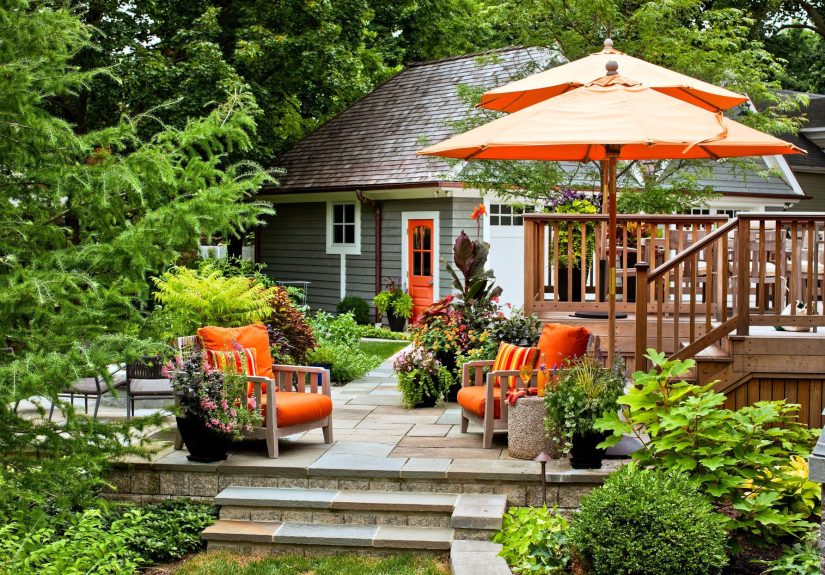
Tip #6: Make Hardscape Your Best Friend (Paths, Edges, and “Structure”)
Plants are the fun part, but hardscape is the part that makes your yard feel finished. “Hardscape” can sound like you’re
auditioning for a construction show, but it simply means the non-living structure: paths, patios, edging, steps, and
retaining walls.
Easy hardscape upgrades for beginners
- Define edges: Clean bed lines and edging instantly make landscaping look more intentional.
- Create a clear path: Stepping stones, gravel, or pavers guide movement and reduce muddy shortcuts.
- Add a small “landing pad”: A simple seating area (even a compact gravel circle) becomes a destination.
- Use mulch or gravel strategically: These reduce weeds, retain moisture, and visually unify your beds.
A single path can solve multiple problems: it controls foot traffic, prevents “desire lines” across the lawn, and makes the
yard feel organized. Plus, it gives you a reason to say “hardscape” casually at parties, which will definitely impress the right
kind of people.
Safety note: In the U.S., always contact 811 before you dig for anything beyond shallow planting. Utilities are not
a fun surprise.
Tip #7: Build in Phases and Budget Like a Grown-Up (Even If You Don’t Feel Like One)
Beginner landscape design goes off the rails when you try to do everything at once. That’s how you end up with half a patio,
three confused shrubs, and a wheelbarrow you now store emotionally.
A simple phased plan that actually works
- Phase 1: Fix functional problems (drainage, paths, access, safety).
- Phase 2: Install “bones” (hardscape, bed lines, major trees/shrubs).
- Phase 3: Add layers (perennials, groundcovers, containers, lighting).
- Phase 4: Fine-tune (seasonal color, decor, upgrades over time).
Your yard doesn’t need to be perfect this season. It needs to be moving in the right direction. Phasing your project lets you
learn what works in your microclimate, what you enjoy maintaining, and how you actually use the space.
Example: If your budget is tight, invest first in bed layout, mulch, and a few “forever” shrubs. You can add perennials
later, divide plants over time, and use containers for affordable seasonal color.
Common Beginner Mistakes (So You Can Skip the Pain)
- Too many plant varieties: It looks busy and is harder to maintain.
- No clear edges: Beds blur into lawn, and everything looks accidental.
- Ignoring water flow: You can’t out-plant a drainage problem forever.
- Planting too close: Crowding creates disease, pruning chores, and plant drama.
- Overbuilding lawn: Turf can be high-maintenance; consider smaller lawn areas plus beds or groundcovers.
Conclusion
If you remember nothing else, remember this: beginner landscaping is less about “finding the perfect plants” and more about
making a plan that matches your yard and your life. Start with a site snapshot, design for how you’ll use the space, lean on
simple principles like repetition and scale, and build in phases so you don’t burn out.
Great landscape design is rarely a single big momentit’s a series of smart, consistent choices that make your outdoor space
feel welcoming, functional, and just a little bit brag-worthy.
Beginner Experiences (What It Really Feels Like to Start)
Most beginners start landscape design with equal parts excitement and mild confusion. The excitement is real: you finally get to
make the yard look like something other than “patchy grass with mystery holes.” The confusion also shows up fast, usually around
the moment you realize your yard has 12 different microclimates and each one has its own personality.
A common first experience: you buy plants based on how they look that day, plant them enthusiastically, and then spend the next two
weeks staring at them like a nervous new pet owner. Are they happy? Are they thirsty? Are they silently judging you? (Yes.) Then
summer hits, and you learn your “full sun” spot is actually “full sun plus reflected heat from the garage,” which is basically a tiny
desert. The lesson lands: observing light and heat patterns is not optionalyour yard is a weather system with opinions.
Another beginner moment: you fall in love with a plant at the nursery because it’s cute and compact, then discover the mature size is
“large shrub that will gently consume your walkway.” This is when you become a believer in reading plant tags and spacing for maturity.
Many people eventually replant things after one season, not because they failed, but because the first year teaches you what your yard
tolerates and what you tolerate. That’s not wasted effortit’s field research.
Beginners also tend to underestimate how powerful clean edges and mulch can be. There’s a point when someone refreshes bed lines, adds a
consistent mulch layer, and suddenly the entire yard looks 60% more polishedwithout adding a single new plant. It’s the landscaping
equivalent of making your bed and instantly feeling like a functional adult. The yard didn’t become perfect; it became intentional.
Many first-timers go through the “variety phase,” where you buy one of everything because options are fun. Then you notice the garden looks
busy and a little chaotic, and maintenance is harder because every plant has different needs. That’s when repetition starts to feel like a
secret weapon. People who simplifyfewer plant types, repeated in clustersusually feel an immediate difference. The yard becomes calmer,
and the work becomes easier.
Finally, there’s the emotional experience of doing landscaping in phases. At first, it can feel like you’re “behind” because the yard isn’t
finished after one weekend. Then you hit a milestonea path installed, a seating area leveled, three sturdy shrubs plantedand you realize
progress is addictive. Each phase makes the next one clearer. You stop guessing, start planning, and your confidence grows alongside the plants.
That’s the real beginner win: not a magazine-perfect yard, but a yard that’s improvingand a process you actually enjoy.