Table of Contents >> Show >> Hide
- Why a Lint Roller Works So Well for Quick Cleaning
- How to Choose the Right Lint Roller Before You Start
- 1) Dust Lampshades and Fabric Decor in Seconds
- 2) Remove Pet Hair from Upholstery, Cushions, and Throws
- 3) Tackle Crumbs, Glitter, and Tiny Dry Messes Without Dragging Out the Vacuum
- 4) Refresh Curtains, Bedding, and Other Hard-to-Wash Fabrics
- 5) Do a Fast Car Interior Cleanup (Especially Before Guests)
- 6) Use It as a Safety-First Follow-Up for Tiny Glass Shards
- Bonus Tips: When a Lint Roller Is the Wrong Tool
- Practical Experiences and Real-World Cleaning Scenarios (500+ Words)
- Conclusion
A lint roller is one of those humble tools that usually lives in a drawer, comes out for a quick swipe on a black sweater, and then goes right back into hiding. But honestly? It deserves a promotion. That sticky little cylinder can do a lot more than de-fuzz your outfit before a meeting.
If you use it strategically, a lint roller can become your quick-cleaning MVP for dry messes, pet hair, dust, and “how is there glitter here again?” situations. It’s not a replacement for deep cleaning, and it definitely isn’t the right tool for every surfacebut for fast touch-ups, it can save time, effort, and a surprising amount of grumbling.
In this guide, you’ll learn six clever lint roller uses that make cleaning easier, plus smart precautions so you don’t accidentally damage delicate materials. (Because a clean lampshade is great. A dented lampshade? Less great.)
Why a Lint Roller Works So Well for Quick Cleaning
The magic is simple: the adhesive surface grabs lightweight debris that likes to cling to fabrics and textured surfacesthings like lint, hair, dust, crumbs, sand, and tiny particles. That makes lint rollers especially handy for upholstery cleaning, pet hair removal, lampshade dusting, and quick car interior cleanup.
They also come in different formats, including travel-size rollers, pet-hair versions, and larger surface rollers, so you can match the tool to the job instead of wrestling a tiny roller across an entire couch cushion like it’s a full-time career.
How to Choose the Right Lint Roller Before You Start
Pick based on surface size
- Mini/travel roller: Great for small spots, lamp pleats, bags, and car consoles.
- Standard roller: Best all-around option for clothing, pillows, chairs, and curtains.
- Large-surface or pet-hair roller: Better for sofas, bedding, and heavy pet-shedding zones.
Use a light touch
A lint roller works by adhesion, not pressure. Pressing too hard can flatten delicate fabrics, leave residue on some materials, or distort lightweight lampshades.
Know what not to roll
Avoid using lint rollers on delicate leather, sequins, satin, fragile trims, or paper surfaces unless the manufacturer/material guidance says it’s safe. When in doubt, test a small hidden spot first.
1) Dust Lampshades and Fabric Decor in Seconds
Lampshades are world-class dust collectors. They sit quietly, look decorative, and silently trap dust, pet hair, and cobwebs until someone turns on the lamp and the shade basically glows with evidence.
Why this works
A lint roller is excellent for fabric lampshades because it lifts dry debris without blasting dust into the air the way some dusters can. It also works on fabric-covered décor pieces and certain textured fabric surfaces that are awkward to wipe.
How to do it
- Turn off and unplug the lamp.
- Remove the shade if possible.
- Test the roller on a hidden area.
- Roll gently from top to bottom in straight strokes.
- Change sheets often so you’re lifting dust, not just moving it around.
- Finish seams or pleats with a soft brush if needed.
Pro caution (important)
This trick is best for sturdier fabric shades. If the shade is very delicate, paper-based, heavily embellished, or easily dented, use a microfiber duster, soft brush, or cool hair dryer setting instead. In other words: let the lint roller clean the shade, not reshape it.
2) Remove Pet Hair from Upholstery, Cushions, and Throws
If you have pets, you already know the deal: you sit down in clean clothes, stand up looking like a fuzzy tribute to your dog. A lint roller is one of the fastest ways to do pet hair removal between deeper cleanings.
Best places to use it
- Sofa cushions and upholstered chairs
- Throw blankets and decorative pillows
- Curtains and drapes
- Pet beds (for quick touch-ups)
- Clothing before heading out the door
How to do it faster
Pull the fabric taut with one hand and roll in long strokes with the other. This gives the adhesive better contact and helps you cover more area without going back and forth over the same spot 12 times.
What a lint roller can and can’t do
It’s great for visible surface hair, but it’s not a substitute for vacuuming, laundering, or deeper allergen controlespecially if someone in the home has pet allergies. Think of it as a fast “keep it under control” tool, not the whole cleaning plan.
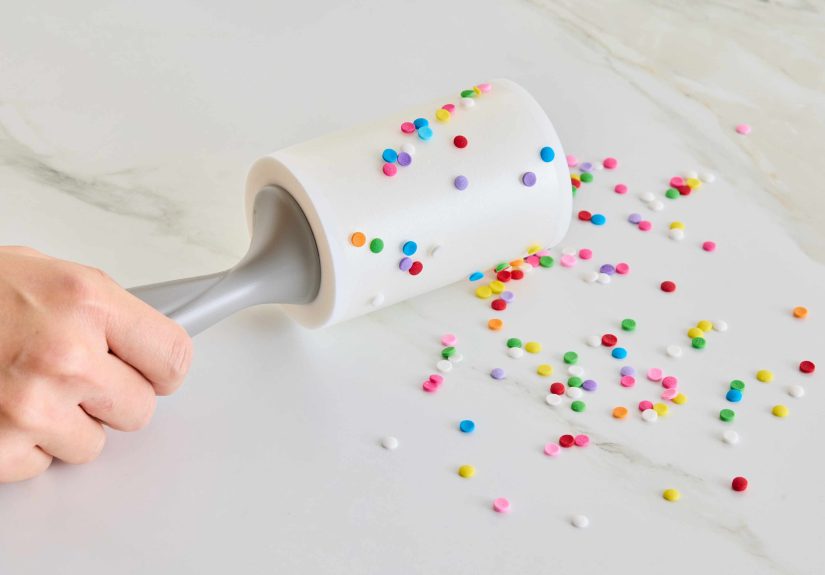
3) Tackle Crumbs, Glitter, and Tiny Dry Messes Without Dragging Out the Vacuum
Some messes are too small for a full vacuum session but too annoying to ignore. Enter the lint roller: the hero of “I just cleaned and I refuse to pull out the vacuum again.”
Perfect for quick dry debris
- Cookie crumbs on counters or tabletops
- Rice, cereal bits, or snack debris on floors
- Craft glitter (the craft supply that never truly leaves)
- Dust and fuzz in drawers or bags
- Loose dirt or sand in backpacks and totes
How to use it efficiently
Roll slowly over the mess instead of fast-swiping. A slower pass gives the adhesive time to grab small particles. For corners, angle the roller and press lightly into the edge.
When not to use it
Skip the lint roller for wet, greasy, sticky, or sugary spills. Adhesive and syrup are not a dream team. For those messes, grab a cloth and cleaner first, then use a lint roller only if there’s dry residue left afterward.
4) Refresh Curtains, Bedding, and Other Hard-to-Wash Fabrics
Some fabrics are technically washable but realistically inconvenient. Taking down curtains, washing them, drying them, and hanging them back up is a project. A lint roller won’t replace laundering, but it can buy you time between wash days.
Smart uses for a “between washes” refresh
- Curtains and drapes with light dust buildup
- Throw pillows and comforters
- Plush toys (dust touch-up)
- Pet beds before a full wash
- Fabric bins and storage baskets
How to get the best result
For curtains, lightly pull the panel taut and roll top to bottom. For bedding and pillows, smooth the fabric first so the roller makes even contact. Replace sheets often so you don’t lose tack halfway through.
Surface and material warning
Avoid delicate fabrics, sequins, and some specialty finishes. If the material snags easily or leaves residue when tested, switch to a soft brush or vacuum upholstery attachment.
5) Do a Fast Car Interior Cleanup (Especially Before Guests)
Your car interior is basically a tiny fabric-covered room that moves at highway speeds and somehow collects snacks, lint, hair, and mystery dust. A lint roller is a fantastic car cleaning hack for quick resets.
Where it works best
- Fabric seats
- Floor mats (for light debris and hair)
- Center console edges
- Door pockets
- Dashboard dust (light touch only)
Quick 3-minute routine
- Start with seats and headrests (biggest visual impact).
- Roll floor mats for hair and crumbs.
- Hit door armrests and console edges.
- Use a fresh sheet for the dashboard and cupholder area.
This is especially useful if you don’t have a handheld vacuum nearbyor if your gas-station vacuum timing somehow always happens when everyone else in the city had the same idea.
6) Use It as a Safety-First Follow-Up for Tiny Glass Shards
This is one of the most useful (and underrated) lint roller hacks: picking up tiny leftover glass pieces after you’ve cleaned up the larger shards. The adhesive can catch slivers that are easy to miss, especially in corners and along baseboards.
Important: This is a follow-up step, not the whole cleanup
First remove large pieces safely using appropriate tools (like stiff cardboard, a dustpan/brush, and gloves). Then use the lint roller for the final pass on small fragments.
How to do it safely
- Keep people and pets away from the area.
- Pick up large pieces first with safer tools and proper hand protection.
- Roll slowly over the area, especially edges and corners.
- Peel off the used sheet directly over a trash can.
- Check the floor with a flashlight at a low angle to spot missed shards.
- Repeat with a fresh sheet if needed.
Very important bulb warning
If the broken item is a CFL or another mercury-containing bulb, do not treat it like ordinary glass. Follow EPA cleanup guidance, which includes steps like airing out the room and using stiff paper/cardboard plus sticky tape for remaining fragments and powder. Safety first, hacks second.
Bonus Tips: When a Lint Roller Is the Wrong Tool
A lint roller is handy, but it isn’t magical. (If it were, we’d all be rolling it over the entire garage and calling it “spring cleaning.”)
- Not for wet spills: Adhesive loses effectiveness fast.
- Not for grease: You’ll just gum up the roller.
- Not for delicate leather or embellished fabrics: Risk of residue or damage.
- Not for fragile paper lampshades: Too sticky for some materials.
- Not a deep-clean substitute: It handles surface debris, not embedded dirt or allergens.
Practical Experiences and Real-World Cleaning Scenarios (500+ Words)
One reason lint roller hacks feel so satisfying is that they solve the exact kind of small mess that interrupts your day. These aren’t dramatic “entire kitchen disaster” situations. They’re the tiny, repeated annoyances that make a home feel messier than it really is: a dusty lampshade, fur on the couch right before company arrives, crumbs in the car seat, or a curtain panel that suddenly looks dull when the afternoon sun hits it.
A common experience in pet-friendly homes is the “I cleaned this yesterday” moment. People vacuum the sofa, feel accomplished, and by evening the cushions already have a fresh layer of fur. In that situation, a lint roller works well because it lowers the effort barrier. Instead of waiting until there is enough mess to justify hauling out a vacuum, a person can do a 60-second pass while watching TV or before opening the front door for guests. That habit matters. Small, frequent touch-ups often keep a space looking cleaner than occasional marathon cleaning sessions.
Another real-world scenario is the pre-event panic clean. Maybe friends are coming over, a landlord is doing a walkthrough, or family is visiting in twenty minutes and somehow everyone can suddenly see dust. A lint roller becomes a high-impact tool because it quickly improves the surfaces people notice first: pillows, chairs, lampshades, throw blankets, and dark clothing. It’s not glamorous, but it works. Many households find that a roller kept in a hallway drawer or entry closet gets used more often than one buried in a laundry room.
Families with kids often report that lint rollers are especially useful for “micro-messes.” Think crushed crackers near the couch, glitter after a school project, eraser bits on a desk, or snack dust in a backpack. These messes are annoying because they’re too small for a full cleanup routine but too visible to ignore. In practice, a lint roller helps because it speeds up the cleanup decision. You don’t need a whole setupjust roll, peel, toss, done.
Car interiors are another place where people tend to notice a big difference from a small effort. A quick pass on cloth seats and floor mats before errands can make a car feel much more put-together, even if a full vacuum hasn’t happened yet. This is especially true for pet owners and parents, since hair and crumbs tend to collect in the exact places people see first when they open the door. The “visible improvement in under three minutes” factor is why lint rollers stick (pun fully intended) as a repeat habit.
There are also practical lessons people learn after a few uses. One is that sheet replacement matters more than people expect. Once the roller is covered with dust or hair, performance drops fast, and continuing to roll just wastes time. Another is that pressure is not your friend. A gentle pass usually works better than pressing hard, especially on fabric décor and lampshades. Light contact protects the surface and preserves the adhesive for longer.
Perhaps the most important experience-based takeaway is understanding the lint roller’s role: it is a maintenance tool, not a miracle tool. It helps homes stay tidy between deeper cleaning tasks. It doesn’t replace washing curtains, vacuuming upholstery, or handling hazardous breakage according to official guidance. But used the right way, it makes cleaning feel easier because it removes frictionliterally and figurativelyfrom everyday messes.
And that’s really the secret. The best cleaning tools are not always the fanciest ones. They’re the ones you’ll actually use on a Tuesday afternoon when life is busy and the couch is furry.
Conclusion
A lint roller may be marketed for clothing, but it’s a quietly brilliant tool for quick household cleaning. Use it for lampshades, pet hair, crumbs, curtains, bedding touch-ups, car interiors, and tiny leftover glass shards (after proper cleanup steps). Choose the right roller size, use light pressure, and avoid delicate or unsuitable materials.
In short: if you want a faster, easier way to handle small messes before they turn into bigger cleaning jobs, keep a lint roller where you can actually reach it. The drawer gremlin just became a cleaning assistant.