Table of Contents >> Show >> Hide
- Why the internet was especially roast-ready that week
- The 49 funniest burns from the week of August 25, 2025
- Celebrity photos, public images, and the art of getting absolutely cooked
- TV, movies, comedy, and entertainment news that practically roasted itself
- Music, media, and pop-culture commentary with knives out
- Brands, platforms, and corporate nonsense getting the treatment they earned
- Absurdly specific internet moments that hit because they were too real
- Random posts, accidental poetry, and internet anthropology at its finest
- The final stretch: pure internet nonsense, compacted into one-liners
- What made these burns actually funny instead of just mean
- Experience: what it feels like to scroll a week’s worth of internet burns
- Conclusion
Some weeks on the internet feel like a polite dinner party. The week of August 25, 2025 was not one of those weeks. It was a full buffet of viral clapbacks, celebrity styling critiques, workplace-grade sarcasm, aging-platform jokes, and the kind of comment-section brutality that somehow manages to be both ruthless and weirdly poetic. One minute the internet was staring at Lana Del Rey’s W cover like it had wandered out of a haunted doll factory, and the next it was roasting terrible financial advice, forgotten Netflix hits, awkward dating math, and the fact that somebody, somewhere, still thought Google’s old motto had aged well.
That is what makes a great weekly burns roundup work: it is never just about people being mean online. The funniest internet burns are tiny cultural snapshots. They tell you what people are sick of, what they are obsessed with, what they no longer respect, and which public image got left unattended near an open flame. Good burns do not merely insult. They diagnose. They summarize an entire situation in one sentence, then walk away while the building is still smoking.
Below is a fully original, SEO-friendly recap of the funniest burns orbiting the week of August 25, 2025. Rather than copy-and-paste anyone else’s jokes, this article rewrites the spirit of the week in fresh language, with context, analysis, and enough sharp commentary to keep the whole thing moving. Think of it as a guided tour through the internet’s most efficient form of criticism: the one-liner with a body count.
Why the internet was especially roast-ready that week
Late August is prime time for online snark. Summer is running out of gas, people are tired, celebrity news gets extra surreal, and every app starts feeling like a waiting room with Wi-Fi. In that environment, viral burns spread because they do two jobs at once: they entertain and they relieve pressure. A clever drag of a bad outfit, a ridiculous headline, or a public-relations misfire gives everyone the same emotional release. It is basically communal eye-rolling, but with better sentence structure.
That week had everything the internet loves to chew on: a divisive magazine cover, awkward entertainment headlines, dated opinions re-emerging like expired yogurt, and a fresh batch of reminders that online culture rewards speed, specificity, and just enough cruelty to feel dangerous without tipping into joyless nastiness. The strongest burns landed because they were short, visual, and painfully precise. Nobody had time for a monologue. One sentence, one kill shot, next topic.
The 49 funniest burns from the week of August 25, 2025
Celebrity photos, public images, and the art of getting absolutely cooked
- A photo of a politician’s makeup mismatch got treated less like a political image and more like a failed cosmetics test at a department-store counter.
- Lana Del Rey’s fashion cover inspired one of the week’s cleanest visual drags: she looked less like a glamorous icon and more like the food critic from Ratatouille after three bad nights of sleep.
- Other commenters went even broader, saying the styling somehow translated “fashion issue” into “mildly sinister wax figure.”
- The dominant verdict on that cover was simple: it had slipped straight into uncanny valley territory.
- And yes, one of the loudest reactions was basically, “Why does she look like Mr. Burns discovered contour?”
- A singer’s album-promo concept got dismissed as the sort of idea that should have been left in a group chat draft and never shown to sunlight.
- A teacher realizing an 11-year-old knew an old YouTube duo turned into an instant age-roast: one conversation and suddenly adulthood needed to be taken out behind the shed.
TV, movies, comedy, and entertainment news that practically roasted itself
- One comedian’s Wikipedia photo was so unfortunate that the internet treated the actual career news as secondary to the portrait-based crime.
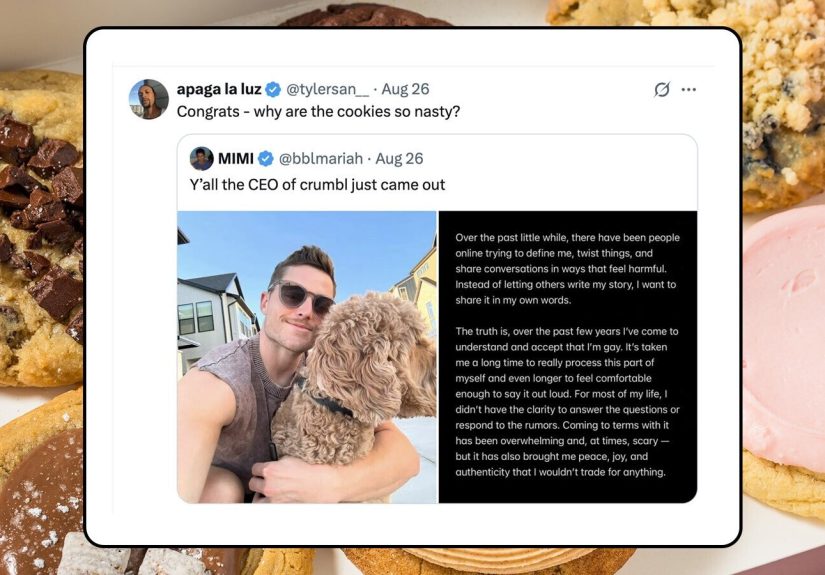
- A cookie-company founder’s personal news got swallowed by replies that immediately dragged the brand’s baggage back onto the stage. The internet never forgets, especially when labor discourse and dessert meet.
- People reacting to panic about Washington, D.C. pointed out that middle-school field trips have survived the city for decades, which is a brutal way of saying, “Please get a grip.”
- A joke about Trump taking health advice from Robert F. Kennedy Jr. worked because it felt both absurd and uncomfortably plausible, which is catnip for online humor.
- Keemstar commenting on teen relationship drama got reduced to its true essence: a grown man acting like the hall monitor of sophomore chaos.
- Branded freebie water bottles were roasted as the hydration equivalent of office pizza: everywhere, mandatory, and somehow never what anyone wanted.
- A Chopped contestant saying “this is not the end of my story” got translated into the internet’s version of, “Sure, buddy, see you never.”
Music, media, and pop-culture commentary with knives out
- Aaron Lewis acting like he had just cracked the code on “Born in the U.S.A.” earned the kind of reaction usually reserved for people discovering fire in their thirties.
- A White House distraction tactic got called exactly what it looked like: a shiny object waved in front of a very online audience that had seen this trick before.
- One comment about media double standards around Biden’s appearance was cutting because it did not have to exaggerate; it just pointed at the script and read it aloud.
- The Michael Longfellow exit chatter produced a family-text-message classic: a totally disproportionate response delivered with the confidence of someone suggesting you move a couch.
- Tate McRae performing while staring at a phone got hit with a generational star test: if the device is doing half the charisma, the audience notices.
- A viral aging comparison became funnier when someone observed that the man looked like his hair and face had simply traded places out of boredom.
- Amy Adams catching strays for her film choices landed because it sounded like the internet had mistaken a rough run of projects for a personal artistic protest.
Brands, platforms, and corporate nonsense getting the treatment they earned
- Opera’s logo evolution inspired the perfect design critique: apparently one of the old versions looked less “classic tech” and more “evil portal in a children’s movie.”
- The one-year “anniversary” of a widely mocked movie got compared to a historical tragedy, which was wildly overdramatic and therefore completely on-brand for film Twitter.
- A courtroom image of Cardi B prompted the kind of reaction meme that says, “I have no context, but emotionally I am already committed.”
- The steady drip of SNL exit reports got described as an unemployment advent calendar, which is such a neat phrase it barely counts as a joke and fully counts as a murder.
- Google’s old “Don’t be evil” motto resurfaced and got roasted by history itself. Sometimes the funniest burn is just time.
- A David Mitchell quote about “mansplaining” felt so dated people reacted as if someone had accidentally reposted a relic from the Obama administration.
- A guy complaining about spending $450 on a date and getting only a hug got the internet’s version of financial counseling: maybe stop treating romance like a vending machine.
Absurdly specific internet moments that hit because they were too real
- An Alaska State Fair pumpkin result was roasted with the tone of a disappointed coach asking whether second place had even stretched first.
- Netflix’s record-chart reshuffle made people realize Red Notice had become a cultural ghost: massively watched, barely remembered, spiritually made of drywall.
- A cookie-company announcement got hijacked by a totally unrelated but devastating question: why are the cookies bad, though?
- Ebon Moss-Bachrach’s name got lovingly reduced to the truth: it absolutely sounds like somebody from Star Wars would say it while handing over coordinates.
- A satire account using a Ben Shapiro profile picture was roasted for being so committed to the bit that the bit appeared to be colonizing the host body.
- A man posting about eating steak with honey and berries received exactly the energy such a culinary confession deserves: intense concern disguised as curiosity.
- Bill Burr showing up in an NFL-adjacent context got summed up like a surprise side quest in a video game nobody asked to unlock.
Random posts, accidental poetry, and internet anthropology at its finest
- A suggestion that humanity needed a fourth utensil received the perfect reply: the kind of exhausted sarcasm that says innovation has gone too far.
- An old sketch about a fetus got compared to JD Vance, proving once again that internet users can identify a politician in almost any shape if given enough lighting.
- Norway’s plain nicotine packaging was supposed to be discouraging, but commenters argued it looked so sleek it risked becoming accidental Scandinavian advertising.
- Someone shocked that a user had been on Twitter since 2011 asked whether they were a founder, which is exactly how time works on social media: ten years equals ancient civilization.
- A publicity photo of a male actor was so baffling that the reaction boiled down to one eternal Hollywood question: “Who approved this, and do they hate him?”
- A Fantastic Four baby scene got torched because the giant rock man somehow looked more convincing than the infant, which is not the realism score Marvel aims for.
- A “free salt hack” was mocked for presenting salt like it was a luxury commodity smuggled in by moonlight.
The final stretch: pure internet nonsense, compacted into one-liners
- The New York Post breathlessly covering a bench-press fail got read for what it was: evidence that the outrage machine was running low on fresh lumber.
- A Reddit story involving an AI girlfriend and bacon clothing was described as the most Reddit thing imaginable, which honestly may qualify as peer-reviewed taxonomy.
- A person claiming to be lactose intolerant to chicken got corrected by the internet in the bluntest possible terms: that is not how any of this works.
- Drake not performing his diss tracks on tour was met with the obvious explanation: it is difficult to victory-lap after losing the race in public.
- FL Studio being told “this beat is ass” by a meme screenshot captured every creator’s secret fear: even the software has started judging.
- A post claiming that earned $2,000 is better than free $100,000 got dismissed as financial advice from someone auditioning to be blocked by everyone they know.
- And that final burn mattered because it summed up the whole week: online audiences no longer have patience for fake wisdom, inflated posturing, or anything that sounds inspirational but collapses under one follow-up question.
What made these burns actually funny instead of just mean
The best social media burns do three things. First, they are specific. “That outfit is bad” is forgettable. “That outfit makes a fashion cover look haunted” sticks. Second, they compress a whole argument into one image or sentence. A good burn is basically criticism with the fat trimmed off. Third, they reveal a shared cultural understanding. You laugh because you already know the background: the celebrity, the headline, the overhyped movie, the tired brand concept, the public figure trying too hard to look in on the joke.
That is why this particular week worked so well. The jokes were not random. They were aimed at recognizable patterns: celebrity image management gone sideways, corporate messaging that underestimated the audience, and public posts that accidentally begged to be roasted. Internet burns are funniest when they expose a gap between how something wanted to be seen and how it was actually received. In other words, comedy lives in the difference between “iconic” and “why does this look cursed?”
Experience: what it feels like to scroll a week’s worth of internet burns
Reading through a roundup like this is a strangely specific modern experience. It is not the same as watching stand-up, and it is not the same as reading criticism. It feels more like eavesdropping on the fastest room in America. Every post is trying to beat every other post to the cleanest observation, the sharpest comparison, the weirdest but somehow most accurate image. By the time you get ten burns in, you stop feeling like you are consuming “content” and start feeling like you are witnessing a collective reflex.
What always stands out is how little setup the internet needs. A hand with the wrong foundation shade. A magazine cover that seems off by five degrees. A familiar celebrity whose face now looks like it was rendered by a nervous intern. A headline that sounds like it escaped from a 2014 think piece. That is enough. The audience supplies the rest. They bring the references, the fatigue, the resentment toward bad branding, the memory of older scandals, the awareness of who is trying too hard, and the instinctive knowledge of when a public image has drifted from polished into unintentionally hilarious.
There is also something oddly democratic about it. The week’s funniest burns were not all aimed upward at the same kind of target. Some punched at celebrities, some at media outlets, some at app design, some at clueless posters, some at pop culture, and some at the eternal human tendency to announce nonsense with full confidence. That variety is part of the thrill. A great burns roundup does not just tell you what was funny. It tells you what people were collectively done with.
And yes, there is a craft to it. The strongest jokes are short because short jokes travel. They are vivid because vivid jokes survive screenshots. They are conversational because nobody wants to retweet a dissertation. But when they really work, they do what all good comedy does: they turn recognition into relief. You were already thinking, “This feels weird,” and then someone online phrases it better than you ever could. Suddenly you are not just noticing the absurdity. You are participating in its official documentation.
That is why these weekly burn compilations keep working, even in an era when people claim the internet is exhausted, stale, or trapped in a great meme depression. The joke engine is not dead. It is just picky. It needs a target that deserves it, a format that flatters speed, and an audience that understands both sincerity and irony well enough to know when one is cosplaying as the other. The week of August 25, 2025 had all of that. It gave the internet messy visuals, overconfident takes, stale ideas, and enough public-facing awkwardness to power a small city.
By the end of a roundup like this, the biggest takeaway is not that people online are mean. It is that they are observational to an almost supernatural degree. They can look at a fairground pumpkin, a bad headshot, an overworked brand slogan, or a celebrity cover and convert it into a sentence that permanently changes how everyone else sees it. After that, there is no going back. The image is cooked. The phrase sticks. The internet moves on. And somewhere, one very specific person is still recovering from being compared to a cartoon villain, a side character from Ratatouille, or a rejected member of the Jedi Council.
Conclusion
The funniest burns from the week of August 25, 2025 did what great internet humor always does: they took bloated stories, awkward visuals, and self-serious public moments and punctured them with one efficient line. Some were savage. Some were stupid. A few were so accurate they deserved museum glass. But taken together, they formed a perfect snapshot of online comedy in 2025: faster, more visual, more referential, and mercilessly allergic to anything fake, overproduced, or accidentally ridiculous.
If there is a lesson here, it is not “be meaner online.” It is “do not hand the internet an easy setup unless you are fully prepared to become the punchline.” Because once the timelines synchronize, the comments lock in, and the right joke lands, no PR team on earth is strong enough to put that genie back in the bottle.