Table of Contents >> Show >> Hide
A good home office should do two things at once: help you focus and make you happy you’re there. That sounds obvious, but plenty of workspaces still look like someone lost a fight with a folding table, a sad lamp, and a nest of charging cables. If you work from home full-time, part-time, or just need a place to handle bills, meetings, side hustles, and “quick emails” that somehow eat your afternoon, your setup deserves better.
The best home office ideas combine function, comfort, and personality. That means a workspace that fits your routine, supports your body, uses space wisely, and still looks like it belongs in your home instead of a beige corporate time capsule. Stylish does not have to mean precious, and productive does not have to mean boring.
Below, you’ll find 41 home office ideas for creating a stylish workspace, from layout tricks and lighting upgrades to color choices, storage solutions, and design details that make your desk area feel finished. Whether you have a dedicated room, a bedroom corner, a closet office, or a tiny wall niche, these ideas can help you build a workspace that looks sharp and works even harder.
Why a Stylish Home Office Matters
A stylish home office is not just about aesthetics. It shapes how you feel in the space, how easily you can concentrate, and how well your work life fits into your actual life. A thoughtfully designed workspace can reduce visual clutter, create better separation from the rest of the house, and make everyday tasks feel less draining. In plain English: when your office looks intentional, you’re more likely to use it intentionally.
41 Home Office Ideas for Creating a Stylish Workspace
Layout and Furniture Ideas
- Choose a desk you genuinely like looking at. If your desk is the star of the room, pick one with personality. A warm wood desk, vintage table, waterfall-edge console, or slim modern piece instantly sets the tone and keeps the room from feeling too corporate.
- Invest in an ergonomic chair that does not scream “conference room.” Comfort matters, especially if you spend hours at your screen. The good news is that today’s ergonomic chairs come in cleaner, softer, more design-forward silhouettes, so your back and your decor no longer have to file separate complaints.
- Face natural light whenever possible. A desk near a window can make a workspace feel bigger, brighter, and less cave-like. Bonus: natural light usually improves your video calls, which is great because nobody needs to look like they’re broadcasting from a submarine.
- Try a floating desk in a tight space. Floating desks are ideal for hallways, bedrooms, guest rooms, and odd little nooks. They create a lighter visual footprint and make a small office feel less crowded.
- Use a built-in look for a custom feel. Even a simple desktop set between cabinets or bookcases can create the effect of a tailored home office. It looks expensive, works hard, and gives storage a cleaner, more architectural presence.
- Turn a closet into a “cloffice.” A closet office is one of the smartest small-space ideas because it creates a dedicated work zone that can literally disappear after hours. Add wallpaper, shelves, and a proper task light so it feels intentional rather than improvised.
- Zone your office by activity. If you have the room, think beyond one desk. Create separate zones for computer work, reading, brainstorming, and storage. This makes the office more functional and helps the space feel more like a studio than a workstation.
- Anchor the desk with a rug. A rug defines the office area, especially in open-plan homes or multi-use rooms. It also softens the room visually and acoustically, which is handy when your “quiet workspace” shares territory with family life.
- Use a secretary desk for a polished hybrid look. A secretary desk is ideal if your office lives in a bedroom, dining room, or living room. When closed, it reads like furniture. When open, it says, “Yes, I am absolutely working and not just rearranging paper clips.”
- Add a second seat if space allows. A small lounge chair, stool, or slipper chair gives the room flexibility and makes the office feel more layered. It is useful for reading, taking calls, or pretending you are in a stylish editorial spread.
Lighting, Color, and Comfort
- Layer your lighting. Relying on one harsh overhead light is a fast way to make your office feel sterile. Combine natural light, a desk lamp, and a softer accent light such as a floor lamp, sconce, or pendant.
- Pick a statement light fixture. A sculptural pendant or elegant chandelier can instantly elevate a home office. It gives the room a focal point and proves that utility and beauty can share a zip code.
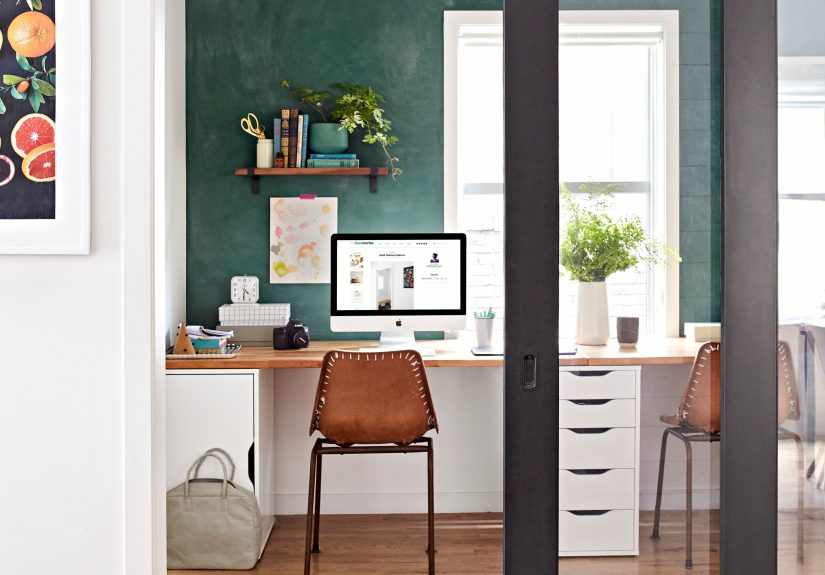
- Choose calming paint colors for focus. Soft blues, greens, warm whites, taupes, and muted grays are popular for a reason. They create a calmer backdrop for concentrated work and pair easily with most furniture styles.
- Use a jewel tone if your work is creative. Deep plum, moody blue, olive, or aubergine can add richness and drama. In a creative workspace, bold color can energize the room without turning it into visual chaos.
- Create a Zoom-friendly background. A beautiful backdrop matters more than many people admit. A painted accent wall, framed art, built-in shelving, or subtle wallpaper can make your video setup look thoughtful instead of accidental.
- Add drapery for softness. Curtains bring texture and warmth, and they help a workspace feel integrated into the home. They also soften sound, which is useful if your office acoustics currently resemble a bathroom.
- Bring in a footrest or cushion. Small comfort upgrades can make a surprisingly big difference. A supportive seat cushion, footrest, or desk mat is the kind of practical luxury that earns its keep every day.
- Use scent carefully. A subtle diffuser or candle can make the office feel more inviting, but go easy. Your workspace should smell fresh and calm, not like a candle store exploded five minutes before a deadline.
- Let texture do some of the decorating. Cane, linen, boucle, leather, wood, brass, and woven baskets add visual warmth. A room with texture feels styled even when the color palette is restrained.
- Warm up white walls. If you love a bright office, keep it from feeling clinical with wood tones, warm metals, soft textiles, and layered decor. White works best when it looks crisp, not cold.
Decor Ideas That Add Personality
- Hang art that actually means something to you. The office is one of the best rooms for personal art because it can energize and motivate you throughout the day. Think photography, prints, abstract pieces, or even a framed vintage map.
- Try a gallery wall above or beside the desk. A gallery wall can turn a plain office into a space with character. Keep the frames cohesive if you want a polished look, or mix styles for a more collected feel.
- Mix old and new furniture. Pairing a sleek chair with an antique desk, or modern shelving with vintage accessories, creates depth and avoids the showroom effect. The result feels curated rather than copy-pasted.
- Lean into vintage charm. Antique desks, mail sorters, banker’s lamps, and timeworn frames can make a workspace feel soulful. They add character that brand-new furniture sometimes struggles to fake.
- Use wallpaper strategically. Wallpaper behind the desk, inside a closet office, or on the ceiling can transform a bland office into something memorable. Removable wallpaper is especially helpful if you rent or fear commitment.
- Add one playful detail. A lacquered cabinet, colorful task chair, sculptural lamp, or bold memo board can keep a workspace from taking itself too seriously. Every office needs one element that says, “I know spreadsheets, but I also know joy.”
- Style open shelving with restraint. Shelves should hold useful items, but they should also look balanced. Mix books, storage boxes, a plant, framed art, and a few decorative objects so the display feels edited.
- Display books like decor. Books instantly make an office feel smarter, warmer, and more lived-in. Stack them horizontally, line them vertically, or use them to break up office supplies on shelves.
- Bring in plants for life and separation. Plants soften hard lines, add color, and can help define a workspace in an open room. A tall plant beside the desk or a row of greenery on a shelf can act as a subtle divider.
- Try dopamine decor in moderation. If bright colors and patterns energize you, bring in cheerful accents through art, accessories, or textiles. A home office should reflect your personality, not just a generic “productive person” mood board.
Storage and Small-Space Solutions
- Use vertical storage first. When floor space is limited, go upward. Floating shelves, tall bookcases, and wall-mounted organizers keep supplies accessible without swallowing the room.
- Choose storage that looks like furniture. Closed cabinets, credenzas, and attractive drawer units can hide the practical stuff while keeping the room stylish. Office clutter disappears; your dignity returns.
- Keep supplies sorted in visible zones. Drawer dividers, trays, magazine files, and labeled bins make it easier to find what you need. A good system saves time and prevents your desktop from becoming an archaeological site.
- Try a mail sorter or desktop organizer with character. Not every organizing tool has to be plastic and depressing. Vintage sorters, wood trays, and metal bins can hold paperwork while adding style.
- Add a memo board or magnetic wall organizer. Pinboards, rail systems, and magnetic boards keep notes off the desktop and within reach. They are especially useful if your work involves ongoing projects, deadlines, or creative planning.
- Use a pocket door or screen for privacy. In a bedroom office or open-plan setup, a door, screen, or room divider can help separate work from relaxation. Even visual separation makes a space feel calmer and more intentional.
- Borrow underused spaces. Entry nooks, wide landings, attic corners, sunrooms, and even large hallways can become surprisingly stylish offices. The trick is to treat the area like a real room, not a leftover patch of wall.
- Make the office blend with the surrounding room. In shared spaces, choose finishes and colors that echo nearby furniture. Matching shelves to wall color or using similar woods can make a desk area feel naturally integrated.
- Use multipurpose furniture. A console table can function as a desk. A dresser can hold office supplies. A dining banquette can become a reading zone. Smart home office design often comes down to flexible pieces that do more than one job.
- Keep the printer and tech out of sight when possible. Printers, routers, and cables are necessary, but they are not decorative geniuses. Hide them in cabinets, on slide-out trays, or in baskets with cord management to keep visual clutter down.
Finishing Touches That Make the Room Work Harder
- Edit the room regularly. The most stylish home office is rarely the one with the most stuff. It is the one where every item earns its place. Keep what supports your work, remove what distracts you, and let the room breathe.
How to Pull the Look Together Without Overdoing It
If you want your home office to feel stylish, focus on three priorities: a strong anchor piece, a consistent palette, and hidden clutter control. The anchor piece might be your desk, rug, wallpaper, or light fixture. Your palette keeps the room cohesive, whether that means warm neutrals, classic black and white, earthy greens, or something more colorful. Hidden clutter control is the secret ingredient. You can have beautiful art and a gorgeous chair, but if loose papers and tangled cables are staging a rebellion on every surface, the room will still feel chaotic.
It also helps to decide what mood you want from the space. Calm and minimal? Go with soft paint, simple shelving, and a clean-lined desk. Collected and cozy? Mix antique pieces, layered textiles, and a warmer palette. Creative and upbeat? Bring in stronger color, playful art, and a more expressive mix of materials. The most successful home office decor ideas are the ones that match your actual work style rather than chasing a trend you will be tired of in three weeks.
Conclusion
The best home office ideas are not about copying one perfect room. They are about building a workspace that fits your routine, reflects your taste, and helps you focus without sacrificing comfort. A stylish home office can be bold or minimal, compact or spacious, vintage or modern. What matters most is that it feels intentional.
Start with the essentials: a good desk, supportive seating, proper lighting, and smart storage. Then layer in the details that make the room feel like yours, whether that means wallpaper, plants, art, books, or one gloriously unnecessary lamp that sparks joy every time you switch it on. When function and personality work together, your office stops feeling like a place where work merely happens. It becomes a room that supports better workdays.
Extended Experience: What I’ve Learned From Real Home Office Setups
One of the biggest lessons from real-world home office makeovers is that people often start by thinking too small. They assume they need a desk and chair, and that is the whole story. But the home offices that truly work well usually come together when people think in layers. First comes the basic function: where the desk goes, where the light comes from, where the cords hide, where the printer lives. Then comes the comfort layer: a better chair, a rug underfoot, a lamp that does not make everything look like an interrogation room, and maybe a cushion or footrest that keeps long work sessions from becoming a physical endurance event. Finally comes the personality layer, which is the difference between “temporary setup” and “room I actually enjoy using.”
I’ve seen people transform a dull spare room simply by moving the desk to face a window, painting the walls a softer color, and adding shelves with books and framed art. Suddenly the room feels less like a forgotten corner of the house and more like a destination. I’ve also seen tiny spaces outperform big rooms. A bedroom nook with a floating desk, a simple sconce, and a painted backdrop can feel more focused and beautiful than a giant office filled with random furniture that never quite belonged together.
Another common pattern is that storage changes everything. Many stylish home offices are not actually larger or more expensive than messy ones. They are just better edited. Papers have a place. Chargers have a place. Pens are not roaming free like wild animals. Once clutter is controlled, even modest design details start to shine more. A small lamp feels intentional. A plant looks sculptural. A tray becomes decor instead of just “the place where receipts go to die.”
Color is also more personal than many guides make it sound. Some people work best in soft greens and warm whites because the room feels calm. Others come alive with navy walls, patterned wallpaper, or a punchy accent chair. The smartest approach is to choose a palette that supports your mood and workload. If your job is mentally noisy, your room probably should not be. If your work is creative and visual, a little more energy in the decor can help.
And perhaps the most important lesson: a stylish workspace is easier to maintain when it looks like the rest of your home. When the office echoes your overall style, it feels integrated rather than exiled. That means you are more likely to keep it tidy, update it thoughtfully, and enjoy spending time there. In the end, the most successful home office is not the one with the fanciest furniture. It is the one that supports real life beautifully, every single day.