Table of Contents >> Show >> Hide
- Meet the Artist Behind the “Wait… Is That a Bird?” Moment
- Why These Brooches Look Like Real Birds (Blame Feather Science)
- The Stitch Work That Creates the Illusion
- A “Field Guide” to Appreciating a Set of 40 Bird Brooches
- How to Wear a Realistic Embroidered Bird Brooch (Without Looking Like a Disney Side Character)
- Conclusion: A Tiny Bird Portrait You Can Pin to Your Life
- Experiences: What It Feels Like to Live With a Tiny Thread Bird (About )
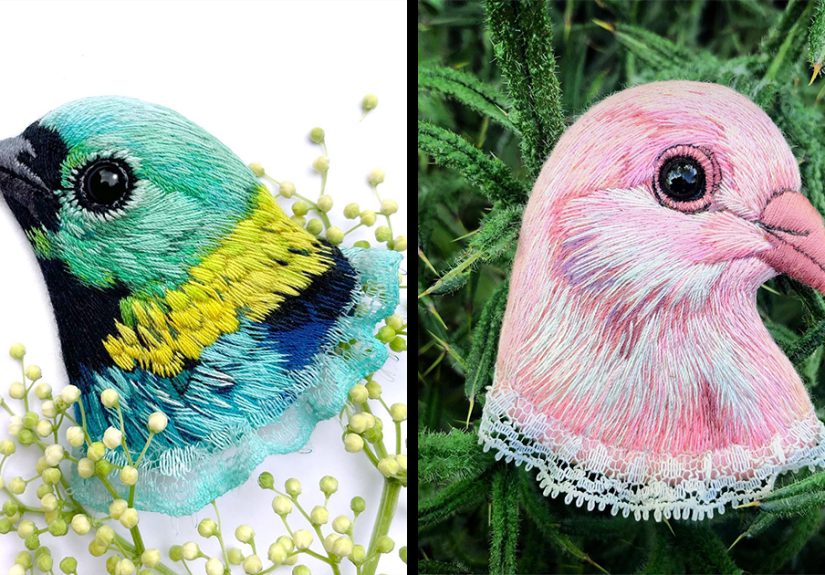
You know that split-second of panic when something “alive” is on your coat… and then your brain catches up? That’s the exact magic trick happening with Paulina Bartnik’s embroidered bird brooches. They’re tiny, wearable portraitsstitched so precisely that your eyes start looking for a heartbeat. (Spoiler: no heartbeat, no crumbs, and absolutely no risk of it flying off your lapel to judge you from a nearby shrub.)
Online, sets of her bird pins often appear as “photo-dump” galleriesdozens at a timebecause one is never enough. Once you’ve seen a thread-painted beak and that glossy, curious eye, you’ll want the whole flock. This article is a behind-the-scenes guide to why these embroidered brooches look so real, what techniques create that illusion, and how to wear (and care for) a small bird that doesn’t need seed or a vet appointment.
Meet the Artist Behind the “Wait… Is That a Bird?” Moment
Paulina Bartnik (also known online as Embirdery) makes embroidered brooches inspired by real bird species. What sets her work apart isn’t just “detail” (lots of people say “detail”)it’s how she translates the logic of feathers into stitches. Birds are basically walking optical puzzles: layered textures, micro-patterns, and color changes that shift with light. Bartnik leans into that complexity instead of simplifying it.
In interviews and features of her work, she’s explained that birds grabbed her attention because of the colors, shapes, and the texture of feathersand that she relies heavily on needle painting (also called thread painting) to imitate plumage. That choice matters. Needle painting isn’t about outlining a bird and filling it in like a coloring book. It’s about building tiny “brushstrokes” with thread so the surface reads like feather barbs and soft down.
She typically builds on a felt foundation to give the brooch body and a subtle lift, then layers long and short stitches in multiple shades to model depth, shadow, and glow. The result is a pin that behaves like a miniature portrait: it has form, it has personality, and it absolutely has the confidence to steal your outfit’s spotlight.
Why These Brooches Look Like Real Birds (Blame Feather Science)
To understand why your brain gets fooled, it helps to know what you’re “supposed” to see when you look at a bird. Feather color doesn’t come from just one source. Some colors come from pigments (like melanins and carotenoids), while other colorsespecially blues and iridescent effectscome from microscopic feather structure bending and scattering light. That’s why certain birds shimmer, and why “blue” feathers can look totally different depending on angle and lighting.
Here’s the wild part: when an embroidery artist tries to recreate a bird, they’re not just copying a palette. They’re recreating how the palette behaves. A believable bird brooch has to suggest: (1) directionality (feathers lie a certain way), (2) layering (plumage stacks), (3) edge softness (downy transitions), and (4) tiny contrast shifts (the difference between “flat” and “alive”).
Pigment colors vs. structural colors (a.k.a. “Why blues are so tricky”)
Reds, oranges, and yellows often come from dietary pigments. Browns and blacks commonly come from melanin. But blues? Blues are frequently structuralcreated by feather microstructure rather than blue pigment. That’s why a blue bird can seem to change shade as it moves. When embroidery captures that “structured” lookby shifting stitch direction, thread sheen, and valueit starts to behave like real plumage in your peripheral vision.
Iridescence (the “hummingbird problem”)
Iridescent throat feathers in many hummingbirds are a classic example of structural color: the visual effect depends on viewing angle. Embroidery can’t literally refract light the same way, but it can suggest the effect by placing glossy threads next to deep shadows, using abrupt but controlled value changes, and shaping stitches so they look like tight, reflective feather groupings.
The Stitch Work That Creates the Illusion
If you zoom in on a realistic embroidered bird brooch, you’ll notice something comforting: it’s not one “secret stitch.” It’s a handful of techniquesused with stubborn patience and excellent taste.
Needle painting (long-and-short stitch shading)
Needle painting builds smooth gradients by alternating long and short stitches in slightly shifting colors. The goal is a blended surface that looks more like a watercolor wash than a patchwork quilt. When done well, you get soft transitions that mimic the way feathers fade from one tone to another.
A practical detail many embroidery teachers emphasize: using fewer strands can produce smoother shading, because the stitches sit more delicately and blend without looking chunky. That’s the difference between “pretty embroidery” and “wait, did that blink?”
Felt foundations and raised embroidery (a.k.a. “Give the bird a little body”)
A brooch isn’t a flat wall-hangingit’s worn, bumped, and seen from the side. Adding dimension helps it read as a sculptural object instead of a patch. Felt layering under stitches creates gentle relief: cheeks feel rounded, the forehead has a slight dome, and the bird’s silhouette looks more natural.
This approach overlaps with stumpwork (raised embroidery), a style that uses padding and layering to lift stitches above the fabric and create three-dimensional effects. Historically, stumpwork dates back centuries, but modern artists use the principles in fresh wayslike turning a tiny bird portrait into wearable art.
Padded satin stitch and clean edges
While needle painting handles “feather softness,” other areaslike crisp markings or certain beak highlightsbenefit from smoother, denser stitches. Padded satin stitch (satin stitch worked over an underlayer) can create raised, light-catching sections that read like firm structure rather than fluff.
A “Field Guide” to Appreciating a Set of 40 Bird Brooches
When you see a gallery of 40 embroidered bird brooches at once, it can feel like scrolling through the world’s cutest ornithology textbookexcept the pages are pin-back hardware and your jacket is the lab bench. Instead of trying to “identify” each bird like a quiz, try looking for repeated craftsmanship choices. Here are the details that tend to show up again and again in work like Bartnik’s:
- The eye highlight: a tiny shine that gives instant “alive” energy.
- Feather direction: stitches follow the flow of plumage, not the outline of the shape.
- Under-feather shadows: small dark zones where layers overlap.
- Cheek transitions: soft blending where face markings meet throat or chest.
- Beak gradients: subtle shifts that suggest keratin texture, not flat color.
- Edge softness: fuzzier stitch endings where down would naturally blur.
- High-contrast markings: sharp stripes or patches that “lock in” species character.
- Micro-speckling: tiny stitch changes that imply mottling or spots.
- Limited-but-perfect palettes: not every color, just the right ones.
- Strategic sheen: thread shine placed where a feather would catch light.
The usual “flock categories” you’ll spot
In big collections of realistic bird pins, you’ll often notice themes that make the set feel like a curated aviary:
- Owls and night birds: bold facial discs, soft mottling, and velvety browns.
- Small songbirds: compact shapes, delicate beaks, and crisp head markings.
- High-saturation tropical looks: where color placement does the heavy lifting.
- Dark, dramatic birds: glossy blacks and deep shadows that demand clean stitching.
- Tiny iridescent “spark” birds: shimmering zones that shift with movement.
- Blue illusions: blues that feel structuralbright but not “painted on.”
The fun part is realizing that each brooch is both a portrait and a design object. From a distance, it reads as “a bird.” Up close, it reads as “hundreds of tiny decisions that somehow became a bird.”
How to Wear a Realistic Embroidered Bird Brooch (Without Looking Like a Disney Side Character)
Bird brooches have a way of trying to become the main character. Let themjust give them a good stage.
Styling tips that keep it modern
- Go solid: Denim jackets, wool coats, and plain sweaters make the embroidery pop.
- Use “museum lighting” logic: Pin it where it catches lightlapels and scarf folds are perfect.
- One bird is chic; three birds is a council: If you stack multiples, keep the rest minimal.
- Let color do the talking: Match one thread color (not all of them) to a bag, shoe, or hat.
Care tips for embroidered jewelry
- Avoid water and heavy friction: Embroidery thread is tough, but it isn’t invincible.
- Store it like a tiny artwork: A box or pouch prevents crushing and snagging.
- Keep it away from sharp pins and zippers: The enemy of thread is surprise metal.
- Dust gently: A soft brush can remove lint without disturbing stitches.
Bonus: if you’re the kind of person who loves feathers but also loves following laws, remember that in the U.S. it’s generally illegal to possess feathers from most native birds without proper permits. A stitched bird brooch is the “admire the plumage” option you can wear guilt-free.
Conclusion: A Tiny Bird Portrait You Can Pin to Your Life
Realistic embroidered bird brooches sit at a delightful intersection: craft technique, nature observation, and wearable design. Paulina Bartnik’s work stands out because it respects what makes birds visually complicatedthen solves those complications with thread. Whether you’re a birder, a fiber-arts nerd, or just someone who wants a conversation starter that isn’t another slogan tee, these brooches deliver that rare effect: art that feels alive, but behaves nicely at brunch.
Experiences: What It Feels Like to Live With a Tiny Thread Bird (About )
The first experience is always the double-take. You pin the brooch on, step back, and suddenly your coat has a passenger. Not in a chaotic, “someone left the window open” waymore like a calm, dignified visitor who expects you to keep your shoulders level so their portrait doesn’t tilt.
Then comes the second experience: other people’s faces. Realistic bird brooches are social magnets, because they land in that sweet spot between “pretty accessory” and “waitwhat is that?” You’ll catch strangers doing polite math with their eyes. They’re trying to decide whether they’re seeing embroidery, a sculpted charm, or an actual bird that has taken a personal interest in your outerwear. When they finally ask, you get to deliver the most satisfying answer: “It’s stitched.”
If you’ve ever been around birders, you’ll recognize the third experience: accidental field-guide conversations. Someone will lean in and say, “That looks like an owl,” or “Those colors remind me of a finch,” and suddenly you’re discussing feather patterns in the coffee line like it’s a documentary. You don’t even need to be an expert. The brooch does the work for youbecause a good embroidered bird pin carries the right “field marks”: the eye ring, the beak shape, the chest shading, the tiny contrast lines that hint at species personality.
The fourth experience is surprisingly emotional: carrying a little piece of nature through a very indoor day. Offices, subways, grocery storesnone of them are known for their woodland vibes. But a bird brooch sneaks that feeling back into your routine. It’s a reminder that outside exists, that color exists, and that not everything in life has to be flat and functional. Sometimes something can be small and impractical and still make you happier.
The fifth experience is the “outfit anchor” effect. On days when your clothing feels like it came from the “I-Woke-Up-Late” collection, a single embroidered bird can pull everything together. It’s like putting a tiny museum exhibit on your lapel. Suddenly your plain sweater becomes intentional. Your coat becomes curated. You are, for reasons you can’t fully explain, a person with taste and mystery.
And finally, there’s the quiet experience you don’t expect: caring for it. You start handling it gently. You store it like a keepsake. You check for snags like you’re protecting a small endangered species. It’s oddly comforting. Because in a world where everything is mass-produced and disposable, a hand-embroidered bird brooch is a soft rebellionone stitch at a time.