Table of Contents >> Show >> Hide
- What Is a Colon in Grammar?
- Why Colons Matter in Good Writing
- 4 Ways to Use a Colon in a Sentence
- Colon Capitalization Rules
- Colon vs. Semicolon: What Is the Difference?
- Colon vs. Dash: Which One Should You Use?
- Common Mistakes When Using Colons
- Quick Practice: Fix the Colon
- How to Use Colons in Blog Writing and SEO Content
- Experience-Based Writing: What Learning to Use Colons Teaches Writers
- Conclusion
Note: This article synthesizes practical grammar guidance from reputable American writing resources, including university writing centers, dictionary-based grammar guides, academic style references, and professional editing resources. It is written as original, publication-ready content without source links or citation markers.
A colon is the punctuation mark that looks like two tiny dots stacked in a very organized elevator: :. Small? Yes. Powerful? Absolutely. When used well, a colon can make a sentence clearer, sharper, and more stylish. When used badly, it can make a sentence look as if it tripped over a grocery list and landed face-first in a grammar worksheet.
The good news is simple: learning how to use a colon in a sentence is not as scary as it looks. A colon usually tells the reader, “Pay attentionsomething important, explanatory, or specific is coming next.” It can introduce a list, explain an idea, present a quotation, or create emphasis. Think of it as a little spotlight for the words that follow.
In this guide, we will walk through 4 ways to use a colon in a sentence, with clear rules, natural examples, common mistakes, and friendly explanations. Whether you are writing an essay, blog post, business email, creative story, academic paper, or social media caption that does not look like it was assembled during a caffeine emergency, this guide will help.
What Is a Colon in Grammar?
A colon is a punctuation mark used to introduce information that expands on what came before it. In most formal writing, the words before the colon should form a complete sentence. That means the part before the colon should be able to stand alone without sounding unfinished.
Here is a correct example:
Correct: I packed three things for the trip: sunscreen, sneakers, and snacks.
The first part, “I packed three things for the trip,” is a complete sentence. The colon then introduces the three things. Nice and tidy. Grammar has put on clean socks.
Now look at this incorrect version:
Incorrect: I packed: sunscreen, sneakers, and snacks.
The phrase “I packed” is not complete enough to set up the list in this structure. The sentence does not need a colon there. A smoother version would be:
Better: I packed sunscreen, sneakers, and snacks.
That is one of the biggest colon rules to remember: do not place a colon directly after a verb or preposition if the sentence flows naturally without it.
Why Colons Matter in Good Writing
Colons help readers understand relationships between ideas. They can signal that the next part of a sentence will define, explain, list, quote, or emphasize something. In SEO writing, academic writing, and professional communication, that clarity matters. Search engines may not give you a gold star for every well-placed colon, but readers absolutely notice when your writing feels clean and easy to follow.
A colon can also improve rhythm. It creates a short pause that feels more deliberate than a comma. It says, “Here comes the point.” Used sparingly, it adds polish. Used every other sentence, it starts to look like your keyboard is trying to start a punctuation band. Balance is the secret.
4 Ways to Use a Colon in a Sentence
1. Use a Colon to Introduce a List
The most common way to use a colon is before a list. This is probably the colon’s favorite job. It gets to stand at the doorway and announce, “Here are the items.”
Example: The writing workshop covered four topics: punctuation, sentence structure, paragraph flow, and revision.
In this sentence, the colon introduces a list of topics. The part before the colon is complete, and the list explains exactly what the workshop covered.
Here are more examples:
- The recipe requires three ingredients: flour, eggs, and milk.
- My desk contains the usual suspects: notebooks, pens, coffee cups, and one mysterious paper clip.
- The teacher gave us a clear assignment: read the chapter, answer the questions, and prepare for discussion.
The key rule is that the sentence before the colon must introduce the list naturally. If the words before the colon cannot stand alone, the colon is usually unnecessary.
Incorrect: My favorite fruits are: apples, mangoes, and grapes.
This is incorrect in most formal writing because “My favorite fruits are” flows directly into the list. The verb “are” already connects to the items. You do not need a colon.
Correct: My favorite fruits are apples, mangoes, and grapes.
Also correct: I have three favorite fruits: apples, mangoes, and grapes.
The second correct version works because “I have three favorite fruits” is a complete sentence. The colon then introduces the list.
2. Use a Colon to Introduce an Explanation
A colon can introduce an explanation, clarification, or restatement. This is useful when the second part of the sentence answers a silent question raised by the first part.
Example: She missed the meeting for one reason: her train was delayed.
The phrase after the colon explains the reason. The colon works like a tiny drumroll before the answer.
Here are more examples:
- The problem was obvious: nobody had read the instructions.
- He had one goal: finish the marathon before sunset.
- The solution was simple: restart the computer and apologize to it emotionally.
This use of the colon is especially helpful in essays and blog posts because it lets you make a point with confidence. Instead of writing a longer sentence full of extra words, you can use a colon to create a clean explanation.
Compare these two sentences:
Wordy: The reason the campaign failed was that the message was unclear.
Sharper: The campaign failed for one reason: the message was unclear.
The second version is more direct. The colon creates focus. It removes clutter. It tells the reader exactly where to look.
However, do not use a colon when the explanation is not strongly connected to the first part. A colon should not feel random.
Weak: I bought a jacket: the moon looked bright.
Unless the jacket was purchased for a highly specific moon-based fashion emergency, those two ideas do not belong together with a colon.
Better: I bought a jacket because the weather turned cold.
3. Use a Colon to Introduce a Quotation
A colon can introduce a quotation, especially when the words before the quotation form a complete sentence. This is common in academic writing, journalism, speeches, and formal analysis.
Example: The coach ended practice with a simple reminder: “Effort matters when talent gets tired.”
The sentence before the colon prepares the reader for the quote. The quotation then delivers the exact words.
More examples:
- The sign gave one clear warning: “Do not enter after dark.”
- Her advice was unforgettable: “Write the first draft before you judge it.”
- The email began with an urgent message: “Please review the attached document today.”
Writers often use a colon before longer quotations or block quotations because the colon creates a formal introduction. A comma can introduce a short quote after a speech tag, such as “She said,” but a colon is stronger when the introduction is complete and more independent.
Compare:
Comma with speech tag: She said, “The meeting starts at nine.”
Colon with full introduction: She gave the team a final instruction: “The meeting starts at nine.”
Both are correct, but they do slightly different jobs. The comma works with a simple speech tag. The colon works when the first part of the sentence is a complete setup.
4. Use a Colon for Emphasis
A colon can create emphasis by pointing to a word, phrase, or clause that delivers the main idea. This use is elegant when done well. It gives the sentence a satisfying “aha” moment.
Example: After months of planning, testing, and revising, the team wanted only one thing: results.
The colon emphasizes “results.” It makes the final word land with more force.
More examples:
- There was only one possible answer: yes.
- She feared one thing more than public speaking: public speaking without coffee.
- The company needed a new strategy: faster service, clearer pricing, and better support.
This type of colon is useful in headlines, introductions, conclusions, and persuasive writing. It can make a sentence feel more dramatic without sounding overly fancy.
Still, emphasis should not become melodrama. If every sentence contains a colon, your writing may start to sound like a movie trailer narrator:
Too much: He opened the fridge: empty. He checked the cabinet: empty. He looked into his soul: also empty.
Funny? Maybe. Sustainable for a full article? Please do not do this to your readers.
Colon Capitalization Rules
Capitalization after a colon can vary depending on the style guide. In general American writing, you should follow the style required by your school, publisher, company, or editor. If no style guide is required, consistency is more important than trying to impress punctuation scholars at dinner parties.
Here are practical guidelines:
- Use a lowercase letter after a colon when the colon introduces a list or sentence fragment.
- Capitalize a proper noun after a colon.
- Capitalize the first word of a complete quotation after a colon.
- In titles and subtitles, capitalize the first major word after a colon according to title case rules.
- When a colon introduces more than one complete sentence, many style guides recommend capitalizing the first word after the colon.
Lowercase after a colon: She brought three tools: a ruler, a pencil, and a notebook.
Proper noun after a colon: He moved to one city: Chicago.
Quotation after a colon: The judge made the rule clear: “All entries must be submitted by Friday.”
Subtitle: Grammar Basics: How to Use a Colon Correctly
When in doubt, check the style guide you are using. APA, MLA, Chicago, and AP style may handle certain capitalization cases differently. For everyday writing, the safest approach is to keep the word after a colon lowercase unless it begins a proper noun, a direct quote, a title-style subtitle, or a complete sentence that your style guide says should be capitalized.
Colon vs. Semicolon: What Is the Difference?
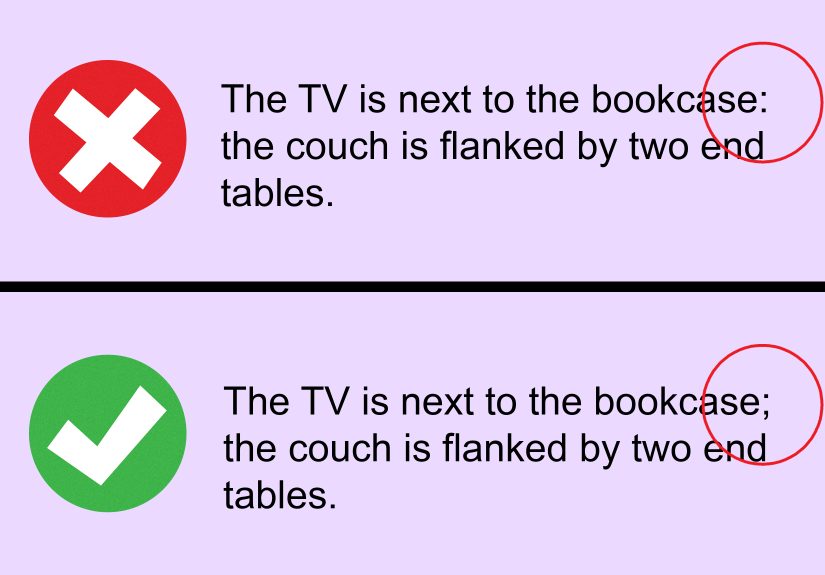
The colon and semicolon are often confused because both look serious and slightly academic, like punctuation marks wearing tiny reading glasses. But they do different jobs.
A colon introduces something. It says, “Here comes the explanation, list, quote, or result.”
Example: I need one thing: silence.
A semicolon connects two closely related independent clauses. It says, “These two complete thoughts belong together.”
Example: I wanted to write; my phone wanted attention.
Use a colon when the second part explains, identifies, or expands the first part. Use a semicolon when both sides are complete sentences and you want to show a close relationship without using a conjunction like “and” or “but.”
Colon vs. Dash: Which One Should You Use?
A dash can also introduce or emphasize information, but it feels more casual and dramatic. A colon feels more formal and controlled.
Colon: She had one priority: accuracy.
Dash: She had one priorityaccuracy.
Both sentences are correct. The colon feels polished and direct. The dash feels more conversational and punchy. In formal essays, business writing, and instructional articles, the colon is often the better choice. In creative writing or casual blog content, a dash can add personality.
Common Mistakes When Using Colons
Mistake 1: Using a Colon After “Such As”
Incorrect: I enjoy outdoor activities such as: hiking, biking, and kayaking.
Correct: I enjoy outdoor activities such as hiking, biking, and kayaking.
The phrase “such as” already introduces examples. Adding a colon is like bringing a ladder to an elevator: unnecessary and awkward.
Mistake 2: Using a Colon After a Verb
Incorrect: The ingredients are: sugar, butter, and flour.
Correct: The ingredients are sugar, butter, and flour.
Also correct: The recipe needs three ingredients: sugar, butter, and flour.
Mistake 3: Using a Colon Between Unrelated Ideas
Incorrect: I finished my homework: the dog barked outside.
Correct: I finished my homework while the dog barked outside.
The information after a colon should explain, expand, identify, or complete the idea before it.
Mistake 4: Overusing Colons
Colons are useful, but they lose power when overused. One colon in a paragraph can add clarity. Five colons in a paragraph can make the reader wonder whether your punctuation key is stuck.
Quick Practice: Fix the Colon
Try reviewing these examples:
Incorrect: My hobbies include: reading, cooking, and painting.
Correct: My hobbies include reading, cooking, and painting.
Incorrect: She needed: patience, focus, and a better alarm clock.
Correct: She needed three things: patience, focus, and a better alarm clock.
Incorrect: The answer was clear: We should leave early.
Possibly correct, depending on style: The answer was clear: we should leave early.
Correct with quotation: The answer was clear: “We should leave early.”
These small adjustments make sentences smoother and more professional. The colon should feel like a doorway, not a speed bump.
How to Use Colons in Blog Writing and SEO Content
Colons are especially useful in blog writing because they help organize information. A strong headline can use a colon to connect a keyword-rich topic with a benefit-driven subtitle.
Example: Colon Rules: How to Use This Punctuation Mark Correctly
This kind of title works well because it is clear, searchable, and reader-friendly. The main keyword appears naturally, and the subtitle explains what the reader will learn.
Colons also work well in introductions. They help writers preview a point without sounding robotic.
Example: This guide has one goal: to help you use colons with confidence.
In SEO content, clarity is king. Readers scan before they commit. A colon can create clean structure in headings, bullet points, and explanatory sentences. Just remember not to force it. Search engines appreciate helpful content, but humans are the ones who decide whether your article is worth reading.
Experience-Based Writing: What Learning to Use Colons Teaches Writers
When people first learn punctuation, the colon often feels like an advanced tool reserved for professors, editors, and people who own too many bookmarks. In real writing, though, the colon becomes useful the moment you want to make a sentence more precise. Many writers discover this while revising. A sentence feels wordy, soft, or slightly tangled. Then a colon steps in and organizes everything.
For example, imagine writing this sentence: “The biggest issue with the report was that the conclusion did not match the evidence.” It is correct, but it is not very lively. Now revise it with a colon: “The report had one major issue: the conclusion did not match the evidence.” The second version is cleaner. It has movement. It guides the reader from setup to answer.
That is one of the best experiences a writer can have with colons: realizing they are not decorative. They are functional. They help you control pacing. They let you slow the reader down for a split second before delivering the important part. In persuasive writing, that pause can make an argument stronger. In academic writing, it can make an explanation clearer. In blog writing, it can make a paragraph easier to scan.
Another useful experience comes from editing lists. Many beginner writers place a colon after any phrase that appears before a list. This is understandable. Lists look like they are waiting for a colon the way pancakes look like they are waiting for syrup. But grammar is pickier than breakfast. Once writers learn that the words before the colon should usually form a complete sentence, their list writing improves quickly.
Consider the difference between “The best tools are: a notebook, a timer, and a checklist” and “The best writing setup includes three tools: a notebook, a timer, and a checklist.” The second sentence sounds more polished because the colon has a proper setup. This tiny change can make school essays, professional emails, and online articles feel more mature.
Writers also learn that colons can prevent overexplaining. Instead of saying, “What I mean by this is that your first sentence needs to attract attention,” you can write, “The rule is simple: your first sentence needs to attract attention.” That version is direct. It respects the reader’s time. It also sounds more confident, which is helpful when writing instructions, advice, reviews, or educational content.
In everyday communication, colons can make messages easier to understand. A project update might say, “We have one blocker: the client has not approved the design.” A teacher might write, “Bring the following items: a pencil, your notebook, and the signed form.” A blogger might write, “There is one trick to better punctuation: read your sentence out loud.” These examples are practical, not fancy. That is the real value of the colon.
One caution from experience: do not let the colon become a habit you use automatically. Some writers fall in love with it and start placing it everywhere. The result can feel stiff. A colon should earn its spot. Before using one, ask, “Does the second part explain, list, quote, or emphasize the first part?” If yes, the colon probably belongs. If no, a comma, period, dash, or rewritten sentence may work better.
The more you practice, the more natural colon usage becomes. You stop thinking of it as a mysterious punctuation mark and start seeing it as a simple tool for creating structure. And that is the whole point: good punctuation should help readers glide through your writing, not make them stop and wonder what just happened.
Conclusion
Learning how to use a colon in a sentence is easier when you remember its main purpose: a colon introduces something important. It can introduce a list, explanation, quotation, or emphasized idea. The part before the colon usually needs to be a complete sentence, and the part after the colon should be closely connected to it.
Use colons when they make your writing clearer, stronger, and more organized. Avoid them after verbs, prepositions, and phrases like “such as” when the sentence does not need one. Pay attention to capitalization, especially if you are following a specific style guide. Most importantly, do not panic. A colon is not a grammar monster. It is just two dots with a job.
Master these four uses, and your sentences will become easier to read, more polished, and occasionally even elegant. Not bad for a punctuation mark that looks like a tiny snowman standing at attention.