Table of Contents >> Show >> Hide
- Before You Start: Don’t Let the Stain Run the Show
- Method 1: Dish Soap and Warm Water for Fresh Water-Based Paint
- Method 2: Rubbing Alcohol for Dried Acrylic or Latex Paint
- Method 3: A Baking Soda Paste for Stubborn Residue and White or Light Canvas
- Method 4: Acetone or Paint Thinner for Oil-Based Paint
- What About Paint on Rubber Soles?
- Mistakes That Make Paint Stains Worse
- How to Keep Canvas Shoes Looking Good After Paint Removal
- Real-Life Experience: What Actually Happens When You Try to Save Paint-Splattered Canvas Shoes
- Final Takeaway
- SEO Tags
Paint on canvas shoes has a special talent for showing up at the worst possible time. One minute you are freshening up a wall, helping a kid with a craft project, or living your best artsy life. The next minute, your favorite sneakers look like they lost a fight with a paint tray. The good news? In many cases, you can get paint off canvas shoes at home without turning your laundry room into a chemistry lab or your sneakers into a tragic before photo.
The trick is knowing what kind of paint you are dealing with and how aggressively to clean it. Fresh water-based paint is usually the easiest to remove. Dried acrylic or latex paint often needs rubbing alcohol and a little patience. Oil-based paint is the stubborn troublemaker of the group and usually calls for stronger solvents used carefully and sparingly. And through all of this, the goal is simple: lift the paint without bleaching the color, fraying the canvas, or warping the shape of the shoe.
This guide breaks down four practical ways to get paint off canvas shoes, plus the mistakes to avoid, tips for treating rubber soles and laces, and real-world lessons that can save you from making a small mess dramatically worse. Because yes, cleaning paint from shoes is doable. No, panic-scrubbing like you are auditioning for a detergent commercial is not the move.
Before You Start: Don’t Let the Stain Run the Show
Before trying any paint removal method, set yourself up for success. That means slowing down for about two minutes so you do not accidentally grind the stain deeper into the fabric.
Do this first
- Remove the laces so you can reach the canvas properly.
- Stuff the shoes lightly with paper towels or clean cloths to help them hold their shape.
- Scrape off any thick, wet, or flaky paint gently with a spoon, dull knife, or old card.
- Blot, do not rub, especially if the paint is still wet.
- Test any cleaner on a hidden spot, such as the edge of the tongue or an inside seam.
One more important note: check the care label if your shoes still have one. Some canvas sneakers can handle more moisture than others, but hand spot-cleaning is usually the safest choice. If you use rubbing alcohol, acetone, or paint thinner, work in a well-ventilated area and keep the shoes away from heat or open flame. In plain English: this is not the moment for candles, cigarettes, or a hair dryer blasting hot air at your sneakers like they owe you money.
Method 1: Dish Soap and Warm Water for Fresh Water-Based Paint
If the paint is still wet and it is latex, acrylic, or another water-based formula, this is your best starting point. It is gentle, easy, and far less likely to mess with the fabric dye on your shoes.
What you need
- Mild dish soap or gentle laundry detergent
- Warm water
- Soft cloth or sponge
- Old toothbrush or soft-bristled brush
- Clean dry towel
How to do it
- Lift off as much fresh paint as possible with a spoon or dull edge.
- Mix a small amount of dish soap with warm water.
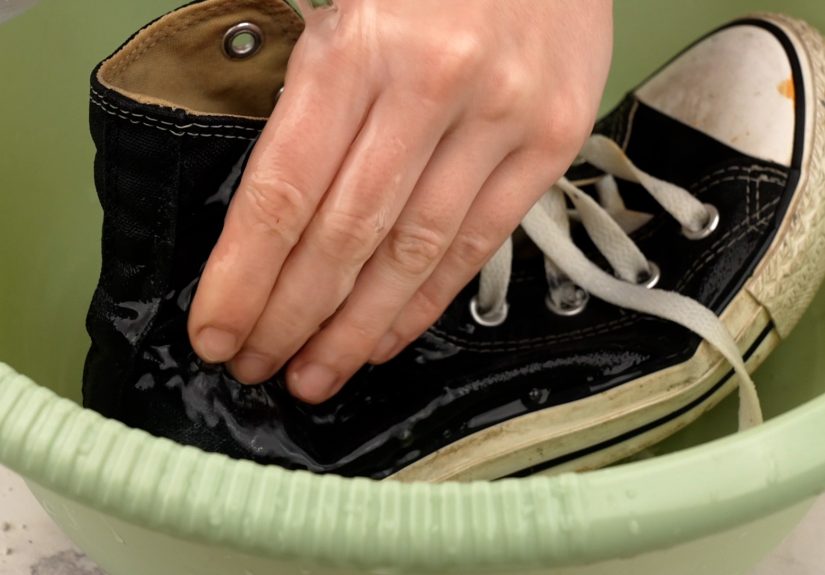
- Dampen a cloth or soft brush in the solution and blot the paint stain.
- Work from the outside of the stain toward the center so you do not spread it.
- Use a toothbrush to gently loosen paint caught in the canvas weave.
- Wipe away loosened paint with a clean damp cloth.
- Repeat until the stain fades, then blot dry and let the shoes air-dry.
This method works well because fresh water-based paint has not fully bonded to the fibers yet. A gentle soap solution can help lift the paint before it hardens into a tiny permanent mural. If the stain lightens but does not disappear, that is still progress. Think of it as moving from “paint disaster” to “barely noticeable scuff with a backstory.”
Best for: fresh latex paint, fresh acrylic paint, craft paint, and light splatters.
Method 2: Rubbing Alcohol for Dried Acrylic or Latex Paint
Once paint dries on canvas, mild soap may not be enough. This is where rubbing alcohol becomes the star of the show. It is especially useful for dried acrylic and latex paint because it helps break down the paint film so you can blot and lift it out.
What you need
- Isopropyl rubbing alcohol
- Cotton balls, soft cloth, or paper towels
- Old toothbrush
- Mild detergent
- Water
How to do it
- Scrape away any brittle or flaky paint gently first.
- Moisten a cloth or cotton ball with rubbing alcohol. Do not soak the shoe like it is headed to a pool party.
- Dab the stain and let the alcohol sit for a minute or two.
- Blot and gently scrub with a toothbrush, working from the outside in.
- Keep switching to a clean section of cloth as paint transfers off the shoe.
- Once the paint has mostly lifted, apply a drop of mild detergent and wipe the area with a damp cloth.
- Air-dry the shoes completely.
This is one of the best methods if you need to remove dried paint from canvas shoes without jumping straight to harsher chemicals. It may take a few rounds, especially if the paint is thick or has been there long enough to start paying rent. Be patient. Small repeated treatments are safer for canvas than one overly enthusiastic scrub session.
Best for: dried latex paint, dried acrylic paint, and mystery paint that softens when touched with alcohol.
Method 3: A Baking Soda Paste for Stubborn Residue and White or Light Canvas
If you have already loosened most of the paint but a faint stain or crusty residue remains, a mild paste can help. For white or light-colored canvas shoes, a paste made with baking soda plus dish soap and a little rubbing alcohol can provide a bit more lifting power.
What you need
- Baking soda
- Dish soap
- Rubbing alcohol
- Small bowl
- Toothbrush
- Damp cloth
How to do it
- Mix equal parts baking soda, dish soap, and rubbing alcohol into a paste.
- Apply a small amount to the paint-stained area.
- Let it sit for 5 to 10 minutes.
- Use a soft toothbrush to scrub gently in small circles.
- Wipe away the residue with a damp cloth.
- Repeat if needed, then let the shoes air-dry.
This method is especially helpful when the paint is no longer thick but still leaves behind a visible shadow or stiff patch. The paste gives you light abrasion plus stain-lifting power without the intensity of straight acetone or paint thinner.
A quick caution: use extra care on dark or brightly colored canvas. Baking soda mixtures can sometimes dull the finish or leave a faded look if you scrub too hard. Test first, use a small amount, and keep your expectations realistic. The goal is cleaner shoes, not a surprise tie-dye project.
Best for: leftover dried residue, light canvas shoes, and stubborn paint shadows after soap or alcohol treatment.
Method 4: Acetone or Paint Thinner for Oil-Based Paint
If the paint is oil-based, water and dish soap alone usually will not cut it. You may need acetone, mineral spirits, or the paint thinner recommended on the paint label. This is the strongest option on the list, which means it should be treated like the last resort it is.
What you need
- Acetone or paint thinner
- Cotton swabs or a clean white cloth
- Paper towels
- Mild dish soap
- Water
- Gloves
How to do it
- Test the solvent on a hidden area first.
- Place paper towels inside the shoe or behind the stained area to absorb transfer.
- Apply a tiny amount of acetone or paint thinner to a cloth or cotton swab.
- Blot the stain gently rather than flooding the canvas.
- Replace the cloth section often as paint transfers.
- Once the paint lifts, wipe the area with mild soapy water to remove solvent residue.
- Blot with clean water and let the shoes air-dry completely in a ventilated space.
This method can be effective, but it is also the most likely to affect color, glue, and fabric finish if overused. Translation: use the smallest amount possible, treat only the stained area, and avoid turning your whole sneaker into a chemistry experiment.
Best for: oil-based paint, enamel paint, and stains that do not respond to alcohol.
What About Paint on Rubber Soles?
If the paint landed mostly on the rubber foxing or toe cap instead of the canvas upper, you have an easier job. A magic eraser, a little dish soap, or rubbing alcohol on a cloth often works well on rubber. Just keep the cleaner off the canvas as much as possible. The rubber can usually handle more scrubbing than the fabric, but the fabric will absolutely remember if you bullied it.
Mistakes That Make Paint Stains Worse
- Rubbing too hard: this pushes paint deeper into the canvas weave.
- Using hot air to dry the shoes: heat can set residue and may warp glue or shape.
- Skipping the spot test: this is how “tiny stain removal” turns into “why is there a pale circle on my shoe?”
- Pouring solvent directly on the shoe: targeted blotting is safer than soaking.
- Machine washing by default: some canvas shoes can tolerate it, but many brands recommend gentle hand cleaning instead.
- Using bleach casually: it may brighten white shoes, but it can also weaken fibers or alter color if used carelessly.
How to Keep Canvas Shoes Looking Good After Paint Removal
Once the stain is gone or mostly gone, the aftercare matters. Blot the cleaned area with plain water to remove leftover cleaner. Reshape the shoes with paper towels. Let them air-dry indoors away from direct heat. When dry, re-lace them and check whether the cleaned patch looks stiff or dull. If it does, a very light pass with a damp cloth can help soften the canvas again.
If you wear canvas sneakers often, consider using a fabric protector made for shoes after they are fully dry. It will not make them invincible, but it can buy you a little extra time the next time paint, mud, or mystery sidewalk goo tries to move in.
Real-Life Experience: What Actually Happens When You Try to Save Paint-Splattered Canvas Shoes
In real life, getting paint off canvas shoes is rarely a one-swipe miracle. It is usually more of a “clean a little, assess, clean a little more” situation. The people who get the best results are not necessarily using secret products. They are usually the ones who act quickly, identify the paint type, and resist the universal urge to scrub like they are sanding a deck.
A very common scenario goes like this: someone gets a few drops of wall paint on their white or beige canvas sneakers while touching up trim. They do not notice it immediately. By the time they do, one drop is tacky, another is dry, and a third has somehow turned into a strange streak that feels emotionally personal. In cases like this, mild soap and warm water often remove the freshest spots, while rubbing alcohol takes care of the paint that already dried. The biggest difference-maker is usually not the product. It is the timing.
Another real-world lesson is that less liquid is often better. People tend to assume more cleaner equals more cleaning power, but canvas shoes are not kitchen tile. Flooding the fabric can spread pigment, weaken adhesives, or leave water marks. Using a cloth, cotton swab, or toothbrush with controlled moisture usually gives better results than soaking the whole shoe and hoping for a cinematic transformation.
There is also the matter of expectations. If the paint blob is large, dark, and has dried for days, the goal may shift from “make it look brand new” to “make it look clean enough that no one notices unless they are kneeling down and examining your footwear like a museum conservator.” That is still a win. A faint shadow is a lot better than a bright blue paint splat announcing itself across your toe box.
People also learn quickly that different parts of the shoe behave differently. Rubber toe caps and sidewalls are usually far easier to clean than the canvas upper. Laces often hold onto paint longer than expected. And printed patterns or dyed canvas can react unpredictably to stronger cleaners. That is why spot testing matters so much. It sounds boring, but boring is good when the alternative is accidentally bleaching one tiny circle into another zip code.
One of the most overlooked parts of the process is drying. A lot of shoe-cleaning regrets begin when someone gets impatient and sets the shoes in direct sun, under a heater, or near a vent. Gentle air-drying indoors is slower, but it is far kinder to the shape, glue, and fabric. Good cleaning is not just about removing the stain. It is about making sure your shoes still look like shoes when you are done.
So yes, canvas sneakers can often recover from paint. Not always perfectly, not always instantly, and definitely not with rage-cleaning. But with the right method and a little patience, most paint accidents go from “I ruined them” to “I can absolutely still wear these.” Which, in the world of household mishaps, is a pretty satisfying ending.
Final Takeaway
If you want the simplest formula for success, here it is: match the method to the paint. Use dish soap and warm water for fresh water-based paint. Reach for rubbing alcohol when acrylic or latex dries down. Try a baking soda paste for leftover residue. Save acetone or paint thinner for oil-based paint and use it with caution. Spot test first, work gently, and let the shoes air-dry naturally.
That is really the secret to getting paint off canvas shoes without wrecking them. No magic. No drama. Just smart cleaning, decent timing, and a refusal to let one clumsy painting moment retire a perfectly good pair of sneakers.