Table of Contents >> Show >> Hide
- Before You Start: Measure First, Regret Less
- Way 1: Attach the Headboard Directly to the Bed Frame
- Way 2: Use Adapter Plates or Universal Headboard Brackets
- Way 3: Mount the Headboard to the Wall
- Way 4: Use a Freestanding or Leaning Headboard
- How to Choose the Best Method for Your Bed
- Common Mistakes to Avoid
- Real-World Experiences: What Fitting a Headboard Actually Feels Like
- Final Thoughts
A bed without a headboard can look a little like a sentence without punctuation. Technically, it works. Emotionally, something feels unfinished. The good news is that fitting a bed headboard is not a mysterious furniture ritual performed only by people who own three drills and a laser level. In most bedrooms, it comes down to matching the right headboard to the right setup and choosing the installation method that makes sense for your frame, your wall, and your patience level.
If you have ever bought a beautiful headboard and then discovered your bed frame has no mounting holes, your wall is made of something suspiciously crumbly, or your “five-minute setup” somehow turned into a full family debate, welcome. You are not alone. This guide walks through four practical ways to fit a bed headboard, plus how to measure properly, avoid the most common mistakes, and make the finished bed look intentional instead of “assembled during a power outage.”
Before You Start: Measure First, Regret Less
Before you pick a fitting method, make sure the headboard actually suits your bed and room. The safest move is to match the headboard size to the mattress size: twin with twin, full with full, queen with queen, and so on. A slightly wider headboard can work as a style choice, but going too far off-size can make the bed look awkward or create alignment problems.
Measure these three things before you touch a single bolt:
1. Bed width
Measure the width of your mattress or bed frame from side to side. This tells you whether the headboard is visually proportional and physically compatible.
2. Mounting-hole spacing
If you already have a metal frame or platform bed, check whether there are predrilled holes at the head of the bed. Measure the vertical and horizontal spacing between them. This detail matters more than many people realize. A gorgeous headboard with the wrong hole pattern is basically wall art with unrealistic expectations.
3. Headboard height
Think about how high you want the headboard to sit above the mattress. If you like to sit up in bed to read, scroll, snack, or pretend to read while actually watching videos, a taller headboard is usually more comfortable. In a small room with low ceilings, a lower profile may look better and feel less bulky.
You should also gather a few basic tools: a tape measure, wrench or socket set, screwdriver, level, pencil, and possibly a drill. If you are mounting to the wall, add wall anchors or a stud finder to the list. If you are attaching to a frame, keep washers nearby. Those tiny metal rings may not look glamorous, but they do an excellent job of preventing wobble and saving your sanity.
Way 1: Attach the Headboard Directly to the Bed Frame
This is the classic method, and in many cases, it is the easiest. If your bed frame has built-in headboard brackets or mounting holes, you can bolt the headboard directly onto the frame. This works especially well with standard metal bed frames, many wood frames, and some upholstered bed bases.
How it works
You line up the headboard legs or struts with the mounting holes at the head of the bed, insert bolts through both pieces, add washers and nuts, and tighten everything until stable. That is the simple version. The real-life version includes kneeling on the floor, squinting at two almost-matching holes, and saying, “Can you hold it a little higher? No, lower. Actually, higher.”
Why this method is popular
Direct attachment creates a clean, integrated look. Because the headboard moves with the bed, it is usually a solid choice for people who rearrange furniture, vacuum like they mean it, or do not want the headboard shifting every time the bed is nudged.
Best for
- Metal bed frames with predrilled holes
- Wood frames designed for separate headboards
- People who want the most traditional installation
Watch out for
The biggest issue is compatibility. The holes on your frame and the holes on your headboard must line up, or at least be close enough to work safely. If the hole spacing is off, do not force it. Furniture should not require emotional negotiation.
Way 2: Use Adapter Plates or Universal Headboard Brackets
If your bed frame and headboard are not naturally compatible, adapter plates can save the day. This method is incredibly useful when the frame holes do not line up with the headboard legs, when the frame has an odd hole pattern, or when you are trying to add a headboard to an adjustable base or minimalist platform frame.
What adapter hardware does
Adapter plates, conversion brackets, or universal headboard brackets act like translators for stubborn furniture. They connect mismatched holes and create new mounting points so your headboard can be attached securely even when the original setup says, “Absolutely not.”
How to fit a headboard this way
- Attach the adapter plates to the bed frame first.
- Position the headboard behind the frame.
- Line up the headboard legs with the new bracket holes.
- Insert bolts with washers and tighten gradually on both sides.
- Check the height and alignment before fully tightening.
Why it is a smart fix
This method expands your options dramatically. Instead of shopping only for headboards that perfectly match your frame, you can choose the design you actually want. It also helps when you are updating a room on a budget and want to keep your existing frame instead of replacing the whole bed.
Best for
- Adjustable bed bases
- Platform beds without obvious headboard mounts
- Older metal frames with unusual spacing
- DIY-friendly fixes that avoid buying a new bed
Watch out for
Do not guess at hardware size. Bring your measurements or existing bolts to the hardware store if needed. Loose or undersized hardware is one of the fastest ways to end up with a rattling headboard that sounds like it is judging you every time you roll over.
Way 3: Mount the Headboard to the Wall
A wall-mounted headboard is a great option when you want a floating look, have a platform bed that does not cooperate, or simply prefer the visual drama of a headboard that feels built into the room. This method can look polished, custom, and surprisingly high-end.
How it works
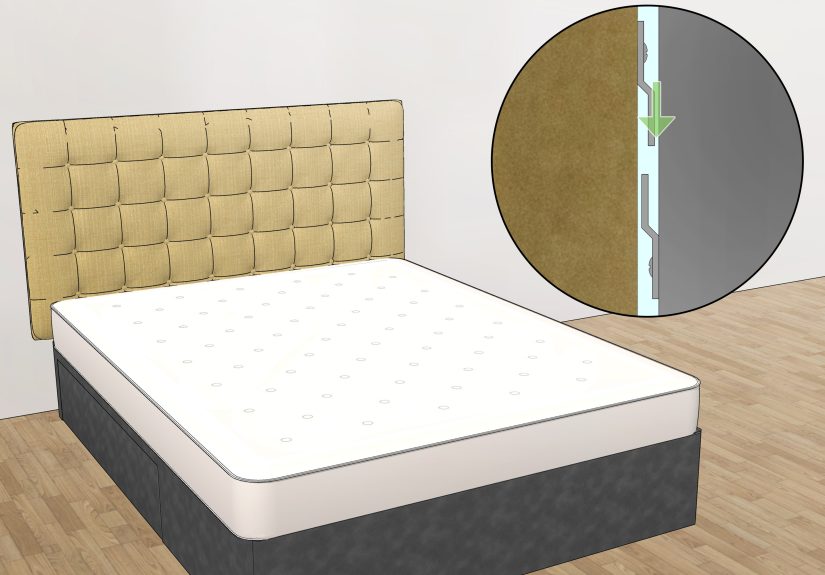
Instead of attaching the headboard to the bed frame, you fasten it to the wall behind the bed. Depending on the headboard type, this may involve D-rings, heavy-duty picture hardware, a French cleat, or manufacturer-provided wall brackets. Once installed, you slide the bed into place underneath it.
Why people love wall-mounted headboards
Wall mounting gives you more freedom with height. You are not limited by the frame’s hole placement, so you can position the headboard exactly where it looks best. It also works beautifully for oversized upholstered panels, wood slat designs, or wall-to-wall headboard treatments that turn the whole bed wall into a feature.
Best for
- Modern and custom bedroom designs
- Platform beds and floating beds
- Rooms where you want a larger visual statement
- Homeowners looking for a more architectural look
Watch out for
This method depends on your wall. Drywall alone is not enough for heavy pieces unless you use the proper anchors, and studs are always the better choice when possible. Use a level, measure twice, and do not eyeball it unless your dream aesthetic is “haunted boutique hotel.”
Wall-mounted headboards are also less ideal if you move your bed often. The headboard stays put, which is wonderful for stability and not as wonderful if you like to rearrange your room every time you buy new bedding.
Way 4: Use a Freestanding or Leaning Headboard
The fourth way to fit a bed headboard is the least mechanical and sometimes the most forgiving: choose a freestanding headboard or a design that can sit behind the bed and rest against the wall. Some freestanding headboards come with legs and support brackets, while others are designed to stand visually behind the bed without being rigidly fixed to the frame.
Why this method works
Not every bedroom needs a bolt-heavy installation. In some setups, especially guest rooms, rentals, or decor-focused spaces, a freestanding headboard can deliver the look of a full bed without requiring major hardware. It is also a practical route if you want flexibility or are testing out a new layout.
Best for
- Renters who want fewer wall modifications
- Guest rooms and low-traffic bedrooms
- Decorative headboards that are more about style than structure
- People who plan to change the room again later
Watch out for
Freestanding does not mean careless. If the headboard is tall, heavy, or used in a room with kids or pets, stability matters. Some freestanding pieces should still be anchored lightly to the wall for safety. Always check the manufacturer’s guidance rather than assuming “it looks stable” is a valid engineering principle.
How to Choose the Best Method for Your Bed
If you are wondering which fitting method is right for you, start with the bed you already own.
If you have a standard metal frame
Try direct attachment first. If the holes do not line up, use adapter plates.
If you have a platform bed
Check whether the frame accepts brackets. If not, wall mounting or freestanding options are often easier.
If you have an adjustable base
Look for compatible headboard brackets made for adjustable beds. Not every headboard works with every base, so compatibility matters.
If you rent or hate drilling into walls
Freestanding or frame-mounted options are usually the least disruptive.
If you want the most custom, designer-style look
Wall mounting often wins. It gives you the freedom to go taller, wider, and more dramatic without relying on the bed frame’s exact hardware.
Common Mistakes to Avoid
Even a simple headboard installation can go sideways if you skip the boring-but-important steps. Here are the mistakes people make all the time:
- Skipping measurements: “It looks about right” is how many furniture problems begin.
- Ignoring hole spacing: A queen headboard is not automatically compatible with every queen frame.
- Using the wrong bolts: Too short, too long, or too thin can all cause trouble.
- Forgetting washers: Small part, big difference.
- Mounting heavy headboards without proper support: This is a style choice right up until it becomes a safety issue.
- Over-tightening before leveling: Always check alignment first, then fully tighten.
Real-World Experiences: What Fitting a Headboard Actually Feels Like
On paper, fitting a headboard sounds delightfully straightforward. Measure. Align. Tighten. Done. In real life, it often becomes one of those home projects that teaches you more than expected about furniture, walls, tools, and the emotional power of tiny bags of missing hardware.
One common experience is the surprise of discovering that “queen size” is not the same as “universally compatible with all queen-size things ever made.” Plenty of people buy a headboard believing the size label is all that matters, only to realize the mounting holes on the frame sit too narrow, too wide, or too low. That is usually the moment adapter plates become the unexpected heroes of the bedroom. They are not glamorous, but they can rescue a purchase that would otherwise end in a return label and mild resentment.
Another very normal experience is learning that headboard height changes the whole mood of the room. A low, simple headboard can make a bedroom feel airy and modern. A tall upholstered headboard can make the same room feel softer, cozier, and more expensive. People often do not notice this until the headboard is actually in place. Suddenly the bed feels like a destination instead of just a mattress with ambitions.
There is also the “helpful assistant” stage of the project. This may be a spouse, roommate, friend, sibling, or whoever happened to walk by at the wrong time. Their main role is usually to hold the headboard steady while you line up bolts, but the emotional arc is predictable: optimism, confusion, silence, and then a sentence like, “I am holding it straight.” This is part of the tradition. Accept it with grace.
Wall-mounted headboards bring a different kind of experience. They often look amazing when finished, but they demand patience up front. Many people say the hardest part is not the mounting itself, but trusting the measurements. You mark the wall, step back, change your mind, measure again, and then spend five full minutes staring at pencil marks like they are a high-stakes exam. Once installed correctly, though, the result can look wonderfully custom, especially in smaller rooms where a floating effect keeps the bed area from feeling bulky.
Freestanding headboards create yet another kind of satisfaction. They are popular with renters and design lovers because they can dramatically upgrade a room without turning the wall into a construction site. People often describe these setups as the easiest visual win: the bedroom looks more complete, more intentional, and more “grown-up” almost instantly. The trade-off is that stability matters. A headboard that only looks secure is not the same as one that actually is secure.
Perhaps the most universal experience is how finishing the headboard changes the way the entire bedroom feels. Once the bed has a proper backdrop, bedding looks better, pillows look fluffier, and even the lamp on the nightstand seems to have its life together. That is the sneaky charm of a good headboard. It is part function, part comfort, and part visual anchor. In many bedrooms, it is the detail that finally makes the space feel finished.
Final Thoughts
When it comes to fitting a bed headboard, there is no single perfect method. The best choice depends on your frame, your room, your style, and how much drilling you are willing to do before coffee. If your frame is compatible, direct attachment is simple and reliable. If it is not, adapter brackets can bridge the gap. If you want a custom look, wall mounting delivers serious style. And if flexibility matters most, a freestanding headboard can still transform the room beautifully.
The key is to measure carefully, use the right hardware, and pick the method that fits your real-life setup, not some imaginary showroom where every hole lines up and nobody loses the washers. Do that, and your bed will go from “functional sleep rectangle” to a polished focal point that actually looks finished.