Table of Contents >> Show >> Hide
Some sentences are basically a smoke alarm with vowels. Not because the words are magicalbecause of what they often
do: dismiss your feelings, rewrite reality, bulldoze boundaries, or pressure you into choices you don’t want.
One awkward quote in isolation can be nothing. A pattern of the same “harmless” line? That’s when it stops being a quirk
and starts looking like a strategy.
This list isn’t here to turn you into a human lie detector. It’s here to help you notice when language is being used as a
lever: to control, confuse, or “win” at your expense. Think of these as instant red flagsnot instant verdicts.
Context matters. Frequency matters. Your gut matters.
How to Use This List Without Becoming a Walking Siren
1) Look for patterns, not one-offs
Anyone can say something clumsy on a bad day. Red flags show up when the same phrases appear whenever you bring up a
concern, set a boundary, or ask for basic respect.
2) Watch what happens after the phrase
Healthy people can hear feedback and adjust. Unhealthy dynamics double down: the phrase becomes a trap door that drops the
conversation into “your fault” territory.
3) Ask one simple question
Does this sentence move us toward clarity and careor toward confusion and control? If it consistently moves
you away from clarity, that’s your sign.
32 Phrases That Are Instant Red Flags
These phrases can show up in dating, friendships, family, and workplaces. The “red flag” isn’t the exact wordingit’s the
intent and impact when the phrase is used to shut you down, flip blame, or keep you off-balance.
Emotional Invalidation (a.k.a. “Your feelings are inconvenient”)
-
“You’re too sensitive.”
Translation: “I don’t want to take responsibility for how I’m coming across.” A healthier move is curiosity:
“I didn’t mean to hurt youwhat landed wrong?” -
“You’re overreacting.”
Often used to shrink your emotions so they can avoid the issue. If it’s repeated, you may start editing yourself just to
keep the peacenever a great sign. -
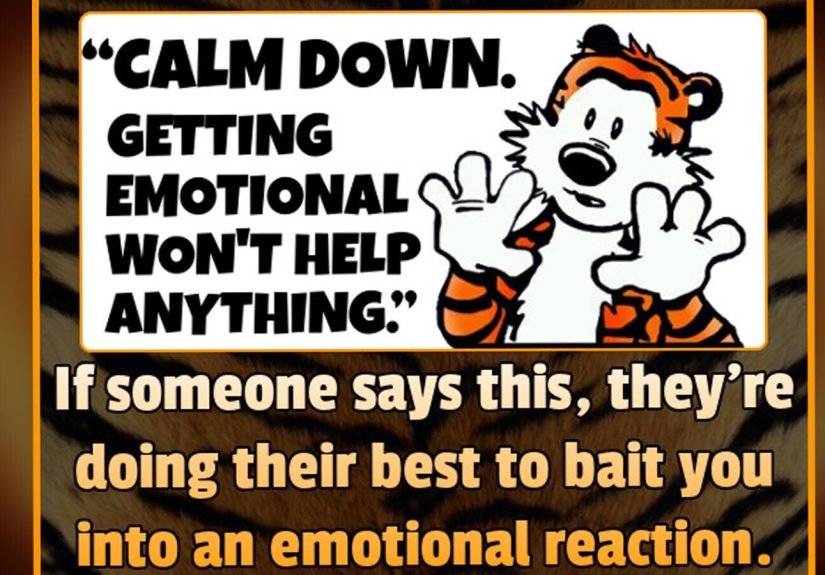
“Calm down.”
If someone uses this as a command (especially while they escalate), it’s less “support” and more “comply.”
Try: “I can talk when we’re both respectful.” -
“It’s not a big deal.”
If it mattered enough for you to bring up, it’s a deal. Minimizing is a shortcut to ignoring. -
“I’m sorry you feel that way.”
This can be a non-apology that treats your reaction as the problem. Real accountability sounds like:
“I’m sorry I did that. I get why it hurt.” -
“Good vibes only.”
Toxic positivity in a trench coat. If “positive” means “we never talk about real problems,” the relationship becomes a
performance, not a connection. -
“Whatever.”
Dismissal disguised as punctuation. It communicates contempt and refusal to engage. -
“Nothing’s wrong.” (when something is clearly wrong)
Avoidance is normal sometimes. But if it’s a recurring way to punish you with silence or keep you guessing, that’s a
power move, not a mood.
Reality-Warping and “Wait, Did I Imagine That?” Talk
-
“That never happened.”
If you have a clear memory and they repeatedly deny obvious events, you’re being pushed toward self-doubt.
A healthy person might disagree; they don’t try to erase your reality. -
“You’re remembering it wrong.”
Sometimes memories differ. The red flag is the certainty and dismissalespecially when it always benefits them. -
“You’re crazy.”
Name-calling + undermining your sanity is a classic control tactic. People who respect you don’t diagnose you mid-argument. -
“Everyone agrees with me.”
This is social pressure disguised as proof. It isolates you: now you’re not just “wrong,” you’re outnumbered. -
“I was just joking.”
If the “joke” consistently targets your insecurities, it’s not humorit’s a test of how much disrespect you’ll tolerate. -
“You’re making things up.”
Another reality-erasing move. The goal is often to make you stop bringing things up because it’s exhausting. -
“You misunderstood.”
One-time miscommunication happens. The red flag is when it’s used as a get-out-of-accountability card, every time. -
“You’re too emotional.”
This frames normal human feelings as a flaw, so they don’t have to address your point. Emotion doesn’t cancel facts.
Blame Shifting, Guilt Trips, and “My Actions Are Your Fault”
-
“You made me do it.”
Adults own their behavior. This phrase tries to hand you the steering wheel… after they crashed the car. -
“If you didn’t push my buttons…”
Similar vibe, different packaging. It suggests you’re responsible for their lack of self-control. -
“Look what you made me do.”
This is blame shifting with dramatic lighting. In healthy conflict, people discuss choices, not excuses. -
“If you really loved me, you would…”
Love isn’t a coupon you redeem for compliance. This phrase turns affection into a transaction and pressure into “proof.” -
“Prove it.”
When affection requires constant demonstrations, the relationship becomes an auditionand you’re never cast. -
“After everything I’ve done for you…”
Genuine care doesn’t come with invoices. This is often a setup to demand something you don’t want to give. -
“I guess I’m just the worst, then.”
This flips you into comforting them instead of addressing your concern. It’s emotional dodgeball: you throw a problem, they
throw a pity grenade. -
“You always…” / “You never…”
Absolutes escalate conflict and erase nuance. If it’s their default style, you’ll feel constantly on trial instead of on the
same team.
Control, Isolation, and Boundary Bulldozing
-
“Who are you texting?” (said like an interrogation)
Curiosity is fine. Control is not. Tone mattersand so does whether “answers” are demanded. -
“You don’t need privacy from me.”
Privacy is not secrecy. It’s dignity. Anyone who insists you surrender it is asking for power, not closeness. -
“Give me your passwords.”
Trust isn’t surveillance. Password demands often escalate into monitoring and isolation. -
“I don’t like your friends/family.” (especially early on)
Sometimes there are real concerns. But if it becomes “choose me or them,” that’s isolation with a bow on it. -
“If you leave, you’ll regret it.”
Threat energy. Even when said “calmly,” it signals coercion and fear-based control. -
“No one else would put up with you.”
This is designed to lower your self-esteem so you stay. Healthy love doesn’t need you to feel small.
Workplace-Specific Red Flags (Because Paychecks Don’t Cancel Manipulation)
-
“We’re a family here.”
Sometimes it’s genuine warmth. Often it’s code for blurred boundaries, unpaid extra labor, and guilt if you say no.
A job can be supportive without needing to adopt you. -
“That’s just how we do thingsdon’t ask questions.”
This shuts down accountability and learning. If “curiosity” is punished, mistakes and favoritism thrive.
What to Say Instead: Quick, Calm Responses That Protect You
Use the “Name + Need” formula
Try: “When you say ‘you’re overreacting’, I feel dismissed. I need us to talk about the actual issue.”
You’re not debating their opinionyou’re stating your boundary.
Don’t argue about your feelings
Feelings aren’t a court case. If someone insists your emotions are “wrong,” you can exit the loop:
“You don’t have to agree, but you do need to be respectful.”
Watch for behavior change
The best apology is different behavior. If the phrases stop and accountability starts, that’s growth. If the phrases keep
coming back like a bad sequel, trust the pattern.
500+ Words of Real-World “Wait… That’s a Red Flag” Experiences
People rarely wake up one day and think, “I’d love to be manipulated by a sentence today.” It’s usually subtler: a vibe, a
comment, a pattern that slowly teaches you to doubt yourself. Here are some common experiences people recognizeacross
relationships, friendships, family dynamics, and jobsthat show how these phrases work in the wild.
A classic one: you finally bring up something small, like a joke that hit too hard. You’re trying to be reasonablemaybe
you even preface it with, “This isn’t a huge thing, but…” And then you hear it: “I was just joking” or
“You’re too sensitive.” The problem isn’t the joke anymore. The problem is now your personality. Over time,
you might stop speaking up because you don’t want to be labeled “dramatic.” That’s the red flag doing its job: training you
to stay quiet.
Another experience shows up when someone makes a mistake and you expect a simple “My bad.” Instead you get
“You misunderstood” or “That never happened.” At first, you think, “Maybe I did hear it
wrong.” Then it happens again. And again. You start replaying conversations in your head like you’re reviewing security
footage. You take screenshots. You keep receipts. That’s not “being crazy”that’s what people do when reality keeps getting
rewritten and they’re trying to hold onto something solid.
In friendships, guilt-trip phrases can feel like friendship with a barcode scanner. You say you can’t make it to a hangout,
and the response is “After everything I’ve done for you…” or “Prove you care.” Suddenly
your boundaries become a loyalty test. The tricky part is that you might comply because you don’t want to be a bad friend.
But healthy friends don’t demand sacrifice as proof. They might be disappointed, surebut they don’t punish you for having a
life.
Family dynamics often come with their own “greatest hits,” like “Because I said so” in place of explanation,
or “Nothing’s wrong” as a weaponized silence. The experience many people describe is walking on eggshells:
trying to guess which version of the person they’ll get today. If your peace depends on mind-reading, that’s a sign the
communication isn’t safe.
Workplaces can be even sneakier because you’re paid to tolerate things you shouldn’t have to. Someone interviews for a job
and hears, “We’re a family here”and it sounds sweet. Two months later, it becomes “family” in the sense
that you’re expected to stay late, skip boundaries, and never say no without guilt. Or you ask a fair questionabout policy,
deadlines, payand get “That’s just how we do thingsdon’t ask questions.” The lived experience is that you
learn to stop advocating for yourself because it’s treated as “attitude.” A healthy workplace doesn’t fear questions; it
answers them.
The most important pattern people notice, across all these situations, is this: the red-flag phrases show up right when
you try to claim something basicrespect, clarity, privacy, fairness. If you consistently feel smaller after conversations,
more confused, more apologetic, or more responsible for someone else’s behavior, it’s worth taking seriously. Talk to a
trusted friend, mentor, or adult. You don’t need a courtroom-level “case” to deserve better communication. You just need
the truth of your experience.
Conclusion: Red Flags Aren’t About PanicThey’re About Information
If you recognized a phrase or two, don’t spiral. The goal isn’t to “catch” peopleit’s to protect your time, energy, and
self-respect. A single awkward sentence can be repaired with accountability. A repeated pattern of dismissal, blame
shifting, and control is data you shouldn’t ignore.
Keep it simple: notice the phrase, name the impact, set a boundary, and watch what happens next. Respectful people adjust.
Manipulative dynamics escalate. And if you ever feel unsafe or pressured, reach out to someone trustworthy in your life for
support.