Table of Contents >> Show >> Hide
- Why Rachid Lotf’s Nostalgic Art Works So Well
- Why Older People Feel the Nostalgia More Deeply
- The Objects That Make These 30 Pictures So Effective
- These Pictures Are About More Than the 1990s
- Why Nostalgia Content Keeps Winning on the Internet
- What Older Readers Really See in These 30 Pictures
- A Longer Walk Down Memory Lane: The Experience Behind the Pictures
- Final Thoughts
There are two kinds of people in this world: people who look at a cluttered bedroom illustration and see a messy room, and people who look at it and whisper, “Wait… I had that exact cassette case.” If you fall into the second group, Rachid Lotf’s nostalgic artwork probably hits you like a time machine with excellent taste in pop culture.
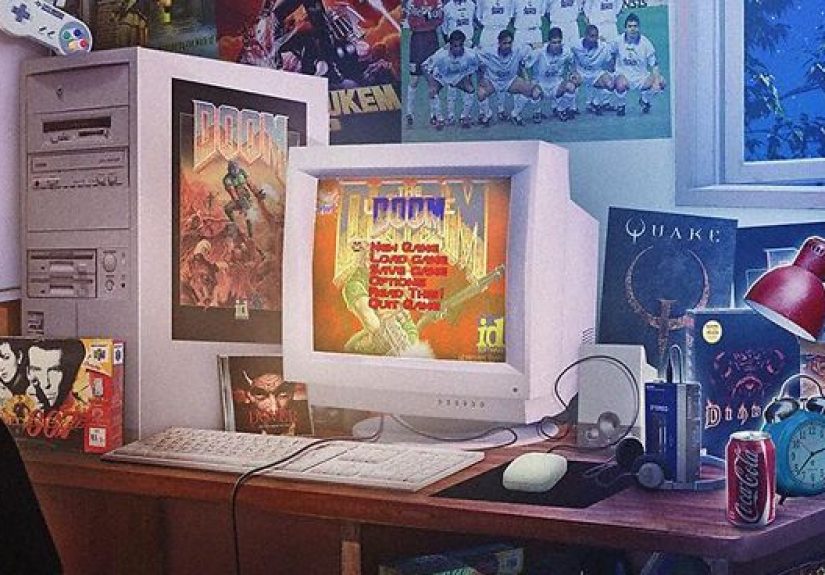
The collection often referred to as “30 Pictures That Only Older People Will Find Nostalgic” isn’t just a random pile of retro objects. It’s a carefully arranged emotional ambush. One second you’re scrolling casually, and the next you’re mentally back in a room with a chunky TV, tangled controller cords, snack wrappers on the floor, and a shelf full of things that modern kids would probably mistake for archaeological evidence.
That is the magic of Lotf’s work. His pictures do not simply show old stuff. They recreate the feeling of an era. And for older readers, especially those who grew up in the analog-to-digital transition, that feeling can be almost suspiciously powerful.
Why Rachid Lotf’s Nostalgic Art Works So Well
Rachid Lotf has built a recognizable visual style around retro gaming, bedroom culture, vintage toys, old-school media, and the everyday chaos of pre-streaming life. His illustrations are dense, colorful, and loaded with references. That density is the point. They reward the kind of looking younger internet habits often discourage: slow, delighted, detail-by-detail attention.
Instead of presenting one “hero” object, Lotf fills a scene with dozens of memory triggers. A console sits near a stack of games. A poster hangs crooked on the wall. A familiar snack, a music device, a toy, a VHS tape, and a school supply all crowd the same space. It feels lived-in rather than staged. And that lived-in quality matters, because nostalgia rarely comes back as one perfect still image. It returns in fragments.
That is why his work lands so hard. A single Walkman might make you smile. But a Walkman next to a pile of comics, old candy, game cartridges, and a CRT television? That can send your brain into full emotional surround sound.
Why Older People Feel the Nostalgia More Deeply
There is actual psychology behind that rush. Researchers have long described something called the reminiscence bump, the tendency for people to recall especially vivid memories from adolescence and early adulthood. In plain English: the stuff you loved, used, wore, watched, and obsessed over in those years tends to stick around in your mind like glitter after a school craft project. You never fully get rid of it.
That helps explain why Lotf’s pictures feel so personal to older viewers. They are not just seeing objects. They are seeing their own timeline. The bedroom in the image is not literally their bedroom, but emotionally it might as well have their fingerprints on the remote.
Nostalgia also does more than make people sentimental. It can strengthen feelings of continuity, connection, and meaning. That is one reason older readers do not just react with “Oh, cool, I remember that.” They react with stories. They tell you about the first time they beat a game, the song they rewound fifty times, the cousin who borrowed a CD and never returned it, the summer they stayed up too late watching movies they were absolutely not supposed to be watching.
In other words, nostalgia turns objects into evidence. Evidence that a version of you once existed in a very specific place and time, wearing very questionable fashion choices and somehow surviving on sugar, static electricity, and vibes.
The Objects That Make These 30 Pictures So Effective
1. Retro gaming gear
If there is a beating heart in Lotf’s nostalgic work, it is retro gaming. Handhelds, cartridges, controllers, consoles, arcade references, and pixel-era iconography show up again and again. These details matter because games were never just games for the people who grew up with them. They were rituals. Blowing on a cartridge. Sitting too close to the TV. Memorizing cheat codes like sacred texts. Negotiating whose turn it was with the diplomacy of a small nation.
Older readers recognize that gaming used to be physical. You held it, stacked it, traded it, lost it, and occasionally stepped on it. A console was furniture. A game case was a trophy. A memory card could contain more emotional tension than a modern group chat.
2. Music devices from the age of patience
Walkmans, Discmans, boomboxes, cassettes, and CDs are nostalgia gold because they were not background technology. They demanded participation. You had to choose the tape, carry the batteries, flip the side, rewind the song, and protect your favorite album from being scratched into oblivion. Listening to music felt tactile and intentional.
That is why older viewers react so strongly to these objects in Lotf’s scenes. They do not just remember songs. They remember the equipment that delivered those songs, including the mild athletic challenge of keeping a Discman from skipping if you dared to move too enthusiastically.
3. VHS tapes and movie-night clutter
There is a special kind of nostalgia reserved for the VHS era. It was imperfect, bulky, and beautiful in its own weird way. Watching a movie used to involve selecting a tape, checking whether it was rewound, arguing over who picked the last movie, and accepting that the picture quality might look like a ghost was filming your living room.
Lotf understands that VHS is not nostalgic only because of the format itself. It stands for an entire home experience: Friday-night rentals, horror covers at the video store, plastic cases, and the oddly satisfying thump of a tape going into the VCR.
4. Bedroom walls as identity statements
Before profiles, feeds, and curated bios, a kid’s bedroom did a lot of personal branding. Posters, stickers, books, game boxes, sports gear, magazines, and toys told the world who you were trying to become. Lotf’s rooms are powerful because they recreate that analog identity map.
Older readers see those walls and instantly understand the language. This was the era when your room said, “I like this band, this game, this movie, this athlete, and yes, I am absolutely keeping this fast-food toy forever.”
5. Tiny everyday objects that should not matter this much, and yet do
This might be Lotf’s smartest trick. It is not always the big-ticket icons that break people emotionally. Sometimes it is the minor stuff. The school supplies. The wrappers. The desk junk. The random toy. The shape of the phone. The style of the lamp. The plastic storage bin. The little things are often what make a viewer gasp and point at the screen like they have discovered lost treasure.
Big cultural icons create broad recognition. Small objects create intimacy.
These Pictures Are About More Than the 1990s
At first glance, it is easy to label Lotf’s art as “90s nostalgia” and move on. But that would be too narrow. His scenes pull from multiple decades and from a broader culture of physical entertainment, home life, and youth identity. Depending on the image, different generations may latch onto different details. One person sees the game console. Another sees the snacks. Another spots the music gear. Someone else locks onto the furniture and says, “My aunt had that exact shelf unit.”
That multigenerational pull is part of why the series works online. It lets people participate from slightly different angles. A Gen X viewer might focus on the media formats. An older millennial might zero in on gaming and bedroom decor. A younger viewer may not have lived through the era at all, but still recognize its aesthetic through hand-me-down culture, family photos, reruns, or internet fascination with “the good old days.”
So while the title suggests these pictures are only for older people, the better way to say it is this: older people are the ones most likely to feel the pictures in their chest.
Why Nostalgia Content Keeps Winning on the Internet
There is a reason articles, slideshows, and social posts built around retro imagery perform so well. Nostalgia is one of the internet’s most reliable emotional engines. It combines recognition, identity, emotion, and shareability in one neat little package. People do not just consume nostalgic content. They respond to it, tag friends in it, argue over it, and use it to prove that their childhood was objectively superior. Very scientific behavior.
Lotf’s illustrations are especially effective in that environment because they are designed for discovery. You can glance at them and enjoy the vibe, or stare at them for ten minutes and keep finding details. That makes them ideal for modern attention spans, which are contradictory little creatures. We want everything fast, but we still love content that rewards a deep dive.
His pictures also benefit from an important truth about memory: people often remember atmospheres better than timelines. You may forget exactly when you owned a certain device, but you remember the feeling of sitting in that room, hearing the hum of electronics, and believing summer vacation would last forever.
What Older Readers Really See in These 30 Pictures
Older readers are not just seeing nostalgia. They are seeing a version of life organized differently. Entertainment was slower, more physical, and less infinite. You could not summon every song, show, and game in seconds. You had what you had. That limitation made objects matter more.
A game had to last. A tape got replayed until it nearly dissolved. A poster stayed on the wall for years. A favorite movie was not just watched; it was scheduled into the rhythm of a weekend. Even boredom had texture back then. You stared at your room. You rearranged your stuff. You read the back of a game box for the hundredth time. You memorized album art. You formed attachments to objects that now seem hilariously ordinary.
That is what gives Lotf’s art its emotional force. His pictures remind older viewers that their memories are not made only of major milestones. They are made of rooms, routines, clutter, and the glow of familiar things.
A Longer Walk Down Memory Lane: The Experience Behind the Pictures
Looking at these 30 pictures feels a lot like opening a closet at your parents’ house and finding a box you forgot existed. You lift the lid expecting junk, and suddenly it is not junk at all. It is a map of your younger self. A faded game manual. A cracked cassette case. A movie you watched so many times you could quote it before the opening credits finished. A toy that seemed enormous when you were ten and now fits in the palm of your hand like a tiny ambassador from another universe.
That is the experience Lotf recreates so well. His images capture the sensory weirdness of growing up before everything became sleek, wireless, and hidden behind glass screens. Back then, life had buttons. It had cords. It had plastic doors that clicked shut. It had static, hum, flicker, and little rituals that made ordinary objects feel important. You did not just press play. You committed to a format.
Older people often respond strongly to this because they remember not only the objects, but the pace of the world wrapped around them. A Saturday morning could revolve around one cartoon block, one game cartridge, one rented movie, one trip to the store. That sounds limited by today’s standards, but it also made everything feel bigger. A new CD was an event. A new game was a season. A room makeover was practically a personality reboot.
There is also something deeply funny about how specific the memories can be. You may not remember what happened on a random Tuesday in 1996, but you absolutely remember the sound of Velcro on a certain pair of shoes, the smell of warm electronics in a bedroom after a long gaming session, or the panic of realizing your favorite tape had unraveled and now required pencil-based emergency surgery. Nostalgia is generous like that. It skips the boring admin of life and keeps the good weird details.
These pictures also remind many older viewers of how social memory works. Very few of these objects were enjoyed alone forever. Someone introduced you to a game. Someone lent you a CD. Someone hogged the good controller. Someone came over after school and sat cross-legged on the carpet while you argued about music, movies, or who got to be Player One. The objects survived in memory because they were attached to people.
And maybe that is why Rachid Lotf’s nostalgic pictures feel bigger than retro fan art. They are not just visual tributes to old technology or pop culture. They are portraits of shared time. They show the ecosystems of growing up: the room, the mess, the excitement, the anticipation, the comfort, and the ordinary magic of being completely absorbed in the things you loved.
For older readers, that is where the real nostalgia lives. Not in the fact that a certain device existed, but in the memory of who you were when it mattered. You were younger, probably louder, possibly less responsible, and absolutely convinced that your favorite music, movie, or console was the peak of civilization. Honestly, you may still be right.
Final Thoughts
“30 Pictures That Only Older People Will Find Nostalgic” works because Rachid Lotf understands a simple truth: nostalgia is rarely about one iconic object. It is about the emotional ecosystem surrounding that object. The room it lived in. The people nearby. The habits attached to it. The era it represents. His illustrations do not just ask viewers to remember. They give them enough detail to feel remembered by their own past.
That is why these images keep circulating, keep resonating, and keep making older readers grin like they just found a long-lost save file. They are funny, detailed, affectionate, and emotionally precise. And in a digital culture obsessed with the next new thing, that kind of backward glance can feel surprisingly fresh.