Table of Contents >> Show >> Hide
- Why Good Gear Storage Matters
- 13 Fishing and Hunting Gear Storage Ideas That Actually Work
- 1. Create Zones Instead of One Giant “Outdoor Stuff” Pile
- 2. Install a Vertical Rod Rack to Get Rods Off the Floor
- 3. Use Rod Sleeves, Lure Wraps, and Hook Covers
- 4. Switch to Modular Tackle Trays and Label Them Like a Sane Person
- 5. Build a Pegboard or Slatwall Command Center
- 6. Add a Drying Station for Waders, Boots, Rain Gear, and Packs
- 7. Use Closed Cabinets for Items That Need Dust Protection
- 8. Store Decoys in Slotted Bags and Organize Them by Season
- 9. Create Grab-and-Go Bins for Specific Trips
- 10. Use a Bench with Under-Seat Storage and Boot Trays
- 11. Make Climate Control Part of the Plan
- 12. Use Locked Storage for Sharp, Regulated, or High-Risk Items
- 13. Build a Post-Trip Reset Routine
- Common Mistakes That Ruin Good Gear Storage
- How to Choose the Best Storage Setup for Your Space
- Experience-Based Notes: What This Kind of Storage Changes in Real Life
- Conclusion
If your garage, shed, mudroom, or basement currently looks like a crankbait exploded next to a decoy bag and a pair of muddy boots, congratulations: you are a real outdoors person. Fishing and hunting gear has a magical ability to multiply, tangle, get damp, and hide exactly when you need it most. One minute you own “a few essentials.” The next minute you are stepping over rod tubes, mystery cords, duck calls, and three lonely gloves that clearly belong to four different seasons.
The good news is that smart fishing and hunting gear storage does not require a giant barn, a custom lodge, or a television crew with matching polo shirts. What it does require is a system. The best systems protect expensive gear, make cleanup faster, prevent mildew and rust, and help you get out the door without the classic pre-dawn sentence: “Where did I put that thing?”
Below are 13 practical ideas for organizing fishing tackle, rods, waders, decoys, optics, packs, boots, and other outdoor essentials. These storage ideas are built for real life, which means they work whether you run a serious setup with dedicated wall space or you are trying to tame one chaotic corner of the garage before it officially becomes a wildlife habitat.
Why Good Gear Storage Matters
Fishing and hunting equipment is not cheap, and it is definitely not delicate in a dramatic movie-star way. But even rugged gear breaks down when it is stored carelessly. Rod guides get bent, lures tangle into metallic bird nests, damp waders grow funk, decoy paint gets scuffed, boots never fully dry, and sharp tools mysteriously migrate to places where human ankles like to travel.
A solid storage plan solves all of that. It also helps you group gear by season, by type of trip, and by frequency of use. That means less time digging and more time actually fishing, scouting, launching, hiking, or sitting in a blind pretending the weather is “not that bad.” In SEO terms, think of organized storage as improving the user experience for your life.
13 Fishing and Hunting Gear Storage Ideas That Actually Work
1. Create Zones Instead of One Giant “Outdoor Stuff” Pile
The biggest upgrade is also the least glamorous: divide your storage area into zones. Create a fishing zone, a waterfowl zone, a deer or upland hunting zone, a clothing and boot zone, and a maintenance zone. When every category has a home, your setup stops feeling like a yard sale hosted by a raccoon.
Try storing your most-used gear at chest level, backup gear higher up, and bulky off-season items in harder-to-reach areas. Zoning also makes it easier to see duplicates, retire broken items, and avoid buying your fifth pair of pliers because you thought you lost the first four.
2. Install a Vertical Rod Rack to Get Rods Off the Floor
Fishing rods hate chaos. They do not enjoy being leaned in corners, trapped behind snow shovels, or stepped on by someone looking for a cooler. A vertical rod rack or wall-mounted rod holder keeps rods straight, visible, and protected.
If you store multiple rod-and-reel combos, choose a rack that leaves enough room for larger reels and varied rod handles. This is especially useful for anglers who keep setups ready for different techniques. A proper rod rack also makes it easier to grab the right combo fast instead of playing “guess that rod tip” in dim garage lighting.
3. Use Rod Sleeves, Lure Wraps, and Hook Covers
Storage is not only about where gear goes. It is also about how gear behaves once it gets there. Rod sleeves reduce tangles and protect guides and tips. Lure wraps and hook guards keep hard baits from catching on every loose strap, cord, and sleeve within a three-foot radius.
This is one of those small upgrades that pays off immediately. You protect your equipment, reduce frustration, and stop turning every grab-and-go trip into a wrestling match with treble hooks. That is a beautiful thing, especially before coffee.
4. Switch to Modular Tackle Trays and Label Them Like a Sane Person
Soft bags and hard tackle boxes both have their place, but modular trays are hard to beat for home organization. Use clear trays for terminal tackle, soft plastics, topwater lures, jigs, weights, flies, or species-specific gear. Then label them clearly. Not “misc.” Never “misc.” That is the storage equivalent of giving up.
Organize by technique, season, or trip type. For example, keep one tray for bass pond fishing, one for inshore saltwater, and one for river trout essentials. When you build your system around how you actually fish, packing becomes faster and your tackle stash becomes way less mysterious.
5. Build a Pegboard or Slatwall Command Center
If your wall space is blank, it is basically begging for a pegboard or slatwall system. These setups are great for hanging pliers, nets, scales, headlamps, calls, gloves, dog leashes, shell pouches, and other grab-and-go gear. They also keep frequently used tools visible, which dramatically cuts down on rummaging.
Add small labeled bins for leaders, sinkers, extra batteries, line spools, choke tubes, and repair items. The beauty of pegboard and slatwall is flexibility. Your setup can change with the season, your hobbies, or your latest phase of “I think I need to get really into crappie this year.”
6. Add a Drying Station for Waders, Boots, Rain Gear, and Packs
Wet gear should never be shoved into a dark corner and forgotten until next weekend. That is how mildew, odors, and expensive regret are born. Create a drying station with sturdy hooks, a boot tray, airflow, and enough room to hang waders and rain gear fully open.
Waders should be dried completely inside and out before long-term storage. Hanging them is usually the safest option. The same logic applies to jackets, bibs, decoy bags, and wet packs. A cheap drying zone can save a very expensive piece of gear from aging before its time.
7. Use Closed Cabinets for Items That Need Dust Protection
Some gear is perfectly happy on open shelving. Other gear acts more like a diva. Reels, optics, electronics, mapping devices, chargers, and spare camera gear generally do better in closed cabinets where dust, grime, and random garage debris are less likely to settle in.
Choose adjustable shelves so you can fit large cases, tackle bags, and odd-shaped storage boxes. Cabinets also make the room look tidier, which is nice if your spouse or roommate would prefer the garage not resemble a sporting-goods store after a tornado.
8. Store Decoys in Slotted Bags and Organize Them by Season
Waterfowl hunters know decoys can turn into a knotty, paint-chipped mess if they are dumped together without a plan. Slotted decoy bags help reduce rubbing, tangling, and general abuse. They also stack better than loose piles of plastic birds that seem to expand every off-season.
Take it a step further by organizing decoys by species or part of the season. Put early-season spreads where they are easy to grab and late-season gear farther back. Secure weights neatly, protect delicate flocked heads, and keep everything dry. Future you, standing in the cold at 4:45 a.m., will be thrilled.
9. Create Grab-and-Go Bins for Specific Trips
One of the smartest storage ideas is building ready-made bins for the types of outings you do most. Think “pond bass bin,” “duck blind bin,” “catfish night bin,” “upland walk-in bin,” or “ice fishing repair bin.” Each one should contain the basics for that exact mission.
This strategy cuts down on packing time, forgotten essentials, and the classic situation where your flashlight is in one bag, your gloves are in another, and your license holder is apparently vacationing in a third location. Clear bins work well, but sturdy totes with labels are just as effective.
10. Use a Bench with Under-Seat Storage and Boot Trays
If you have room near an entry door, mudroom, or garage transition area, add a storage bench. It gives you a place to sit while changing boots, and it creates valuable hidden storage underneath for gloves, neck gaiters, socks, small bags, and rainy-day extras.
Pair the bench with boot trays and a few wall hooks above it. Suddenly, your messiest gear has a landing pad. This setup is especially useful during hunting season, when damp clothing and muddy boots can otherwise wander through the house like they pay rent.
11. Make Climate Control Part of the Plan
Heat, humidity, and big temperature swings are rough on outdoor gear. Line, reels, metal tools, optics, shell boxes, and other sensitive items all last longer when stored in a cool, dry place. Add desiccant packs where appropriate, and avoid leaving valuable gear in places that swing from sauna to freezer.
If your garage is not climate-controlled, reserve the worst spaces for the toughest items and move vulnerable gear inside cabinets, closets, or conditioned storage areas. This does not have to become a laboratory. It just means using common sense so your gear is not forced to live in a swampy attic with old paint cans.
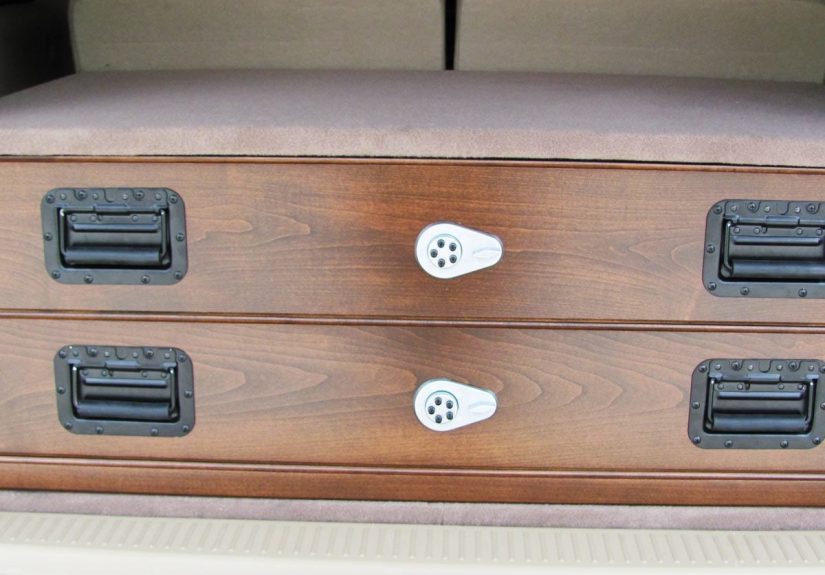
12. Use Locked Storage for Sharp, Regulated, or High-Risk Items
Not every piece of hunting gear belongs on open display. Broadheads, fillet knives, specialty tools, and other sharp items should be sheathed, guarded, and stored in secure drawers or cabinets. Adult-owned regulated items require even stricter storage practices.
For firearms, the safest approach is secure adult-only storage: unloaded, locked, inaccessible to children and unauthorized users, with ammunition locked separately and stored according to applicable laws and safety guidance. This is not just about neatness. It is about responsibility.
13. Build a Post-Trip Reset Routine
The best storage system in the world falls apart if gear never makes it back home properly. Create a simple post-trip routine: unload, rinse what needs rinsing, dry wet items, inspect for damage, restock consumables, and return everything to its assigned spot.
This habit keeps you from discovering missing leaders, dead batteries, or moldy waders the night before your next trip. It also makes your storage area feel less like a disaster site and more like a reliable launch point. Think of it as maintenance with a side of self-respect.
Common Mistakes That Ruin Good Gear Storage
Even a decent setup can fail if you make a few classic mistakes. The biggest one is storing dirty or wet gear. Another is stuffing everything into oversized bins where small items vanish. People also waste space by ignoring vertical walls, buying random containers that do not stack, and keeping too much low-value clutter in prime storage areas.
Another common issue is storing gear according to what looks tidy instead of what works. A beautiful setup that hides frequently used gear behind five other layers is not actually organized. It is just attractive sabotage.
How to Choose the Best Storage Setup for Your Space
If you have a single-car garage or a small shed, prioritize vertical storage, closed cabinets, and multi-use furniture. If you have more room, build out zones with shelves, wall systems, and dedicated bins. If you share the space with household storage, lawn tools, or a vehicle, use the perimeter walls wisely and keep the center clear.
The best fishing and hunting gear storage system is the one you will actually maintain. Start simple. Pick one wall, one bench, or one cabinet. Get the basics right. Then upgrade over time as your gear collection grows or your interests change. Because let’s be honest, they probably will.
Experience-Based Notes: What This Kind of Storage Changes in Real Life
Anyone who spends enough time fishing or hunting learns the same lesson eventually: disorganized gear does not just look bad, it steals time, money, and patience. The difference between a smooth trip and a frustrating one often starts long before you leave home. It starts in the storage area.
Picture a Saturday morning bass trip. The alarm goes off early, the coffee is barely doing its job, and you are trying to launch before the good spot gets crowded. In a bad setup, you waste twenty minutes searching for the right tackle tray, untangling rods, and wondering why your braid scissors are somehow mixed in with duck calls. In a good setup, you grab the labeled tray, lift the rod from the rack, pull a rain jacket from the hook, and head out. Same angler, same lake, wildly different mood.
The same goes for hunting season. People tend to focus on the field part, but the real stress often happens at home. You come in cold, damp, and tired. If there is no plan, wet bibs get tossed over a chair, boots stay muddy, gloves disappear, and decoy lines become a revenge puzzle. After a few weekends of that, gear starts to smell old, look beat-up, and fail sooner than it should. But when you have hooks, trays, drying space, and dedicated bins, cleanup becomes automatic. You stop treating your equipment like a pile of leftovers and start treating it like the investment it is.
There is also a psychological benefit that people do not talk about enough. Organized gear lowers trip friction. When preparation feels easy, you go more often. You are more willing to fish for two hours after work, scout for an afternoon, or take a quick morning hunt because the barrier to leaving is smaller. You are not “getting ready” for an hour. You are just going.
Storage also reveals what you actually use. Once your lures, packs, outerwear, and tools are visible and sorted, you notice patterns. Maybe you only use two tackle systems all summer. Maybe half your gloves are junk. Maybe your favorite headlamp keeps disappearing because it never had a designated home. Good organization turns clutter into information, and information helps you buy smarter, pack lighter, and maintain gear better.
And perhaps most important, good storage protects the expensive stuff from stupid damage. Not dramatic damage. Stupid damage. The kind caused by dampness, dust, bent rod tips, rusted pliers, scuffed optics, or a knife left where it should not be. Those are the losses that feel especially annoying because they were avoidable. A solid storage system will not make you catch bigger fish or fill more tags, but it will make your gear easier to trust, easier to find, and much more likely to last.
That is the real win. Not a prettier garage, though that is nice. Not a social-media-worthy wall, though that can be fun too. The real win is knowing your equipment is clean, protected, and ready when the season, weather, or sudden urge to hit the water says, “Let’s go.”
Conclusion
The best ideas for fishing and hunting gear storage are not necessarily the fanciest ones. They are the ones that protect gear, save space, and make your next trip easier. Start with zones, add vertical storage, build a drying station, use labeled bins, and secure high-risk items responsibly. From there, refine the system around your habits, your seasons, and your space.
When your gear has a real home, everything works better. The garage looks cleaner. Packing gets faster. Expensive equipment lasts longer. And you spend less time digging through clutter and more time doing the thing you bought all that gear for in the first place.