Table of Contents >> Show >> Hide
- What Does It Mean to Condition Vinyl Furniture?
- 11 Easy Ways to Condition Vinyl Furniture
- 1. Start With Regular Dusting
- 2. Clean With Mild Soap and Warm Water
- 3. Blot Spills Immediately
- 4. Use a Vinyl-Specific Cleaner for Deeper Grime
- 5. Apply a Vinyl Conditioner or Protectant
- 6. Protect Vinyl Furniture From Direct Sunlight
- 7. Keep Vinyl Away From Heat Sources
- 8. Avoid Harsh Chemicals and Abrasive Tools
- 9. Rinse and Dry Every Time
- 10. Prevent Dye Transfer and Stubborn Stains
- 11. Create a Simple Conditioning Schedule
- Best Products to Use on Vinyl Furniture
- What Not to Use on Vinyl Furniture
- How to Condition Outdoor Vinyl Furniture
- How to Refresh Old Vinyl Furniture
- Common Mistakes When Conditioning Vinyl Furniture
- Experience-Based Tips for Conditioning Vinyl Furniture
- Conclusion
Vinyl furniture is the dependable friend of the furniture world. It handles spills better than fabric, asks for less drama than leather, and can look stylish in living rooms, patios, breakfast nooks, RVs, boats, home offices, and even busy family rooms where snacks mysteriously migrate into every cushion seam. But “low maintenance” does not mean “no maintenance.” If vinyl is ignored long enough, it can become dull, sticky, faded, stiff, or crackedand suddenly your charming chair starts giving off “forgotten diner booth” energy.
The good news? Learning how to condition vinyl furniture is easy, affordable, and surprisingly satisfying. You do not need a professional upholstery lab, a complicated toolkit, or a secret cleaning potion guarded by furniture elves. Most of the process comes down to gentle cleaning, smart drying, vinyl-safe protectants, and everyday habits that keep the surface flexible and fresh.
Below are 11 simple, practical ways to clean, protect, and condition vinyl furniture so it stays smooth, comfortable, and ready for real life. Whether you have a vinyl sofa, patio chair, dining bench, boat seat, faux leather recliner, or vintage vinyl stool, these tips will help you care for it without overthinking every crumb.
What Does It Mean to Condition Vinyl Furniture?
Conditioning vinyl furniture means keeping the surface clean, flexible, protected, and less vulnerable to drying, fading, cracking, staining, and sticky buildup. Unlike genuine leather, vinyl is a synthetic material, often made with a protective coating. It does not need oily leather conditioners that soak into animal hide. In fact, using the wrong product can leave vinyl greasy, attract dust, or damage the finish.
For vinyl, “conditioning” is more about surface care. You clean away dirt and body oils, rinse off residue, dry the material thoroughly, and apply a vinyl-safe conditioner or protectant when needed. The goal is to maintain softness, preserve color, reduce UV damage, and prevent the material from becoming brittle over time.
11 Easy Ways to Condition Vinyl Furniture
1. Start With Regular Dusting
The easiest way to condition vinyl furniture is also the least glamorous: dust it. Dust may look harmless, but it can act like fine sandpaper when people sit, slide, or shift on the furniture. Over time, grit can dull the surface and settle into seams, stitching, and textured grain.
Use a soft microfiber cloth, a dry cotton cloth, or a vacuum with a brush attachment. Avoid stiff brushes, rough scrub pads, and anything that feels like it belongs in a garage instead of on upholstery. For textured vinyl, gently move the cloth in small circles or follow the grain to lift debris from tiny grooves.
A quick weekly dusting keeps the vinyl ready for deeper cleaning and helps prevent grime from turning into a stubborn film. Think of it as brushing your teeth before needing dental worksmall effort, big payoff.
2. Clean With Mild Soap and Warm Water
Mild soap and warm water are the classic vinyl furniture care duo for a reason. They are gentle, effective, and usually safe for routine cleaning. Mix a few drops of mild dish soap into a bowl of warm water. Dip a soft cloth or sponge into the solution, wring it out well, and wipe the furniture surface.
The key word is “damp,” not “soaked.” Vinyl itself handles moisture better than many fabrics, but water can still sneak into seams, piping, cushion edges, or stitching. Too much water can also leave residue if the soap is not removed properly.
After cleaning, wipe the area with a separate cloth dampened with plain water. This rinses away soap film that can make vinyl feel sticky or attract more dirt. Then dry with a clean towel. Your vinyl should feel clean, smooth, and refreshednot slippery, tacky, or perfumed like a cleaning aisle explosion.
3. Blot Spills Immediately
Vinyl is forgiving, but it is not invincible. Coffee, soda, tomato sauce, sunscreen, makeup, hair dye, ink, and dark denim transfer can leave stains if they sit too long. The faster you respond, the better your chances of avoiding a permanent mark.
Blot spills with a clean, white cloth. White cloths are best because brightly colored rags can transfer dye to light vinyl. Avoid rubbing aggressively, especially on textured or older vinyl. Rubbing can push stains deeper into the grain or spread the mess around like you are finger-painting with regret.
Once the spill is blotted, clean the area with mild soap and water, rinse with a damp cloth, and dry thoroughly. For oily spills, repeat the gentle cleaning process rather than reaching immediately for harsh degreasers.
4. Use a Vinyl-Specific Cleaner for Deeper Grime
When mild soap is not enough, use a cleaner made specifically for vinyl upholstery, faux leather, marine vinyl, automotive vinyl, or plastic-coated furniture surfaces. These products are designed to clean without stripping or degrading the protective finish.
Always read the label before applying anything. Look for words such as “safe for vinyl,” “vinyl upholstery,” “marine vinyl,” or “vinyl furniture.” Avoid products that are meant only for unfinished leather, wood, metal, or floors unless the label clearly says they are safe for vinyl upholstery.
Before using a new cleaner on the entire piece, test it on a hidden spotbehind a cushion, under a seat, or on the back lower edge. Wait until it dries, then check for discoloration, dullness, tackiness, or texture changes. If the test area looks good, continue with light, even applications.
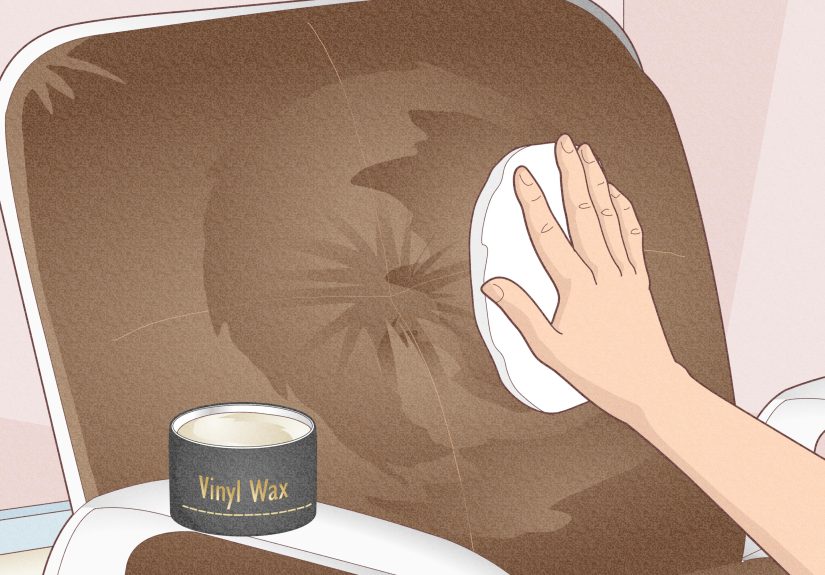
5. Apply a Vinyl Conditioner or Protectant
A vinyl conditioner or protectant can help keep furniture supple, reduce fading, and create a protective barrier against everyday dirt. This is especially useful for outdoor vinyl furniture, boat seats, RV cushions, breakfast benches near sunny windows, or any piece that gets frequent use.
Choose a product labeled for vinyl rather than a heavy leather oil or wax. Many vinyl protectants are water-based and designed to dry to a clean, non-greasy finish. Some also include UV blockers, which help protect against sun-related fading and cracking.
To apply, clean the vinyl first and let it dry completely. Spray the protectant onto a cloth rather than directly onto the furniture, unless the product directions say otherwise. Wipe a thin, even layer over the surface. Buff away excess product with a clean microfiber cloth. More product is not better; too much can make the furniture slick, sticky, or dust-hungry.
6. Protect Vinyl Furniture From Direct Sunlight
Sunlight is one of vinyl furniture’s biggest enemies. UV exposure can fade color, dry the surface, and make vinyl brittle over time. If your favorite chair sits in a blazing window like it is auditioning to be a houseplant, it may need a new location.
Move vinyl furniture away from intense direct sunlight when possible. Use curtains, blinds, UV-filtering window film, patio umbrellas, furniture covers, or shade sails to reduce exposure. For outdoor vinyl furniture, store cushions when not in use or cover them during long sunny stretches.
UV-protective vinyl sprays can help, but they are not magic force fields. They work best as part of a routine that also includes shade, cleaning, and regular reapplication according to the product label.
7. Keep Vinyl Away From Heat Sources
Heat can dry, warp, or weaken vinyl surfaces, especially when combined with sunlight. Avoid placing vinyl furniture directly beside radiators, heating vents, fireplaces, space heaters, or sunny glass doors that turn the room into a toaster oven.
Heat exposure may not cause instant damage, but over time it can make vinyl stiff and prone to cracking. If you cannot move the furniture, redirect airflow, use a barrier, or rotate the piece occasionally so one area does not take all the heat.
This is especially important for vinyl dining chairs, office chairs, and recliners that sit in the same position year-round. A few inches of space from a vent can make a real difference.
8. Avoid Harsh Chemicals and Abrasive Tools
Vinyl furniture is durable, but harsh cleaners can age it quickly. Avoid ammonia-based cleaners, undiluted bleach, strong solvents, nail polish remover, paint thinner, abrasive powders, scouring pads, stiff brushes, and magic-eraser-style sponges unless the furniture manufacturer specifically approves them.
These products may remove stains, but they can also remove protective coatings, dull the finish, dry the surface, or cause discoloration. That is not cleaning; that is redecorating by accident.
Use the gentlest method that works. Start with dusting, then mild soap and water, then vinyl cleaner if necessary. For difficult stains, follow the furniture manufacturer’s care guide when available. If you cannot find one, test carefully in a hidden area and avoid aggressive scrubbing.
9. Rinse and Dry Every Time
One of the most overlooked steps in vinyl furniture care is rinsing. Soap residue, cleaner residue, and excess protectant can all leave vinyl feeling sticky. Sticky vinyl attracts dust, pet hair, crumbs, and mystery fuzz at impressive speed.
After cleaning, wipe the surface with a clean cloth dampened with plain water. Then dry with a soft towel. Pay extra attention to seams, buttons, tufting, cushion edges, and folds where moisture can hide.
Never leave vinyl furniture wet for long periods. Even if the surface looks waterproof, moisture trapped in stitching or cushion seams can encourage mildew, odors, or deterioration. A dry finish is a happy finish.
10. Prevent Dye Transfer and Stubborn Stains
Light-colored vinyl furniture is especially vulnerable to dye transfer from dark jeans, printed fabrics, wet swimsuits, hair dye, newspaper ink, and dark throw pillows. Once dye sinks into vinyl, it can be difficult or impossible to remove completely.
Use washable throws or seat covers in high-risk areas. Be careful with new denim, especially dark blue jeans. If you have a white vinyl breakfast banquette, consider it a “no fresh hair dye, no wet newspaper, no mysterious craft paint” zone.
For busy homes, prevention is easier than stain removal. A vinyl protectant may help create a barrier, but it cannot guarantee protection from every dye or chemical. If something dark or oily touches the surface, wipe it up quickly.
11. Create a Simple Conditioning Schedule
The best way to condition vinyl furniture is to turn care into a routine. You do not need to pamper it daily, but you should give it consistent attention.
For indoor vinyl furniture, dust weekly, clean lightly every two to four weeks, and apply a vinyl-safe conditioner or protectant every three to six months, depending on use and sunlight exposure. For outdoor, marine, or RV vinyl, clean more often and reapply protectant according to the product directions, especially during sunny seasons.
If the furniture gets heavy use from kids, pets, guests, or snack-loving adults, increase the cleaning frequency. If it lives in a low-traffic room, a lighter schedule may be enough. The real secret is consistency. Vinyl furniture usually does not fail overnight; it slowly declines when dirt, sun, heat, and residue gang up on it.
Best Products to Use on Vinyl Furniture
You do not need a giant cleaning cabinet to maintain vinyl furniture. A small, sensible kit is enough for most homes.
Basic Vinyl Furniture Care Kit
- Microfiber cloths
- Soft sponge
- Vacuum with brush attachment
- Mild dish soap
- Small bucket or bowl
- Clean white towels
- Vinyl-safe cleaner
- Vinyl conditioner or UV protectant
- Soft toothbrush for seams and crevices
Keep the kit simple. A gentle routine performed regularly is better than a dramatic rescue mission involving twelve products, three buckets, and a mild identity crisis.
What Not to Use on Vinyl Furniture
Some products sound helpful but can cause problems on vinyl. Avoid heavy oils, greasy leather balms, furniture polish, waxes not labeled for vinyl, high-strength solvents, ammonia glass cleaners, abrasive pads, steam cleaners, and undiluted cleaning chemicals.
Steam can be especially risky because heat and moisture may affect adhesives, seams, backing materials, or coatings. If a furniture manufacturer says steam is safe, follow those instructions carefully. Otherwise, stick with damp cloth cleaning.
How to Condition Outdoor Vinyl Furniture
Outdoor vinyl furniture needs extra protection because it deals with sun, rain, pollen, dust, sunscreen, sweat, and temperature swings. Start by brushing away loose dirt. Wash with mild soap and warm water, rinse thoroughly, and dry completely. Then apply a vinyl-safe UV protectant.
Use furniture covers when the pieces are not in use. Store cushions indoors during storms, winter, or long periods of nonuse. Keep outdoor vinyl away from standing water and avoid leaving wet towels, leaves, or pool chemicals on the surface.
If the furniture is near a pool, clean it more often. Chlorine, sunscreen, and body oils can build up quickly. A quick wipe after heavy use helps prevent sticky film and discoloration.
How to Refresh Old Vinyl Furniture
Older vinyl furniture can often be improved, but expectations matter. If the vinyl is dirty, dull, or slightly stiff, cleaning and conditioning may help. If it is deeply cracked, peeling, or splitting, surface care will not reverse the damage. At that point, repair kits, reupholstery, or replacement may be better options.
For a refresh, vacuum seams first. Clean with mild soap and water. Use a soft toothbrush on creases and around buttons. Rinse with a damp cloth and dry thoroughly. Apply a thin layer of vinyl protectant and buff gently. Repeat only as directed by the product label.
Do not try to “restore” old vinyl with cooking oil, mineral oil, petroleum jelly, or random internet potions. These may create temporary shine but can attract dirt, stain clothing, or interfere with the surface finish.
Common Mistakes When Conditioning Vinyl Furniture
Using Leather Conditioner Without Reading the Label
Some leather conditioners are not suitable for vinyl. Vinyl does not absorb oils the way leather does, so oily products can sit on top and create a greasy film.
Skipping the Rinse Step
Soap left behind can make vinyl sticky. Always wipe with plain water after cleaning.
Scrubbing Too Hard
Aggressive scrubbing can damage texture and finish. Use patience, not punishment.
Letting Sunlight Do Whatever It Wants
Direct sun can fade and dry vinyl. Shade and UV protection are your furniture’s best vacation package.
Conditioning Dirty Vinyl
Protectant should go on clean, dry vinyl. Applying it over grime seals in the problem and can make the surface look cloudy or uneven.
Experience-Based Tips for Conditioning Vinyl Furniture
After cleaning and caring for different types of vinyl furniturefrom dining chairs and faux leather office chairs to patio cushions and vintage stoolsone lesson becomes clear: vinyl rewards boring consistency. The homes with the best-looking vinyl furniture are not necessarily using the fanciest products. They are simply wiping spills quickly, cleaning gently, and protecting pieces from sun and heat.
One practical experience is that light-colored vinyl needs more preventive care than dark vinyl. White, cream, beige, and pale gray vinyl can look stunning, but they also expose every denim mark, ink smudge, and coffee splash like a tiny crime scene. If you have light vinyl dining chairs, keep a stack of clean microfiber cloths nearby. After meals, a fast wipe with a damp cloth prevents food residue from settling into the grain. For families with children, this habit is worth goldor at least worth not having orange sauce permanently decorating a chair.
Another useful tip is to clean seams before cleaning the broad surface. Crumbs, dust, and pet hair love seams. If you wipe the seat first and then attack the seams, debris often spreads back onto the clean area. Vacuum first, use a soft toothbrush along stitching, and then clean the larger panels. This order saves time and makes the final result look more polished.
For vinyl office chairs, body oils and friction are usually the biggest issues. Armrests and seat edges often become shiny, dull, or sticky before the rest of the chair. A mild soap-and-water wipe every week or two can prevent buildup. If the chair sits near a window, rotate it occasionally or lower blinds during peak sunlight. Office chairs may not seem glamorous, but when vinyl cracks on the seat edge, it becomes very noticeable very quickly.
Outdoor vinyl furniture teaches another lesson: protectant works best after a proper cleaning. Spraying UV protectant over dusty patio cushions is like putting sunscreen over sand. It may help a little, but it will not perform as well as it should. Wash, rinse, dry, then protect. Also, avoid covering damp vinyl furniture immediately after rain. Trapped moisture can create odors and mildew. Let the furniture dry first, then cover it.
Vintage vinyl furniture deserves extra patience. Older vinyl can be charming, but it may already be dry or fragile. Test every cleaner in a hidden spot. Use very little moisture. Avoid hard scrubbing. If the piece has sentimental or collectible value, consider asking an upholstery professional before trying stain removers or restoration products. A gentle improvement is better than an enthusiastic disaster.
One of the most reliable habits is keeping a “no harsh cleaners” rule. Many people reach for strong products because they want fast results. Unfortunately, fast can become expensive. A cleaner that removes a stain today may dull the finish tomorrow. Start mild. Give the cleaner time to work. Repeat gently if needed. Vinyl furniture care is not a wrestling match.
Finally, conditioning vinyl furniture becomes easier when you match the routine to the furniture’s lifestyle. A guest-room chair may need only occasional care. A kitchen banquette used every day needs weekly attention. A boat seat or patio cushion needs seasonal protection. A salon chair exposed to hair dye needs barriers and immediate cleanup. Once you understand how the furniture is used, the right care schedule becomes obvious.
The best experience-based advice is simple: do not wait until vinyl looks damaged to care for it. Conditioning is preventive. By the time vinyl is cracked, the problem is much harder to fix. Clean it while it still looks good, protect it before summer sun beats it up, and treat spills like tiny emergencies. Your furniture will stay smoother, brighter, and more comfortableand you will avoid the sad moment when a once-beautiful chair starts sounding crunchy.
Conclusion
Conditioning vinyl furniture is not complicated, but it does require the right approach. Clean gently, rinse thoroughly, dry completely, avoid harsh chemicals, protect from UV rays, and use a vinyl-safe conditioner or protectant when needed. The goal is not to smother vinyl in oily products. The goal is to keep the surface clean, flexible, and protected so it can handle everyday life with style.
Whether you are caring for a vinyl couch, patio chair, faux leather dining bench, boat seat, or vintage stool, these 11 easy methods can help extend its life and preserve its good looks. A little routine care keeps vinyl from fading, cracking, staining, and turning sticky. And honestly, any furniture that survives coffee spills, pets, kids, guests, and snack crumbs deserves a little spa day now and then.