Table of Contents >> Show >> Hide
- 1. It Was Tiny, but It Looked Weirdly Huge
- 2. It Called Itself Baptist, but Mainstream Baptists Wanted Nothing to Do with It
- 3. It Was Largely a Family Enterprise
- 4. The Group Had an Unusually Strong Legal Brain
- 5. Its Founder Had a Startlingly Contradictory Backstory
- 6. It Turned Funerals Into a Public Stage
- 7. It Helped Create One of America’s Strangest Free Speech Cases
- 8. It Triggered a Wave of Funeral-Protection Laws
- 9. It Thrived on Publicity, but Humor Sometimes Deflated It
- 10. The Internet Helped Spread Westboro’s Message, Then Helped Crack It Open
- The Public Experience of Westboro Was Its Own Kind of Weird
- Conclusion
- SEO Tags
Note: Clean HTML body only. No placeholder citation markup or contentReference artifacts included.
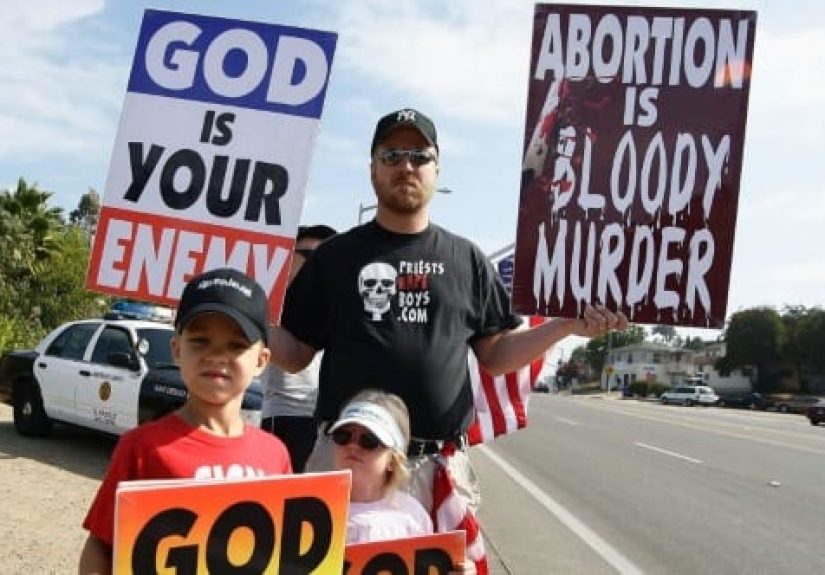
If you only know the Westboro Baptist Church from angry headlines and shocking protest signs, here is the first strange thing: it was never a giant movement. It was a tiny, tightly controlled group from Topeka, Kansas, yet it managed to plant itself in the American imagination like a burr on a sock. Small church, enormous noise. That mismatch is part of what made Westboro so bizarre.
The group became infamous for picketing funerals, targeting LGBTQ people, and provoking outrage with messages designed to get cameras rolling. But the real story is even stranger than the signs. Westboro was part family compound, part legal machine, part media stunt, and part cautionary tale about how extremism can thrive on attention. It wrapped itself in religious language, fought major First Amendment battles, and somehow became one of the most recognizable fringe groups in the country without ever becoming large.
Below are ten of the strangest, most revealing things about the Westboro Baptist Church, followed by a longer look at the public experience surrounding it and why the group still matters as a cultural case study.
1. It Was Tiny, but It Looked Weirdly Huge
Westboro Baptist Church gained national notoriety that made it seem massive, but by most credible accounts it was a very small congregation. That is strange all by itself. America has thousands of larger, richer, louder religious organizations, yet this one tiny church routinely grabbed more press than denominations with millions of members.
Why? Because Westboro understood spectacle. It picked targets that guaranteed attention: military funerals, high-profile tragedies, celebrity deaths, and cultural flashpoints. It did not need huge numbers when it had timing, provocation, and a knack for showing up where cameras already were. In modern media terms, Westboro mastered the terrible art of punching above its weight.
That created an illusion. To the average person watching the news, Westboro looked like a sprawling extremist machine. In reality, it was closer to a small family operation with a terrifyingly efficient publicity strategy. It was less “mass movement” and more “nightmare PR startup.”
2. It Called Itself Baptist, but Mainstream Baptists Wanted Nothing to Do with It
Another oddity is right there in the name. Westboro called itself Baptist and described itself as “Primitive Baptist” or “Old School Baptist,” but mainstream Baptist organizations and leaders have long distanced themselves from it. In plain English, the label sounded familiar, but the ideology was so extreme that many Christians across the spectrum rejected it outright.
This matters because Westboro often benefited from public confusion. People would hear “Baptist church” and assume it was merely a harsh version of a normal American church. It was not. Its theology, tactics, and obsession with public condemnation put it far outside ordinary Baptist life. If most Baptist churches are trying to organize potlucks, Sunday school, and youth retreats, Westboro was busy turning sidewalk harassment into a theology of performance.
That disconnect made the group seem stranger still: it borrowed a familiar Christian word while behaving in ways that most Christian bodies condemned.
3. It Was Largely a Family Enterprise
One of the most unsettling things about Westboro is that it was built largely around one extended family. Reports for years described the congregation as mostly made up of the relatives of founder Fred Phelps. That gave the church a deeply insular quality. Members were not just attending the same church; many were sharing family bonds, authority structures, business ties, and daily social life.
That kind of setup can make dissent incredibly hard. Disagreeing is not just disagreeing with a pastor. It can mean crossing parents, siblings, cousins, grandparents, and the whole social universe that defines your life. In groups like this, leaving does not feel like changing churches. It feels like detonating your identity.
The family-centered structure also explains how Westboro maintained discipline. It was not a loose congregation of strangers drifting in and out. It was a tight inner circle with loyalty reinforced by blood. That is one reason former members often describe departure as both liberating and devastating. You are not just walking away from doctrine; you are risking your last Thanksgiving invitation forever.
4. The Group Had an Unusually Strong Legal Brain
Here is a detail that surprises a lot of people: Westboro was not simply loud. It was legally savvy. Fred Phelps had a law background, and numerous members of the Phelps family reportedly earned law degrees. That mattered. A lot.
Westboro did not just protest; it operated with a sharp awareness of constitutional boundaries, public-space rules, and the legal leverage of the First Amendment. The group often staged demonstrations in ways designed to stay inside the lines of protected speech, even while crossing every imaginable line of decency. That combination made the church maddeningly difficult to silence through ordinary legal means.
It also added to the group’s strange reputation. Westboro was not just a fringe church shouting at the sky. It was a fringe church that often knew exactly how close it could get to the legal edge without tumbling over it. In other words, it was fueled not only by fanaticism, but also by strategy.
5. Its Founder Had a Startlingly Contradictory Backstory
Fred Phelps is remembered mainly as the face of Westboro’s hateful protests, but his biography contains a jarring contradiction. Before becoming nationally infamous for extremist anti-gay activism, he had a reputation in civil rights litigation. That does not redeem what came later, but it does make the story stranger.
Americans like their villains simple. Phelps was not simple. He was combative, legally aggressive, and publicly inflammatory in more than one era of his life. That strange mix helps explain why Westboro was never just random chaos. It emerged from a founder who understood confrontation, law, and publicity very well.
The contradiction does not make the group more admirable. It makes it more unsettling. A man who had once worked within the legal system on civil-rights matters later built one of America’s most infamous anti-LGBTQ protest groups. That is not irony in the cute, coffee-mug sense. That is dark, historical whiplash.
6. It Turned Funerals Into a Public Stage
Westboro became especially notorious for picketing funerals, including military funerals. That choice was central to its public identity and one of the main reasons the group drew such intense disgust. Plenty of extremist groups yell. Westboro chose moments of grief, then inserted itself into them like a vandal crashing a memorial service with a megaphone.
The funeral strategy was not random. It was calculated to provoke maximum emotional response. Grief creates vulnerability, and vulnerability draws public sympathy. By targeting those moments, Westboro forced a nation to confront a deeply uncomfortable question: how much protection should the law give to speech that seems deliberately designed to wound?
The result was a level of notoriety wildly out of proportion to the group’s size. Westboro became a symbol not only of religious extremism, but of the sickening possibility that cruelty could be packaged as “public witness” and then defended as a constitutional right.
7. It Helped Create One of America’s Strangest Free Speech Cases
If Westboro had merely been outrageous, it might have faded into the background of American fringe culture. Instead, it became part of a landmark constitutional fight. The best-known case is Snyder v. Phelps, which reached the U.S. Supreme Court after the funeral protest of Marine Lance Corporal Matthew Snyder.
The legal outcome was deeply painful and deeply important. The Court ruled in favor of Westboro, holding that the First Amendment protected the group’s speech under the circumstances presented in the case. To many Americans, that decision felt infuriating. To constitutional scholars and civil-liberties advocates, it was a reminder that free speech protection often extends even to speech most people loathe.
That is what makes the case so strange: Westboro, one of the nation’s most reviled groups, ended up helping define the limits of speech protection in a democracy. It became a constitutional stress test. The group was hateful, but the legal principle at stake was broader than the group itself. Westboro turned American disgust into a law-school exam question with real funerals and real pain behind it.
8. It Triggered a Wave of Funeral-Protection Laws
Even though Westboro won major free-speech protection in court, the public backlash helped drive efforts to create buffer zones and timing restrictions around funerals. Legislatures across the country looked for ways to protect grieving families without writing laws so broad that courts would strike them down.
That is one of the church’s stranger legacies. A tiny group managed to shape public policy in state after state. It did not win hearts. It did not build a mass following. But it forced lawmakers to think more carefully about privacy, mourning, distance requirements, and the boundary between public protest and personal torment.
In that sense, Westboro’s cultural footprint was much larger than its membership list. It changed the conversation about how the law handles public expression near funerals. That is a bizarre amount of influence for a group that could fit into a modest family reunion photo.
9. It Thrived on Publicity, but Humor Sometimes Deflated It
Westboro wanted outrage because outrage brought microphones. The group understood that public anger was not always a problem; often it was the product. Every furious crowd, every camera crew, every outraged headline helped enlarge Westboro’s presence.
But one of the strangest responses to the church was not always anger. Sometimes it was mockery. Counterprotesters frequently used satire, costumes, parody signs, music, and sheer absurdity to drain some of the theatrical power from Westboro’s demonstrations. Humor did not erase the harm, but it changed the mood. It denied the group its preferred role as the center of a righteous apocalypse drama.
That made Westboro look less like fearsome prophets and more like people trying very hard to be the main character in every tragedy. In media terms, satire often reframed the church from terrifying to ridiculous. And for a group that depended on moral grandeur, ridicule could be surprisingly effective.
10. The Internet Helped Spread Westboro’s Message, Then Helped Crack It Open
This may be the most surprising twist of all. Westboro used websites and social media to amplify its message, but online conversations also played a role in some well-known defections. The story of former member Megan Phelps-Roper is the clearest example. She became active in Westboro’s online presence, encountered people who challenged her beliefs without simply screaming back, and began questioning the ideology she had grown up with.
That does not mean Twitter magically solved extremism. The internet is not a Disney movie with better Wi-Fi. But Westboro’s story shows that exposure to persistent, human, intelligent disagreement can matter. The same platforms that rewarded provocation also created openings for doubt, empathy, and exit.
That is a strange and oddly hopeful detail in an otherwise ugly history. Westboro used modern communication tools to scale hostility, but those same tools helped some insiders see the cracks. In the end, the internet was not only a bullhorn. It was also, occasionally, a door.
The Public Experience of Westboro Was Its Own Kind of Weird
To understand why Westboro Baptist Church became so culturally unforgettable, it helps to talk about the experience surrounding it. Not just the church itself, but what it felt like for everyone orbiting it: grieving families, local communities, veterans, journalists, students, online critics, and former members trying to rebuild their lives.
For many Americans, the first experience of Westboro was not in person but through television clips or viral headlines. The pattern was almost always the same. A tragedy occurred. Then, as if summoned by the worst instincts of media-era opportunism, Westboro appeared with signs, slogans, and the moral sensitivity of a cinder block. Public reaction mixed disgust, disbelief, and a kind of exhausted question: “Are these people real?” Unfortunately, yes.
For families and mourners, the experience was far more than a bizarre news item. It became part of the emotional weather of grief. Even when protesters were held at a distance, their presence could turn an already painful funeral into a national debate about rights, decency, and spectacle. That is one of the reasons the group’s legacy remains so troubling. Westboro did not simply express offensive views; it inserted those views into moments when people had the least emotional bandwidth to absorb them.
For bystanders and counterprotesters, the experience often became a lesson in civic improvisation. Communities developed ways to shield families, sometimes literally. Patriot Guard Riders, local residents, faith groups, LGBTQ activists, and veterans would form visual barriers, create noise buffers, or stand in solidarity. The result was strange in its own right: one small church could trigger enormous displays of communal protection. Westboro tried to dominate the emotional frame, and whole towns responded by saying, “Absolutely not.”
For journalists, Westboro posed a professional trap. The group was undeniably newsworthy, but coverage also risked amplifying the very message the group wanted to spread. Reporters had to decide how much attention was too much, whether showing the signs merely served the spectacle, and how to keep the focus on victims, families, or the larger legal issues rather than on Westboro’s performance.
For former members, the experience was different again. Leaving a group like Westboro was not a clean intellectual upgrade, like swapping one opinion for a better one after reading a persuasive article. It often meant losing family relationships, identity, certainty, and community in one brutal sweep. The public sometimes sees defectors and thinks, “Great, they got out.” True. But getting out can also mean starting life over with emotional shrapnel still embedded everywhere.
And for the wider culture, Westboro became a strange mirror. It forced Americans to confront an awkward democratic truth: a free society protects a lot of speech that decent people find appalling. That realization does not feel noble when attached to funeral protests. It feels maddening. But that tension is part of the experience of living in a country where constitutional principle and human pain can collide in public view.
That, finally, may be the strangest thing of all. Westboro Baptist Church was never just a fringe church. It became a recurring public stress test for grief, law, media, family loyalty, internet discourse, and the limits of tolerance. Small group. Massive shadow. Very weird legacy.
Conclusion
The Westboro Baptist Church remains one of the strangest religious fringe groups in modern American life not because it was large or influential in the usual sense, but because it weaponized visibility. It fused family control, legal knowledge, public provocation, and media timing into a formula that made a tiny congregation feel omnipresent. Its legacy includes landmark court decisions, funeral-protection laws, ex-member memoirs, and a long national argument about where free speech ends and cruelty begins.
If there is a lasting lesson here, it is that extremism does not always grow by persuading millions. Sometimes it grows by hijacking attention. Westboro understood that early, used it ruthlessly, and became infamous because of it. The good news, if there is any, is that communities, courts, journalists, and former insiders also shaped the story. They pushed back, protected mourners, questioned doctrine, and refused to let the group define the whole conversation.